

When the weather gets a little chilly, there’s nothing I crave more than a warm, comforting bowl of soup. This roasted butternut squash soup is the one I turn to time and time again. It’s like a cozy hug in a bowl, packed with deep, sweet flavor from roasting the squash until it’s perfectly caramelized.
Forget complicated steps or hard-to-find ingredients. I designed this recipe for busy weeknights when you need something nourishing and delicious without the stress. The secret is letting the oven do most of the work to build an incredible depth of flavor. The result is a silky, velvety soup that feels luxurious but is secretly so simple to make.
Why This Roasted Butternut Squash Soup Will Be Your New Favorite
I’ve tried a lot of butternut squash soups, and I truly believe this one is special. It’s the recipe I share with friends when they ask for a foolproof, cozy meal.
- Unbelievably Deep Flavor: Roasting the butternut squash is a non-negotiable step in my book. It coaxes out all the natural sweetness and creates a rich, caramelized flavor that you just can’t get from boiling or steaming.
- Silky Smooth Without Heavy Cream: I achieve a wonderfully creamy texture by blending the roasted squash with just a touch of butter and broth. You get all the luxurious mouthfeel without needing any heavy cream, making it feel both rich and light.
- Simple, Accessible Ingredients: This soup is made with pantry staples you likely already have. It proves you don’t need a long, complicated list to create something truly spectacular.
- Easy to Customize: I love a recipe that you can make your own. I’ll share some of my favorite ways to tweak the flavors, from adding a pinch of spice to swapping in different herbs.
How to Choose & Prepare the Perfect Butternut Squash for Soup
I know that dealing with a big, hard squash can feel intimidating, but I promise it’s easier than it looks. Let’s break it down together. When you’re at the store, look for a squash that feels heavy for its size and has a solid, uniform beige color. Avoid any with deep cuts, soft spots, or green patches.
First, give it a good wash. To tackle it safely, I always slice off the top stem and the bottom end to create two flat, stable surfaces. Stand the squash up on one of the flat ends and carefully slice it in half vertically, from top to bottom. A sharp, heavy knife is your best friend here.
Once it’s halved, use a sturdy spoon to scoop out the seeds and stringy bits from the round cavity. That’s it! You don’t even need to peel it for this recipe, because we’re going to roast it and scoop the soft flesh right out of the skin. See? I told you it was simple.
Ingredients
- 1 large butternut squash (about 3 pounds / 1.36 kg), halved vertically* and seeds removed
- 1 tablespoon olive oil, plus more for drizzling
- ½ cup (120 ml) chopped shallot (about 1 large shallot bulb)
- 1 teaspoon salt
- 4 garlic cloves, pressed or minced
- 1 teaspoon (5 ml) maple syrup
- ⅛ teaspoon (0.6 ml) ground nutmeg
- Freshly ground black pepper, to taste
- 3 to 4 cups (710 to 950 ml) vegetable broth, as needed
- 1 to 2 tablespoons (14 to 28g) butter, to taste
Instructions
- Preheat the oven to 425 degrees Fahrenheit and line a rimmed baking sheet with parchment paper. Place the butternut squash on the pan and drizzle each half with just enough olive oil to lightly coat the squash on the inside (about ½ teaspoon each). Rub the oil over the inside of the squash and sprinkle it with salt and pepper.
- Turn the squash face down and roast until it is tender and completely cooked through, about 40 to 50 minutes (don’t worry if the skin or flesh browns—that’s good for flavor). Set the squash aside until it’s cool enough to handle, about 10 minutes.
- Meanwhile, in a large soup pot, warm 1 tablespoon olive oil over medium heat until shimmering (if your blender has a soup preset, use a medium skillet to minimize dishes.) Add the chopped shallot and 1 teaspoon salt. Cook, stirring often, until the shallot has softened and is starting to turn golden on the edges, about 3 to 4 minutes. Add the garlic and cook until fragrant, about 1 minute, stirring frequently. Transfer the contents to your stand blender (see notes on how to use an immersion blender instead).
- Use a large spoon to scoop the butternut squash flesh into your blender. Discard the tough skin. Add the maple syrup, nutmeg and a few twists of freshly ground black pepper to the blender. Pour in 3 cups vegetable broth, being careful not to fill the container past the maximum fill line (you can work in batches if necessary, and stir in any remaining broth later).
- Securely fasten the lid. Blend on high (or select the soup preset, if available), being careful to avoid hot steam escaping from the lid. Stop once your soup is ultra creamy and warmed through.
- If you would like to thin out your soup a bit more, stir in the remaining cup of broth. Add 1 to 2 tablespoons butter or olive oil, to taste, and blend well. Taste and stir in more salt and pepper, if necessary.
- If your soup is piping hot from the blending process, you can pour it into serving bowls. If not, pour it back into your soup pot and warm the soup over medium heat, stirring often, until it’s nice and steamy. I like to top individual bowls with some extra black pepper.
Butternut Squash Soup: A Masterclass in Roasting & Blending for Ultimate Creaminess
The two secrets to a truly unforgettable butternut squash soup are all in the technique: perfect roasting and smart blending. Getting these right is what elevates this dish from good to absolutely amazing.
The Magic of Roasting Your Butternut Squash
I cannot stress this enough: roasting the squash is the key to incredible flavor. When you roast it cut-side down, the heat from the oven caramelizes the natural sugars in the squash. This process creates a deep, nutty, and wonderfully sweet flavor that you simply cannot achieve by boiling or steaming.
You’ll know it’s perfectly roasted when a fork pierces the flesh with absolutely no resistance. The edges will be beautifully browned, and the skin might even be a little blistered. Don’t be afraid of that color; those browned bits are pure flavor.
Mastering the Blend: Achieving Silky Smooth Butternut Squash Soup
To get that velvety texture, a good blend is crucial. A high-powered stand blender is my top choice because it can pulverize the squash fibers into a super smooth, creamy liquid. One very important safety tip: when blending hot liquids, never fill the blender more than halfway. I also remove the small cap from the lid and cover the opening with a folded kitchen towel to allow steam to escape safely.
If you have an immersion blender, that works too! It’s great for fewer dishes. Just be sure to blend thoroughly, moving the blender all around the pot to catch any chunks. Your soup might have a slightly more rustic texture, which can also be lovely. If it’s not as smooth as you’d like, you can always pour it through a fine-mesh sieve for an extra-silky finish.
Customizing Your Butternut Squash Soup: Flavor Variations & Substitutions
One of the best things about this soup is how easy it is to adapt. Think of this recipe as your starting point, and feel free to get creative! Here are a few of my favorite ways to switch things up.
| Category | Variation/Substitution Idea | How it Affects Flavor/Texture |
|---|---|---|
| Sweet Notes | Add a small amount of roasted apple, pear, or a pinch of cinnamon/allspice with the squash. | Enhances the natural sweetness of the squash, adding a warm, autumnal depth. |
| Savory & Spicy Twists | Stir in smoked paprika, a dash of white miso paste, or a pinch of curry powder. | Smoked paprika adds a subtle smoky note; miso paste deepens umami; curry powder introduces a warm, aromatic spice. |
| Spice Level | Add a pinch of cayenne pepper, red pepper flakes, or a dash of chipotle powder. | Introduces a gentle heat that complements the squash’s sweetness. |
| Creaminess Boost | Swirl in full-fat coconut milk (for vegan), a dollop of Greek yogurt (dairy), or cashew cream. | Adds extra richness and a luxurious mouthfeel. Coconut milk also adds a subtle tropical note. |
| Broth Alternatives | Chicken broth (for non-vegan), mushroom broth. | Chicken broth adds a more robust, savory base. Mushroom broth provides a deeper, earthy umami flavor for vegan options. |
| Sweetener Options | Honey, brown sugar, or agave nectar instead of maple syrup. | Offers different nuances of sweetness; honey adds floral notes, brown sugar a molasses depth, agave is a neutral, plant-based alternative. |
| Squash Substitutions | Acorn squash, kabocha squash, sweet potato (alone or mixed with butternut). | Acorn is milder; kabocha is sweeter and drier; sweet potato offers a different flavor profile but delicious creamy texture. Adjust liquid as needed. |
Dietary Adaptations for Every Need
It’s so easy to make this soup fit your dietary needs without sacrificing any flavor.
- For a Vegan Soup: Simply use olive oil or a plant-based butter instead of dairy butter. For extra creaminess, a swirl of full-fat coconut milk at the end is absolutely divine.
- For Gluten-Free: This recipe is naturally gluten-free. Just make sure to use a vegetable broth that is certified gluten-free, as some brands can have hidden gluten.
- For Paleo or Whole30: Omit the maple syrup and butter. Use a compliant broth and a drizzle of olive oil or some ghee for richness. The roasted squash is often sweet enough on its own.
- For Low-Carb: Butternut squash is higher in carbs, but you can enjoy it in smaller portions. To keep the added sugar low, you can omit the maple syrup or use a keto-friendly sweetener if you prefer.
Beyond Roasting: Alternative Cooking Methods for Butternut Squash
While roasting is my favorite for flavor, I know that sometimes you’re just short on time. Here are a few other ways to cook the squash before blending.
- Instant Pot: This is my go-to when I need it done fast. Peel and cube the squash, then cook it on high pressure with a cup of water for about 8-10 minutes. It gets super soft and is ready for the blender in no time.
- Slow Cooker: If you want to set it and forget it, the slow cooker is perfect. Add the cubed squash and just enough broth to barely cover it. Cook on low for 4-6 hours or on high for 2-3 hours, until it’s very tender.
- Stovetop: You can also boil or steam cubed squash in a pot on the stove. Just add water or broth, bring to a boil, then simmer until the squash is fork-tender, about 15-20 minutes. Keep in mind this method will give you the mildest flavor.
What to Serve with Your Butternut Squash Soup
This soup is a star on its own, but it also plays well with others. A piece of crusty bread for dipping is a must in my house. It’s also fantastic alongside a classic grilled cheese sandwich for the ultimate comfort meal.
For a lighter pairing, a simple green salad with a bright vinaigrette cuts through the richness of the soup beautifully. If you want to make it a more substantial meal, top it with some roasted chickpeas for crunch or serve it as a starter for roasted chicken. A swirl of pesto or some toasted pumpkin seeds on top is also a wonderful finishing touch.
Storage, Freezing, & Make-Ahead Tips for Butternut Squash Soup
This soup is perfect for meal prep because it stores and reheats beautifully. Leftovers can be kept in an airtight container in the refrigerator for up to 4 days.
It also freezes like a dream. Let the soup cool completely, then pour it into freezer-safe containers or bags, leaving a little room for expansion. It will last for up to 3 months in the freezer. To reheat, thaw it overnight in the fridge and then gently warm it on the stovetop, stirring occasionally.
To get a head start on dinner, you can roast the squash up to 2 days in advance. Just store the cooked flesh in the fridge, and when you’re ready to make the soup, you can jump right to sautéing the shallots and blending everything together.
Common Mistakes & Troubleshooting Your Butternut Squash Soup
Even the simplest recipes can have little hiccups. If you run into any trouble, don’t worry, I’ve been there. Here are some easy fixes.
- Watery Soup: If your soup is thinner than you’d like, the easiest fix is to simmer it on the stove for a bit longer to allow some of the liquid to evaporate and concentrate the flavor. Make sure the lid is off so the steam can escape.
- Bland Flavor: Don’t be shy with the salt! It’s the number one thing that makes flavors pop. If it still tastes flat after adding more salt, a tiny splash of apple cider vinegar or lemon juice can brighten everything up beautifully.
- Gritty Texture: This usually means the squash wasn’t blended long enough. Keep blending until it’s perfectly smooth. If you’re using an immersion blender and still have bits, passing it through a sieve will give you that silky finish.
- Undercooked Squash: If your squash isn’t completely soft after roasting, your soup won’t be as creamy. Always test it with a fork before taking it out of the oven. If it’s not tender enough, just pop it back in for another 10 minutes.
Frequently Asked Questions About Butternut Squash Soup
- How do I select the best butternut squash?
Look for a squash with a solid, matte beige skin. It should feel heavy for its size and be free of any soft spots, bruises, or cracks. A long neck and a small bulb usually mean more flesh and fewer seeds. - Can I use other types of winter squash in this recipe?
Absolutely! Kabocha squash or even sweet potatoes would be delicious substitutes. Just be aware that different squashes have varying levels of sweetness and moisture, so you might need to adjust the broth and seasonings slightly. - What are some creative garnish ideas for butternut squash soup?
I love topping my soup with toasted pumpkin seeds (pepitas), a swirl of coconut cream, crispy fried sage leaves, a sprinkle of smoked paprika, or some homemade croutons. - How can I adjust this recipe for a larger or smaller batch?
This recipe is easy to scale. Simply halve or double the ingredients as needed. Just be sure to blend in batches if you’re making a larger amount to avoid overfilling your blender. - My soup tastes bland – how can I fix it?
First, check the salt. It almost always needs a little more than you think. If it’s still missing something, a tiny bit of acidity like a squeeze of lemon juice or a dash of vinegar can work wonders to wake up all the flavors.
Conclusion
There you have it, my absolute favorite recipe for a cozy, comforting, and incredibly delicious roasted butternut squash soup. I hope making it brings as much warmth to your kitchen as it does to mine. It’s proof that a simple, nourishing meal can be one of the best parts of the day.
I would love to hear how it turns out for you! Please leave a comment below and let me know if you tried it or if you have your own favorite way to customize it. And if you enjoyed the recipe, I would be so grateful if you could give it a star rating. Enjoy
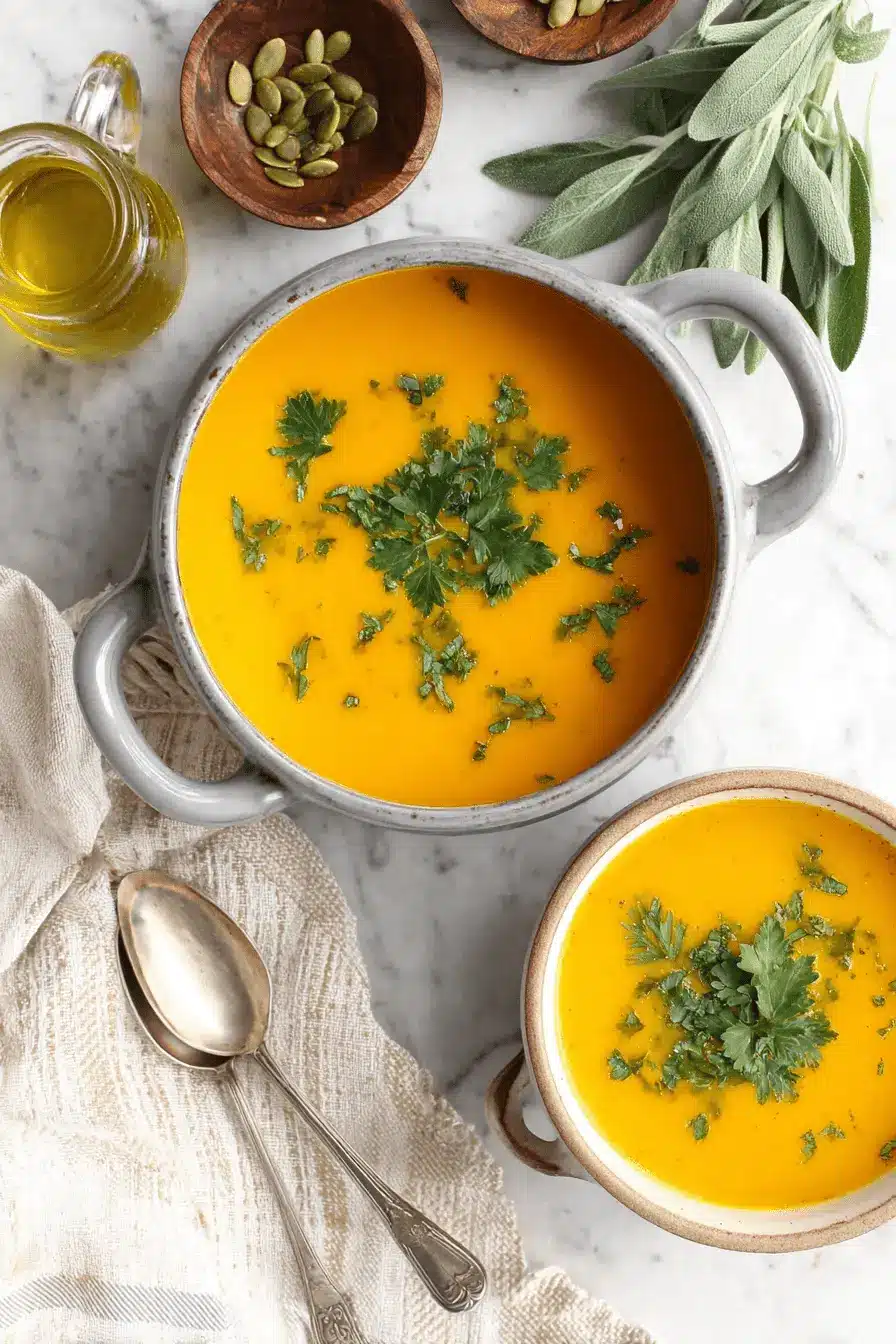
Butternut Squash Soup
Ingredients
Equipment
Method
- Preheat the oven to 425 degrees Fahrenheit and line a rimmed baking sheet with parchment paper. Place the butternut squash halves on the pan, drizzle with olive oil, rub it over, and sprinkle with salt and pepper.
- Turn the squash face down and roast until tender, about 40 to 50 minutes. Set aside to cool for approximately 10 minutes.
- Meanwhile, warm 1 tablespoon olive oil in a large soup pot over medium heat. Add the chopped shallot and 1 teaspoon salt, cooking until softened and golden on the edges (3 to 4 minutes).
- Add the garlic and cook for about 1 minute until fragrant, stirring frequently. Transfer the contents to your stand blender.
- Scoop the butternut squash flesh into your blender, discarding the skin. Add the maple syrup, nutmeg, a few twists of black pepper, and 3 cups of vegetable broth.
- Securely fasten the lid and blend on high until the soup is ultra creamy and warmed through, being careful to avoid hot steam escaping.
- If desired, stir in the remaining cup of broth to thin the soup. Add 1 to 2 tablespoons butter (or olive oil), blend well, and taste to adjust seasoning with more salt and pepper.
- Serve the soup piping hot in serving bowls, warming it over medium heat in the pot if necessary. Top individual bowls with some extra black pepper.