

When the weather starts to cool down, there’s nothing I crave more than a warm, comforting bowl of soup. If you’ve ever felt intimidated by the idea of making soup from scratch, I’m here to tell you that this roasted butternut squash soup is the perfect place to start. It’s incredibly simple, uses just a handful of ingredients, and the flavor is so rich and cozy it feels like a warm hug in a bowl.
This is the recipe I turn to on busy weeknights when I need something nourishing without a lot of fuss. Roasting the squash first is the secret; it brings out a deep, sweet, caramelized flavor that you just can’t get from boiling. Trust me, you can absolutely make a silky-smooth, restaurant-quality soup right in your own kitchen, and I’ll walk you through every step.
Why You’ll Love This Butternut Squash Soup
I know you’re busy, so I focus on recipes that deliver big on comfort without demanding too much of your time. This soup is a perfect example of that, and you can explore even more comforting butternut squash soup recipes on the site.
- Effortless to Make: The oven does most of the work! Once you roast the squash, the rest comes together in minutes, making it a perfect low-stress meal.
- Deep, Rich Flavor: Roasting the squash until it’s tender and slightly caramelized creates a sweet, nutty flavor that is simply irresistible. It tastes complex, but the process couldn’t be easier.
- Incredibly Creamy (Without a Ton of Cream): This soup gets its velvety texture from proper blending, not from heavy cream. A little touch of butter at the end adds richness, but the squash itself is the star.
- Perfect for Meal Prep: This soup tastes even better the next day! It’s a wonderful recipe to make on a Sunday to enjoy for easy lunches or dinners throughout the week.
Key Flavors & Ingredients
The magic of this soup is in its simplicity. By roasting the butternut squash, we transform its natural starches into sugars, creating a deep, sweet, and nutty base flavor. The shallots and garlic provide a savory aromatic foundation, while a touch of maple syrup enhances the squash’s sweetness. A tiny pinch of nutmeg adds that classic warmth that makes the whole bowl feel extra cozy.
Dietary Adaptability for Everyone
One of the best things about this recipe is how easy it is to adapt. To make it vegan and dairy-free, simply swap the butter for a drizzle of olive oil or your favorite plant-based butter. The recipe is already naturally vegetarian (just be sure to use vegetable broth) and gluten-free, so it’s a wonderful dish to serve when you have guests with different dietary needs.
Make-Ahead & Freezing Tips
This soup is a lifesaver for busy schedules. You can make a big batch over the weekend and store it in the refrigerator for up to four days for quick meals. It also freezes beautifully. Just let the soup cool completely before transferring it to freezer-safe containers. It will keep for up to three months, ready for you whenever you need a quick, comforting dinner.
Ingredients You’ll Need for the Best Butternut Squash Soup
Here’s the simple list of ingredients you’ll need to create this wonderfully comforting soup. You might even have most of them in your pantry already!
- 1 large butternut squash (about 3 pounds), halved vertically* and seeds removed
- 1 tablespoon olive oil, plus more for drizzling
- ½ cup chopped shallot (about 1 large shallot bulb)
- 1 teaspoon salt
- 4 garlic cloves, pressed or minced
- 1 teaspoon maple syrup
- ⅓ teaspoon ground nutmeg
- Freshly ground black pepper, to taste
- 3 to 4 cups (24 to 32 ounces) vegetable broth, as needed
- 1 to 2 tablespoons butter, to taste
Tips for Choosing the Best Butternut Squash
Picking a good butternut squash is the first step to a delicious soup. Look for one that feels heavy for its size, which indicates it has plenty of moisture and flesh. The skin should be a solid, deep beige color without any green spots or major blemishes. A firm, intact stem is also a good sign of freshness.
Ingredient Substitutions for Butternut Squash Soup
Don’t worry if you don’t have every single ingredient on hand. This recipe is very forgiving!
| Ingredient | Substitution Suggestion |
|---|---|
| Butternut Squash | Acorn squash or kabocha squash work well. Even sweet potatoes! |
| Shallot | A small yellow or white onion can be used instead. |
| Maple Syrup | Honey or a pinch of brown sugar will also enhance the sweetness. |
| Vegetable Broth | Chicken broth can be used if you are not vegetarian. |
| Nutmeg | A pinch of cinnamon can provide a similar warm spice note. |
The great thing about this recipe is its flexibility, allowing you to swap out butternut squash for a creamy sweet potato soup or even acorn squash for a similar comforting taste.
Step-by-Step Instructions to Make Your Butternut Squash Soup
Just follow these simple steps, and you’ll have a perfect bowl of soup in no time.
- Preheat the oven to 425 degrees Fahrenheit and line a rimmed baking sheet with parchment paper. Place the butternut squash on the pan and drizzle each half with just enough olive oil to lightly coat the squash on the inside (about ½ teaspoon each). Rub the oil over the inside of the squash and sprinkle it with salt and pepper.
- Turn the squash face down and roast until it is tender and completely cooked through, about 40 to 50 minutes (don’t worry if the skin or flesh browns—that’s good for flavor). Set the squash aside until it’s cool enough to handle, about 10 minutes.
- Meanwhile, in a large soup pot, warm 1 tablespoon olive oil over medium heat until shimmering (if your blender has a soup preset, use a medium skillet to minimize dishes.) Add the chopped shallot and 1 teaspoon salt. Cook, stirring often, until the shallot has softened and is starting to turn golden on the edges, about 3 to 4 minutes. Add the garlic and cook until fragrant, about 1 minute, stirring frequently. Transfer the contents to your stand blender (see notes on how to use an immersion blender instead).
- Use a large spoon to scoop the butternut squash flesh into your blender. Discard the tough skin. Add the maple syrup, nutmeg and a few twists of freshly ground black pepper to the blender. Pour in 3 cups vegetable broth, being careful not to fill the container past the maximum fill line (you can work in batches if necessary, and stir in any remaining broth later).
- Securely fasten the lid. Blend on high (or select the soup preset, if available), being careful to avoid hot steam escaping from the lid. Stop once your soup is ultra creamy and warmed through.
- If you would like to thin out your soup a bit more, stir in the remaining cup of broth. Add 1 to 2 tablespoons butter or olive oil, to taste, and blend well. Taste and stir in more salt and pepper, if necessary.
- If your soup is piping hot from the blending process, you can pour it into serving bowls. If not, pour it back into your soup pot and warm the soup over medium heat, stirring often, until it’s nice and steamy. I like to top individual bowls with some extra black pepper.
How to Prepare Butternut Squash Safely and Easily
I know that tackling a whole butternut squash can seem daunting, but with the right technique, it’s totally manageable. Don’t rush, and use a sharp, sturdy knife.
Peeling Your Butternut Squash
First, make your squash stable. I like to trim off the top stem and the bottom end to create two flat surfaces. Stand the squash upright on your cutting board. Using a sharp vegetable peeler or a chef’s knife, carefully peel the skin off in long strips from top to bottom.
(A process photo here would be great, showing the squash standing upright while peeling.)
Halving and Deseeding
Once peeled, lay the squash on its side. Carefully cut it in half lengthwise, from the stem end to the base. You’ll find a hollow part at the bottom filled with seeds. Use a regular spoon to scoop out all the seeds and stringy bits.
(A helpful photo here would show the halved squash and a spoon scooping out the seeds.)
Cubing for Roasting
For this recipe, you don’t need to cube it, as you’re roasting the halves. However, if a recipe calls for cubed squash, simply place each half cut-side down and slice it into uniform pieces. This ensures everything cooks evenly.
Roasting vs. Boiling: Maximizing Flavor in Your Butternut Squash Soup
You might be tempted to boil the squash to save time, but I highly recommend roasting it. Roasting allows the natural sugars in the squash to caramelize, which creates a much deeper, sweeter, and more complex flavor. Boiling simply cooks the squash, resulting in a milder, more one-dimensional taste. That browning you see on the roasted squash is where all the best flavor is!
Achieving the Perfect Creamy Butternut Squash Soup Texture
That silky-smooth texture is what makes this soup feel so luxurious. Here’s how to get it right, whether you’re using a stand blender or an immersion blender.
Using a Stand Blender
A high-powered stand blender is my go-to for the absolute creamiest soup. The key is to be careful with hot liquids. Never fill the blender more than halfway. Remove the small cap from the lid and cover the opening with a folded kitchen towel. This allows steam to escape safely. Start on a low speed and gradually increase to high until the soup is perfectly smooth.
Using an Immersion Blender
An immersion (or stick) blender is great because you can blend directly in the soup pot, which means fewer dishes! To avoid splashes, make sure the head of the blender is fully submerged before you turn it on. I find it helps to tilt the pot slightly, which allows the soup to circulate better and ensures you get every last bit blended smoothly.
Troubleshooting for Silky Smoothness
If your soup isn’t as smooth as you’d like, it probably just needs a little more blending time. If it still has some texture, you can pass it through a fine-mesh sieve for a truly velvety finish. If your soup is too thick, simply stir in more broth until it reaches your desired consistency.
Creative Topping Bar Ideas for Butternut Squash Soup
Toppings are a fantastic way to add texture and extra flavor. I love setting out a few bowls so everyone can customize their own soup.
- Crispy Sage Leaves: Fry a few sage leaves in butter until crisp. They add an incredible savory, earthy crunch.
- Roasted Pumpkin Seeds (Pepitas): A classic for a reason! They provide a great nutty flavor and satisfying crunch.
- Spiced Croutons: Garlic or herb croutons are perfect for soaking up the creamy soup.
- A Swirl of Cream or Yogurt: A drizzle of heavy cream, coconut milk, or plain yogurt adds richness and a beautiful visual contrast.
- A Drizzle of Chili Oil: For those who like a little heat, chili oil adds a wonderful spicy kick.
Serving Suggestions & Perfect Pairings for Butternut Squash Soup
This soup is hearty enough to be a meal on its own, but it also pairs beautifully with other dishes. I love serving it with a thick slice of crusty bread for dipping. A simple grilled cheese sandwich is another classic companion, making for an ultimate comfort food duo. For something lighter, a crisp green salad with a bright vinaigrette provides a refreshing contrast to the rich, creamy soup.
Flavor Variations to Customize Your Butternut Squash Soup
Once you master the basic recipe, it’s fun to experiment with other flavors, including similarly delicious roasted pumpkin soup recipes. Here are a few of my favorite variations.
| Flavor Variation | How to Make It |
|---|---|
| Thai-Inspired Curry | Add 1-2 tablespoons of red curry paste with the garlic. Use coconut milk instead of broth for extra creaminess, and finish with a squeeze of fresh lime juice. |
| Spiced Apple | Add one peeled and cored apple (like a Granny Smith) to the baking sheet to roast alongside the squash. Blend it right into the soup for a touch of tartness. |
| Smoky & Spicy | Add ½ teaspoon of smoked paprika and a pinch of cayenne pepper along with the nutmeg for a smoky, warming kick. |
Troubleshooting Your Butternut Squash Soup: Common Issues & Fixes
Even the simplest recipes can have a hiccup now and then. Don’t worry, most issues are very easy to fix!
My Soup is Bland!
This is usually a seasoning issue. Don’t be shy with the salt and pepper! Taste the soup after blending and add more as needed. A tiny squeeze of lemon juice or a splash of apple cider vinegar at the very end can also brighten up all the flavors without making it taste sour.
My Soup is Too Thin/Thick!
If your soup is too thick, simply stir in more vegetable broth until it’s the consistency you like. If it’s too thin, you can let it simmer gently on the stovetop for 10-15 minutes to allow some of the liquid to evaporate and thicken it up.
My Soup is Gritty/Not Smooth!
This typically means it needs more blending time. Let the blender run for another minute or two. If you’re using an immersion blender, be patient and keep moving it around the pot. If it’s still not perfectly smooth, you can pour it through a fine-mesh strainer for that final bit of silky perfection.
Storage & Freezing Tips for Butternut Squash Soup
This soup is fantastic for leftovers. Store it in an airtight container in the refrigerator for up to 4 days. To freeze, let the soup cool completely, then pour it into freezer-safe bags or containers, leaving a little room at the top for expansion. It will keep well in the freezer for about 3 months. To reheat, thaw it in the fridge overnight and then gently warm it on the stovetop.
Essential Equipment for Your Butternut Squash Soup
You don’t need any fancy gadgets to make this soup. A few basic kitchen tools will make the process smooth and easy.
- A Good Chef’s Knife: A sharp, heavy knife is essential for safely cutting the butternut squash.
- A Sturdy Cutting Board: You need a stable surface that won’t slip while you’re cutting.
- A Rimmed Baking Sheet: This will catch any juices while the squash roasts.
- A Large Soup Pot: For cooking the aromatics and warming the final soup.
- A Blender: Either a stand blender (especially a high-powered one) or an immersion blender will work to get that creamy texture.
Frequently Asked Questions about Butternut Squash Soup
Here are answers to a few questions I get asked often about making this soup.
Can I use frozen butternut squash in this recipe?
Yes, you absolutely can! It’s a great time-saver. I recommend roasting the frozen cubes directly on the baking sheet. They may release more water, but they will still caramelize nicely. You might need to adjust the amount of broth you add later.
How to roast butternut squash without oil?
If you prefer to avoid oil, you can place the squash halves face down on the parchment paper without it. The natural moisture in the squash will help it steam and soften. You won’t get the same level of browning, but it will still be delicious.
Are there any common mistakes to avoid when making butternut squash soup?
The three most common mistakes are under-roasting the squash (which leads to less flavor), under-seasoning the soup (be sure to taste and adjust!), and not blending it long enough to get that super creamy texture.
Can I make this soup vegan or dairy-free?
Yes! It’s very easy. Just use olive oil or a vegan butter substitute instead of the dairy butter at the end. The rest of the recipe is already naturally vegan and dairy-free.
Conclusion
I truly hope you love this roasted butternut squash soup as much as I do. It’s proof that simple, comforting food doesn’t have to be complicated or time-consuming. Making a warm, nourishing meal for yourself or your family is one of the best forms of self-care, and this recipe is a perfect way to do just that.
Give it a try, and please let me know how it turns out! I love hearing from you. Leave a comment below, or if you share a picture on social media, be sure to tag AishaRecipes. Happy cooking
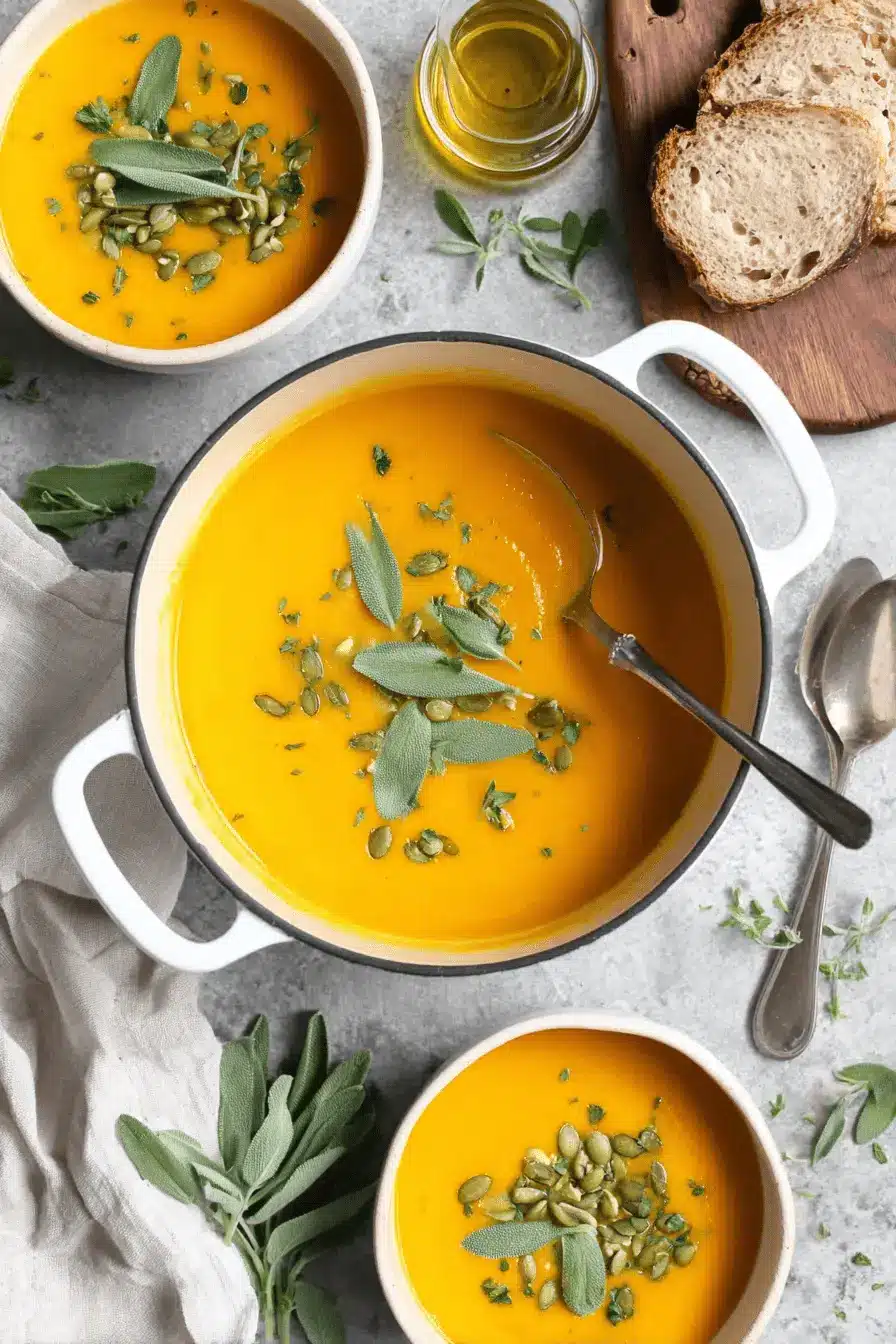
Butternut Squash Soup
Ingredients
Equipment
Method
- Preheat oven to 425°F and line a baking sheet with parchment paper. Drizzle squash halves with olive oil, rub, and season with salt and pepper.
- Roast squash face down for 40-50 minutes until tender, then let cool for 10 minutes.
- Meanwhile, in a soup pot, warm 1 tablespoon olive oil. Cook shallot and 1 teaspoon salt until softened (3-4 min), then add garlic for 1 minute until fragrant. Transfer contents to a blender.
- Scoop roasted squash flesh into the blender with maple syrup, nutmeg, black pepper, and 3 cups vegetable broth.
- Secure the lid and blend on high until the soup is ultra-creamy and warmed through.
- Stir in remaining broth to thin, if desired. Add 1-2 tablespoons butter, blend well, then taste and adjust seasoning.
- Serve the hot soup, or reheat in the pot until steamy. Garnish individual bowls with extra black pepper.