
Why You’ll Love This Homemade Plum Jam
When I say this is a foolproof recipe, I truly mean it. It’s designed for busy people who still want the comfort and flavor of homemade goodness. Here’s why I know you’ll fall in love with it:
- No Fuss, No Extra Ingredients: You can forget about peeling plums or trying to figure out how much pectin to add. This recipe uses just two main ingredients and relies on the natural pectin in the plums to create the perfect set.
- Rich, Natural Plum Flavor: Without pectin or peels getting in the way, the deep, vibrant flavor of the plums is the star of the show. It’s sweet, a little tart, and tastes exactly like summer should.
- Perfect for Beginners: If you’ve never canned before, this is the perfect recipe to start with. The steps are simple and repetitive, building your confidence with each cycle. You’ve got this!
- Incredible for Gifting: A beautiful jar of homemade jam is one of the most thoughtful gifts you can give. It’s perfect for holidays, housewarmings, or just to brighten someone’s day.
What is Plum Jam & Why Make It Homemade?
Plum jam is a sweet spread made by cooking down plums with sugar until they thicken into a beautiful, gel-like consistency. It’s a bit smoother than preserves, which often contain larger pieces of fruit. While store-bought jam is convenient, there’s a special kind of magic in making it yourself.
When you make jam at home, you control everything. You choose the fruit, you decide on the sweetness, and you know exactly what’s going into each jar, with no preservatives or artificial flavors. The taste is simply superior; it’s brighter, fresher, and has a depth of flavor that you just can’t find on a supermarket shelf. For me, it’s a small, joyful act that brings so much warmth to my kitchen.
The Science Behind No-Pectin Jam
You might be wondering how jam can set without adding a box of pectin. It’s actually a little bit of kitchen science, and it’s simpler than it sounds! Plums are naturally rich in a substance called pectin, which is the key to making jam gel. They also have the perfect amount of natural acid.
The process of boiling and cooling the fruit mixture multiple times does two important things. First, boiling helps release the pectin from the plum skins and flesh. Second, it evaporates excess water, which concentrates both the sugar and the natural pectin. As the mixture cools, the long pectin molecules link together to form a network that traps the liquid, creating that perfect, jammy set. It’s a patient process, but it’s what gives this jam its incredible texture and flavor.
Ingredients for Perfect Plum Jam
This recipe is beautifully simple. You only need two main ingredients to create something truly special.
- 12 lbs sweet ripe plums (rinsed)
- 4 1/2 cups granulated sugar
- 8 pint-sized jars with lids.
Instructions
Follow these simple, repetitive steps, and you’ll have perfect jam. The key is patience between the cooking cycles!
- Place pitted and halved plums into the mixing bowl & drizzle with 4 1/2 cups of sugar. Stir plums until all coated with sugar. Let them sit for 1 hour then transfer the mixture into a large cooking pot.
- Bring it to a boil uncovered, stirring occasionally. Boil until the mixture is bubbling uniformly. Simmer for 10 minutes then turn off the heat. Cool to room temperature.
- Repeat step 2 a total of FOUR times. Last time bringing it to a boil at the lower temperature, stirring frequently to prevent scorching.
Choosing the Best Plums for Plum Jam
While you can use almost any plum, some varieties are better suited for jam-making because of their natural sugar and pectin levels. Firmer, slightly tarter plums often work best. Here are a few of my favorites:
| Plum Variety | Sweetness | Tartness | Natural Pectin | Best For… |
|---|---|---|---|---|
| Damson | Low | High | Very High | A classic, deeply flavored, tart jam with a firm set. |
| Santa Rosa | Medium | Medium | Medium | A balanced, sweet-tart jam with a beautiful red color. |
| Italian Prune | High | Low | High | A very sweet, rich, and thick jam. Great for beginners. |
| Black Amber | Medium | Low | Medium | A mild, sweet jam with a gorgeous dark purple hue. |
Don’t worry too much about finding the “perfect” plum. The best ones are often the ones you can get fresh from a local market or even your own backyard!
Sweetener Options & Adjustments
The recipe calls for granulated sugar, which provides sweetness and helps the jam set and preserve properly. If your plums are very sweet, like Italian Prune plums, you might want to reduce the sugar slightly, maybe by a half cup. If they’re extra tart, like Damsons, you can stick to the recipe as is.
If you’re looking for alternatives, you can experiment with honey or maple syrup, but keep in mind this will change the flavor and possibly the texture. These sweeteners can sometimes result in a softer set. I recommend starting with the classic recipe first to get a feel for the process before making substitutions.
Optional Flavor Boosters for Your Plum Jam
Once you’ve mastered the basic recipe, you can have fun adding extra layers of flavor! These are a few of my favorite additions. I recommend adding them during the final boiling cycle so their flavors stay bright and fresh.
- Warm Spices: Add one or two cinnamon sticks or a star anise pod for a warm, cozy flavor.
- Fresh Ginger: A teaspoon of finely grated fresh ginger can add a lovely, spicy kick.
- Vanilla Bean: Scrape the seeds from half a vanilla bean into the jam for a rich, aromatic sweetness.
- Cardamom: A quarter teaspoon of ground cardamom gives the jam an elegant, slightly floral note.
Essential Tools for Homemade Plum Jam & Canning
You don’t need a lot of fancy equipment to make this jam, but a few key tools will make the process much smoother and safer, especially if you plan to can it for long-term storage.
- A Large, Heavy-Bottomed Pot: This is essential to prevent the jam from scorching on the bottom.
- Canning Jars and Lids: Make sure you have clean, pint-sized jars with new, unused lids for a proper seal.
- Water Bath Canner or a Deep Stockpot: This is for processing the jars to make them shelf-stable.
- Jar Lifter: This tool is a must-have for safely moving hot jars in and out of boiling water.
- Canning Funnel: A wide-mouthed funnel helps you fill the jars without making a mess on the rims.
- Ladle and a Long-Handled Spoon: For stirring and transferring the hot jam.
Preparing Your Plums for Jam
One of the best things about this recipe is that you don’t have to peel the plums! The skins contain a lot of natural pectin, which is exactly what we need to help the jam set. Plus, they contribute to the beautiful, deep color.
All you need to do is wash the plums well, then slice them in half and remove the pits. For “freestone” plums like Italian Prunes, the pit will pop right out. For “clingstone” varieties, you’ll have to cut around the pit. Don’t worry about chopping the plums into small pieces; they will break down completely during the cooking process.
The Simmering Cycles for No-Pectin Jam
The magic of this recipe happens during the repeated boiling and cooling cycles. It’s a patient process, but watching the transformation is so rewarding.
- After the First Boil: The mixture will be bright red, thin, and watery. You’ll see large, foamy bubbles. As it cools, it will still be very liquid.
- After the Second Boil: The color will start to deepen, and the mixture will have thickened slightly. The bubbles will be a little smaller and more uniform.
- After the Third Boil: Now you’ll see a noticeable change. The color will be a rich, jewel-toned red or purple. The jam will have thickened considerably, and the bubbles will be thick and slow to pop.
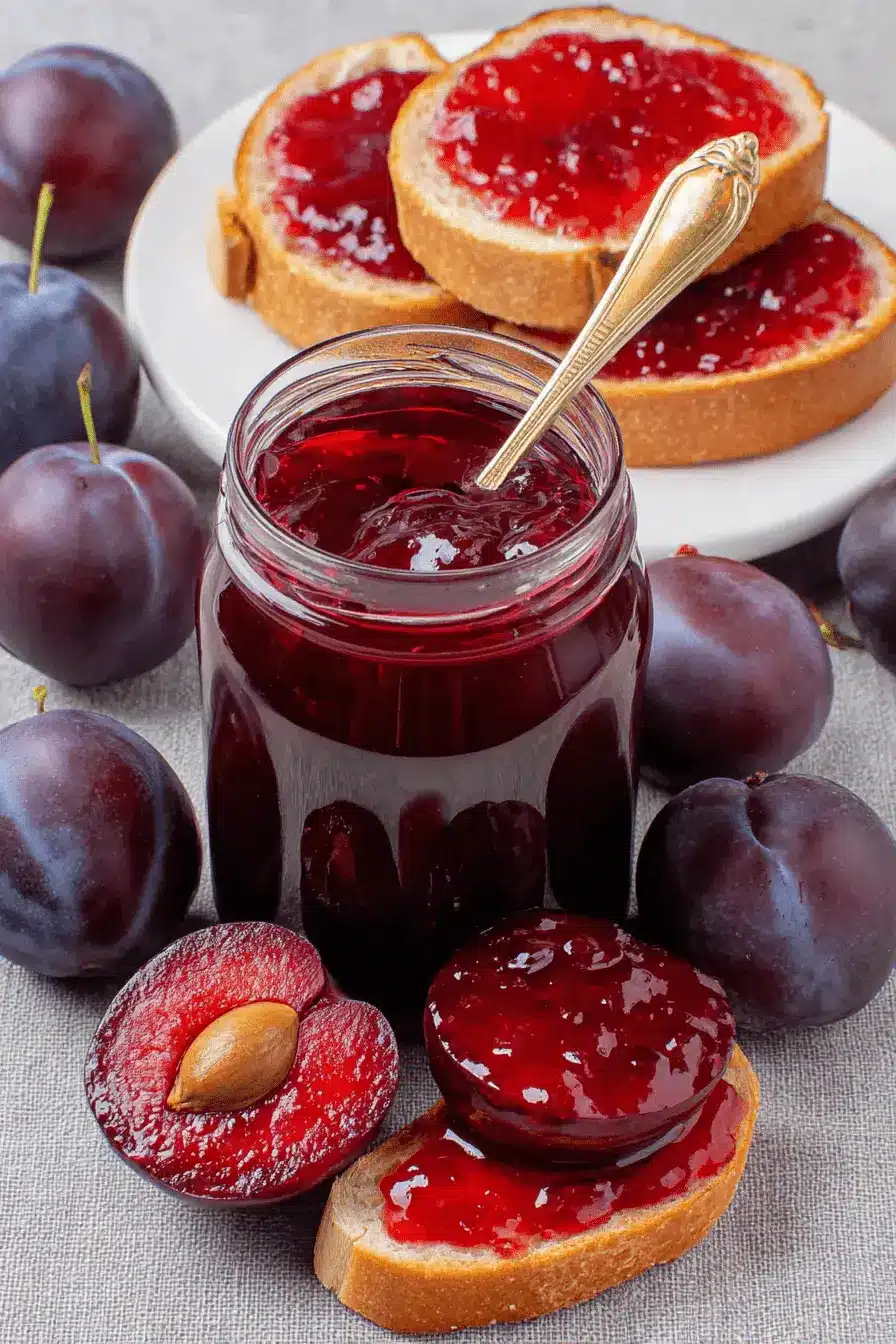
- During the Final Boil: This is when it all comes together. The jam will be very thick, and it will “sheet” off a spoon instead of dripping. The color will be dark and glossy. This is when you know it’s ready.
How to Test for the Perfect Plum Jam Set
Knowing exactly when your jam is ready to set is the key to success. My favorite foolproof method is the “cold plate test.” Before you start your final boil, place a few small plates in your freezer.
To test the jam, turn off the heat, spoon a small amount onto one of the cold plates, and pop it back in the freezer for one to two minutes. Then, run your finger through the jam on the plate. If it wrinkles and holds its shape, it’s ready! If it’s still runny, just continue boiling for another 5 minutes and test again. This method has never failed me.
Water Bath Canning: Sterilizing Jars & Processing Your Plum Jam
Canning might sound intimidating, but it’s a straightforward process that ensures your beautiful jam can be safely stored in the pantry for up to a year. Safety is key, so follow these steps carefully. For extra peace of mind, you can download my printable Canning Safety Checklist PDF to follow along!
Step-by-Step Jar Sterilization
- Wash your jars, lids, and rings in hot, soapy water and rinse them well.
- Place the jars upright in your water bath canner or a large stockpot.
- Fill the pot with water until the jars are fully submerged, then bring it to a rolling boil. Boil for at least 10 minutes.
- Turn off the heat but leave the jars in the hot water to keep them warm until you’re ready to fill them. Place the lids in a small saucepan of hot (not boiling) water to soften the seals.
Filling & Sealing Your Jars
- Carefully remove one hot, sterilized jar from the water using your jar lifter.
- Place your canning funnel in the jar and ladle the hot jam into it, leaving about 1/4 inch of headspace (the space between the jam and the rim).
- Wipe the rim of the jar with a clean, damp cloth. This is a crucial step to ensure a good seal.
- Center the lid on the jar, then screw on the ring until it’s “fingertip tight.” Don’t overtighten it.
Water Bath Processing Guide
- Using the jar lifter, carefully place the filled jars back into the canner. Make sure they are covered by at least one inch of water.
- Bring the water to a full rolling boil, then start your timer. Process the jars for 10 minutes.
- After 10 minutes, turn off the heat, remove the canner lid, and let the jars sit in the hot water for another 5 minutes. This helps prevent siphoning.
Checking for a Secure Seal
- Carefully lift the jars out of the canner and place them on a towel-lined countertop. Leave them undisturbed for 12 to 24 hours.
- During this time, you should hear a satisfying “pop” sound as each jar seals.
- To check the seal, press down on the center of the lid. If it doesn’t move or make a clicking sound, the jar is sealed!
Troubleshooting Common Plum Jam Problems
Even with a simple recipe, things can sometimes go sideways. Don’t worry! Most problems have an easy fix.
- My jam didn’t set: This is the most common issue. It usually just means the jam wasn’t cooked long enough to reach the gel point. You can pour it back into the pot and boil it again, testing every 5-10 minutes until it passes the cold plate test.
- My jam is scorched: This happens when the heat is too high or the jam isn’t stirred frequently enough, especially during the final boil. Unfortunately, you can’t fix a scorched taste, so it’s best to stir constantly as it thickens.
- There’s a lot of foam on top: Foam is perfectly normal and harmless, but it can make the jam look cloudy. You can easily skim it off with a spoon just before ladling it into jars.
Storage, Shelf Life & Safety
Proper storage is essential to enjoy your jam safely.
Proper Storage for Canned & Refrigerated Plum Jam
Properly sealed and processed jars can be stored in a cool, dark place like a pantry for up to one year. Once a jar is opened, it must be stored in the refrigerator and is best enjoyed within a month.
Recognizing Signs of Spoilage
Before opening a jar, always inspect it. If the lid is bulging, leaking, or if you see any signs of mold, discard it immediately. When you open it, there should be a “whoosh” of air. If the contents have an off smell or appearance, do not taste it; throw it away.
What to Do If Your Jars Don’t Seal
If a jar doesn’t seal after 24 hours, don’t panic. You have two options: you can either re-process it with a new lid or simply place that jar in the refrigerator and use it first.
Is It Safe to Freeze Plum Jam?
Yes! Freezing is a great alternative to canning. Simply ladle the cooled jam into freezer-safe containers or jars (leave about an inch of headspace for expansion), seal them tightly, and freeze for up to a year. Thaw it in the refrigerator before using.
Creative Ways to Enjoy Your Homemade Plum Jam
This jam is so versatile! While it’s perfect on toast or scones, here are a few other ways I love to use it:
- Swirl it into plain yogurt or oatmeal.
- Use it as a glaze for roasted chicken or pork chops.
- Spoon it over vanilla ice cream or cheesecake.
- Use it as a filling for thumbprint cookies or layer cakes.
- Mix it with a little balsamic vinegar to create a delicious salad dressing.
Frequently Asked Questions About Plum Jam
- Can I use frozen plums for jam? How does this affect the recipe? Yes, you can absolutely use frozen plums! Just thaw them completely before you start and include any juice that’s released. You may need to cook the jam a little longer to evaporate the extra moisture, but the process is the same.
- What is the difference between plum jam with and without pectin? Jam made with added pectin tends to set faster and may require less cooking time. However, I find that no-pectin jam, like this recipe, has a much purer, more intense fruit flavor and a softer, more luxurious texture.
- Can I make a small batch of plum jam? Definitely. You can easily halve this recipe. Just be aware that a smaller batch will cook much faster, so keep a close eye on it and start testing for a set earlier than you would for a large batch.
- How long can plum jam safely sit during the multi-day cooking process? It’s perfectly safe to let the jam cool to room temperature and sit on the counter, covered, for up to 12-24 hours between boiling cycles. The high sugar content acts as a preservative.
- How do I quickly and efficiently pit plums? The easiest way is to slice the plum in half around the pit, from top to bottom. Then, twist the two halves in opposite directions. For most plums, one half will come away clean, and you can easily scoop the pit out of the other half with your thumb or a small spoon.
- What if my plum jam doesn’t set? Don’t throw it out! If it’s still runny after canning, you can either embrace it as a delicious plum syrup for pancakes and ice cream, or you can empty the jars back into a pot and re-boil it until it passes the cold plate test, then re-process it in clean, sterilized jars.
- How long does homemade plum jam last? Properly canned and sealed jam will last for up to a year in the pantry. Once opened, it should be kept in the refrigerator and used within a month.
- Do I have to peel plums for jam? No, and I highly recommend you don’t! The peels contain natural pectin that helps the jam set, and they contribute to the beautiful, rich color. They cook down so completely that you won’t even notice them in the final product.
Conclusion
There is such a deep sense of satisfaction that comes from lining your pantry shelves with jars of beautiful, homemade jam. It’s a small victory that feels so good, a reminder that you can create wonderful, comforting food for yourself and your family, even on the busiest of days.
I hope this recipe gives you the confidence to dive into the world of preserving. It truly is one of the most rewarding kitchen projects. If you try it, please let me know how it turns out! Leave a comment below, rate the recipe, or share a photo. I love hearing about your kitchen adventures
plum jam
Ingredients
Equipment
Method
- Place pitted and halved plums in a mixing bowl, drizzle with 4 1/2 cups of sugar, and stir to coat. Let the mixture sit for 1 hour, then transfer it to a large cooking pot.
- Bring the plum mixture to a boil uncovered, stirring occasionally, until it bubbles uniformly. Simmer for 10 minutes, then turn off the heat and cool to room temperature.
- Repeat the boiling, simmering, and cooling process a total of three more times. During the final boil, maintain a lower temperature and stir frequently to prevent scorching.