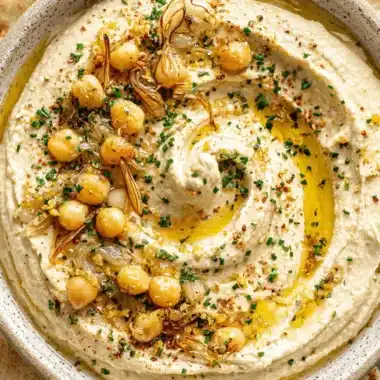
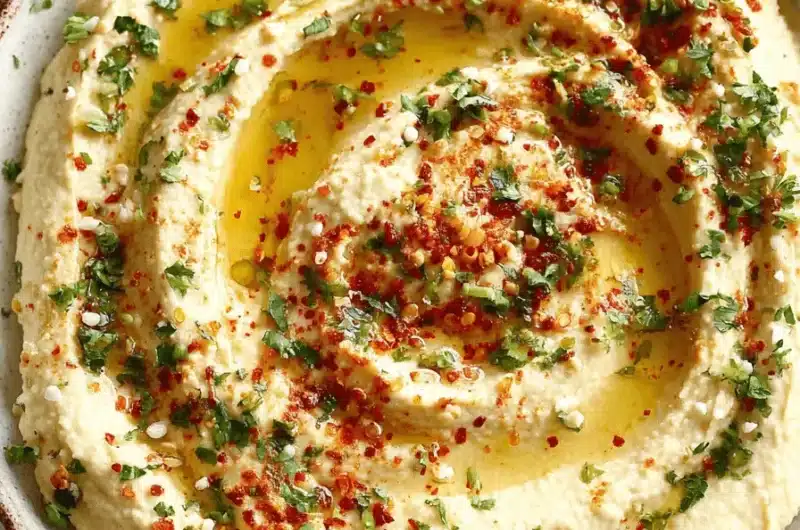
I think I’ve found it: the only hummus recipe you’ll ever need. If you’ve ever felt underwhelmed by store-bought tubs or frustrated by gritty homemade attempts, I promise this one is different. It’s ultra-creamy, packed with authentic flavor, and surprisingly simple to whip up. This isn’t just a snack; it’s a small victory in the kitchen, bringing a touch of comforting, delicious magic to your table without any stress.
Why You’ll Love This Ultra-Creamy Hummus Recipe
- Unbelievably Smooth Texture: I’ll share a simple trick using baking soda that makes the chickpeas incredibly soft, resulting in the silkiest hummus you’ve ever had, no tedious peeling required.
- Perfectly Balanced Flavor: This recipe nails the classic combination of tangy lemon, rich tahini, and just the right amount of garlic. It tastes like it came from a specialty restaurant.
- Quick and Versatile: From a last-minute appetizer with pita bread to a flavorful spread on a wrap for lunch, this hummus is a lifesaver for busy weeknights.
- Better (and Cheaper) Than Store-Bought: Making it yourself means you control the ingredients, avoid preservatives, and get a much fresher, more vibrant taste for a fraction of the cost. Beyond taste, homemade hummus offers impressive nutritional value and health benefits, being particularly good for your heart and digestive system.
What You’ll Need: Essential Equipment for Making Hummus
To get that signature creamy texture, the right tool is essential. Your two main options are a food processor or a high-powered blender, and each has its pros and cons.
A good food processor is my go-to for hummus. Look for one that’s at least 700 watts with a decent-sized bowl (8-cup capacity or larger). A food processor’s wide base and S-shaped blade are perfect for breaking down the chickpeas and creating a smooth, even paste without overheating the mixture. You might have to scrape the sides down a few times, but the final result is consistently fantastic.
A high-powered blender (like a Vitamix or Blendtec) can also work and might even produce a slightly smoother, airier result. However, you may need to add a little more liquid to get the ingredients moving around the blades. The key is to use the tamper to keep everything circulating and blend on a lower speed to avoid turning your hummus into a gummy paste.
The Secret to Ultra-Creamy Hummus: A Deep Dive into the Science
Ever wonder what separates good hummus from great hummus? It comes down to a little kitchen science, and it’s easier than you think. The first secret is baking soda. Boiling the chickpeas with a little baking soda raises the pH of the water, which helps break down pectin in the chickpea skins much faster. This makes the chickpeas fall-apart tender, which is the key to a silky-smooth blend.
The second secret is ice water. It might sound strange, but it’s a game-changer. When you blend tahini with lemon juice, it can seize up and get very thick. Drizzling in ice-cold water while the processor is running helps create a beautiful emulsion. The cold temperature keeps the tahini from getting oily and whips it into a lighter, paler, and fluffier texture, almost like a savory whipped cream.
Key Ingredients for the Best Homemade Hummus
- Chickpeas: Canned chickpeas are my secret for getting this done fast. Using them with the baking soda trick gives amazing results. If you prefer to use dried chickpeas, just be sure to soak them overnight and cook them until they are completely tender and mushy before starting.
- Tahini: This is the soul of your hummus, so quality matters! Look for a tahini that is smooth, runny, and not too bitter. A good tahini should be made from just ground sesame seeds. I find that brands from the Middle East often have the best flavor and consistency.
- Lemon Juice: Please use fresh-squeezed lemon juice! The bottled kind just doesn’t have the same bright, zesty flavor that cuts through the richness of the tahini. It’s a small step that makes a huge difference.
- Garlic: To avoid a harsh, overpowering garlic bite, I let the chopped garlic sit in the lemon juice for about 10 minutes. This little trick mellows out its flavor, giving you a balanced, savory taste instead of a raw garlic punch.
- Ice Water: As I mentioned, this is non-negotiable for a fluffy texture. Make sure your water is truly ice-cold for the best results.
- Olive Oil: A drizzle of good quality extra-virgin olive oil goes into the hummus for richness and on top for serving. Its fruity flavor is the perfect finishing touch.
Ingredients
- 1 can (15 oz / 425 g) chickpeas, rinsed and drained, or 1 ½ cups (270 g) cooked chickpeas
- ½ tsp (2.5 ml) baking soda (if you’re using canned chickpeas)
- ¼ cup (60 ml) lemon juice (from 1 ½ to 2 lemons), more to taste
- 1 medium-to-large clove garlic, roughly chopped
- ½ tsp (2.5 ml) fine sea salt, to taste
- ½ cup (120 ml) tahini
- 2 to 4 tbsp (30-60 ml) ice water, more as needed
- ½ tsp (2.5 ml) ground cumin
- 1 tbsp (15 ml) extra-virgin olive oil
- Any of the following garnishes: drizzle of olive oil or zhoug sauce, sprinkle of ground sumac or paprika, chopped fresh parsley
How to Make Hummus: Step-by-Step Instructions for Flawless Results
- Place the chickpeas in a medium saucepan and add the baking soda. Cover the chickpeas by several inches of water, then bring the mixture to a boil over high heat. Continue boiling, reducing heat if necessary to prevent overflow, for about 20 minutes, or until the chickpeas look bloated, their skins are falling off, and they’re quite soft. In a fine-mesh strainer, drain the chickpeas and run cool water over them for about 30 seconds. Set aside (no need to peel the chickpeas for this recipe!).
- Meanwhile, in a food processor or high-powered blender, combine the lemon juice, garlic and salt. Process until the garlic is very finely chopped, then let the mixture rest so the garlic flavor can mellow, ideally 10 minutes or longer.
- Add the tahini to the food processor and blend until the mixture is thick and creamy, stopping to scrape down any tahini stuck to the sides and bottom of the processor as necessary.
- While running the food processor, drizzle in 2 tablespoons ice water. Scrape down the food processor, and blend until the mixture is ultra smooth, pale and creamy. (If your tahini was extra-thick to begin with, you might need to add 1 to 2 tablespoons more ice water.)
- Add the cumin and the drained, over-cooked chickpeas to the food processor. While blending, drizzle in the olive oil. Blend until the mixture is super smooth, scraping down the sides of the processor as necessary, about 2 minutes. Add more ice water by the tablespoon if necessary to achieve a super creamy texture.
- Taste, and adjust as necessary—I almost always add another ¼ teaspoon salt for more overall flavor and another tablespoon of lemon juice for extra zing.
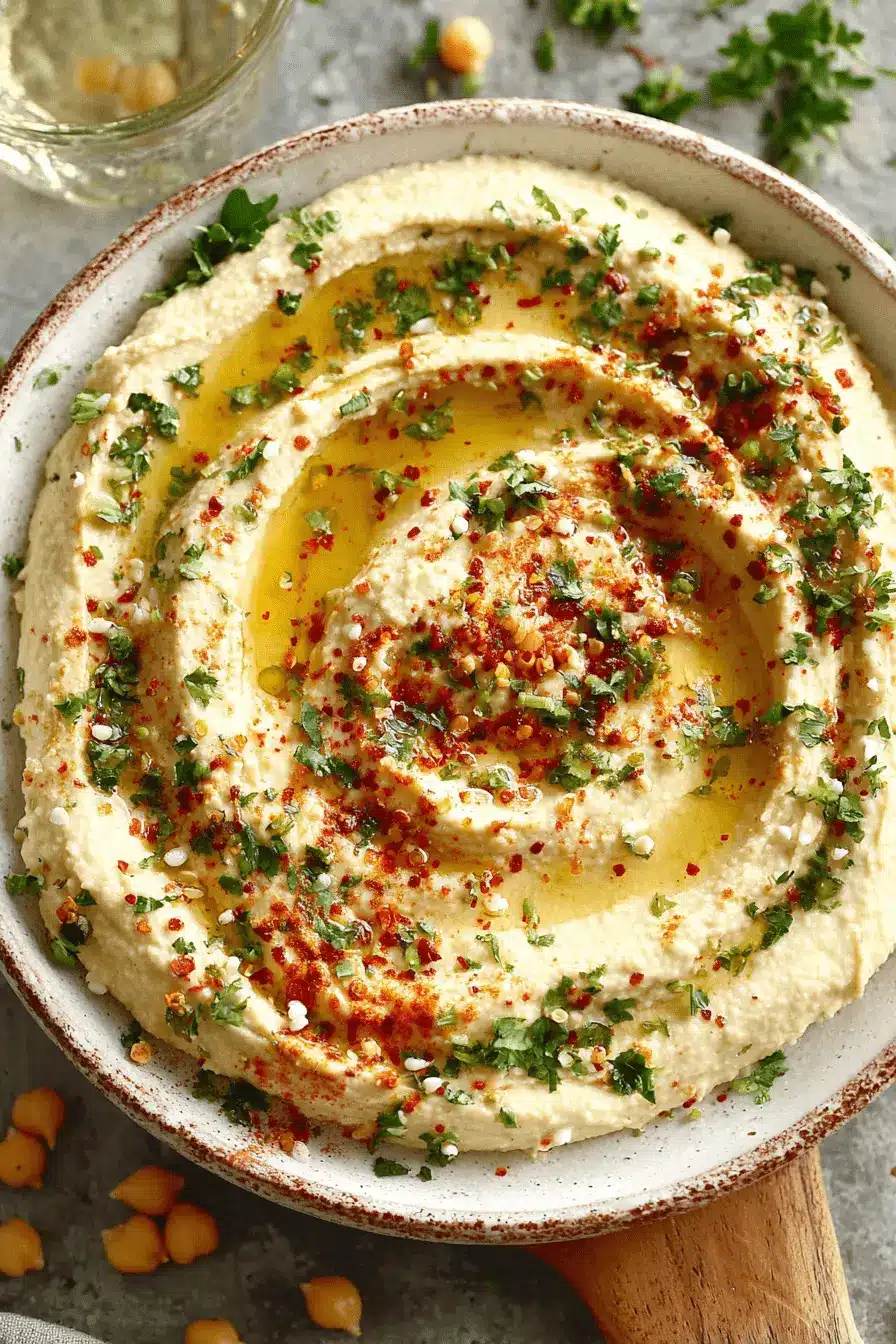
- Scrape the hummus into a serving bowl or platter, and use a spoon to create nice swooshes on top. Top with garnishes of your choice, and serve. Leftover hummus keeps well in the refrigerator, covered, for up to 1 week.
Pro Tips for Your Best Homemade Hummus
- The Chickpea Secret: Cooking Them Soft: Don’t skip the step of boiling the canned chickpeas with baking soda. It truly is the fastest way to get them perfectly soft and ready for blending into a creamy dream.
- The Magic of Ice Water: I can’t stress this enough! Adding ice water, not just cool water, is what whips the tahini and creates that light, fluffy texture. Add it slowly while the machine is running.
- Quality Tahini Matters: If your hummus has ever tasted bitter, the tahini was likely the culprit. Look for a brand that is smooth and tastes nutty, not harsh. A good tahini makes all the difference.
- Don’t Rush the Blending: Be patient and let your food processor run for a full two minutes after adding the chickpeas. This extra time is crucial for breaking down every last bit and achieving maximum creaminess.
- Mellowing Your Garlic: Letting the garlic rest in the lemon juice is a simple step that pays off big time. It tames the raw garlic flavor, ensuring it complements the other ingredients instead of overpowering them.
- Tasting and Adjusting: Your taste buds are the final judge. Always taste before you serve. It might need another pinch of salt to make the flavors pop or an extra squeeze of lemon for brightness.
Common Hummus Mistakes (And How to Fix Them!)
Don’t worry if your first batch isn’t perfect. I’ve made all these mistakes before, and they’re all fixable!
- Gritty Hummus: This usually means the chickpeas weren’t soft enough or you didn’t blend long enough. Make sure to boil them until they’re falling apart, and let that food processor run for at least two minutes.
- Too Thick or Too Thin: If it’s too thick, drizzle in more ice water, one tablespoon at a time, until it reaches your desired consistency. If you’ve accidentally made it too thin, blending in another tablespoon of tahini can help thicken it back up.
- Harsh Garlic Flavor: If you forgot to let the garlic mellow in the lemon juice, you can balance it out. Try adding a bit more tahini, lemon juice, and a pinch of salt to tone down the harshness.
- Hummus Separating: This happens when the tahini and water don’t emulsify properly. Using ice-cold water and drizzling it in slowly while the machine is running is the best way to prevent this.
- Flavorless Hummus: This is an easy fix! It almost always just needs more salt and lemon juice. Add a little of each, blend, and taste again until the flavors sing.
Creative Hummus Variations & Topping Ideas
Once you master the classic recipe, it’s so much fun to play with flavors and toppings. For example, you might try incorporating homemade sun-dried tomatoes for a tangy, umami boost in your hummus variations. Here are a few of my favorites.
| Variation / Topping | Description |
|---|---|
| Roasted Red Pepper Hummus | Blend in roasted red peppers for a sweet, smoky flavor. |
| Spicy Hummus | Add a pinch of cayenne pepper, a dash of hot sauce, or a swirl of chili oil. |
| Sun-Dried Tomato Hummus | Incorporate sun-dried tomatoes (packed in oil) for a tangy, umami boost. |
| Caramelized Onion Hummus | Fold in sweet, slow-cooked caramelized onions for depth. |
| Lemon Herb Hummus | Increase lemon juice and blend with fresh parsley, dill, or cilantro. |
| Loaded Hummus Bowl | Top with roasted vegetables (e.g., zucchini, eggplant), crumbled feta (optional), olives, and a sprinkle of sumac. |
| Warm Spiced Ground Meat | Sauté ground lamb or beef with spices like cumin, paprika, and cinnamon, then serve warm over hummus. |
| Zhoug Sauce Swirl | Drizzle a vibrant, spicy Yemeni chili sauce for a kick. |
How to Serve and Store Your Homemade Hummus
Hummus is so much more than a dip for pita bread and veggies (though that’s a classic for a reason!). I love to spread it on sandwiches and wraps instead of mayo, add a big dollop to salad bowls for a creamy dressing, perhaps alongside a vibrant cherry tomato salad, or serve it as part of a beautiful mezze platter with olives and feta.
To store leftovers, transfer the hummus to an airtight container. I like to pour a thin layer of olive oil over the top to help keep it fresh. It will last in the refrigerator for up to one week.
Frequently Asked Questions About Hummus
- What’s the best type of food processor or blender for hummus? A powerful food processor (700+ watts) is ideal because its wide bowl and S-blade create a great vortex for blending. A high-powered blender like a Vitamix also works well but may require more liquid and use of the tamper.
- Can I make this nut-free if tahini is an issue? Tahini is made from sesame seeds, not nuts, so it’s typically safe for those with nut allergies. If you have a sesame allergy, you can try substituting it with a creamy sunflower seed butter, though the flavor will be different.
- How long should I expect blending to take? Plan for at least 2-3 minutes of total blending time after all the ingredients are in the processor. Patient blending is key to a super smooth result.
- Can I make hummus ahead of time? Absolutely! Hummus is a great make-ahead dish. In fact, I think the flavors meld and taste even better the next day.
- Can I freeze homemade hummus? Yes, you can. Store it in a freezer-safe container, leaving a little room for it to expand. Drizzle a layer of olive oil on top before sealing. To thaw, let it sit in the refrigerator overnight and give it a good stir before serving.
- What are some popular regional variations of hummus? There are many! Hummus-Masabacha features whole chickpeas mixed in, while Hummus Ful is topped with a warm fava bean stew. Different regions also use different spices and garnishes, making each version unique and delicious.
Conclusion
There is something so satisfying about scooping up a spoonful of rich, creamy hummus that you made yourself. It proves that comforting, impressive food doesn’t have to be complicated or stressful. I truly hope this recipe brings a little bit of joy and confidence to your kitchen.
Now it’s your turn! I would love to hear from you. Leave a comment below with your favorite way to top hummus, or if you have any questions, just ask. And if you make this recipe, please share your beautiful results with me
Hummus Rezept
Ingredients
Equipment
Method
- Place chickpeas and baking soda in a saucepan, cover with water, and boil for about 20 minutes until the chickpeas are bloated and soft. Drain the chickpeas and rinse them under cool water, then set aside (no need to peel them).
- Meanwhile, combine lemon juice, roughly chopped garlic, and salt in a food processor or high-powered blender. Process until the garlic is very finely chopped, then let the mixture rest for at least 10 minutes to mellow the garlic flavor.
- Add the tahini to the food processor and blend until the mixture becomes thick and creamy, scraping down the sides as necessary.
- With the food processor running, slowly drizzle in 2 tablespoons of ice water. Continue blending until the mixture is ultra smooth, pale, and creamy, adding 1 to 2 tablespoons more ice water if your tahini was extra thick.
- Add the ground cumin and the drained, over-cooked chickpeas to the food processor. While blending, drizzle in the tablespoon of olive oil, then process for about 2 minutes until the mixture is super smooth, scraping down the sides as needed. Add more ice water by the tablespoon if necessary to achieve a super creamy texture.
- Taste the hummus and adjust the seasoning as necessary, adding more salt for overall flavor or lemon juice for extra zing.
- Scrape the finished hummus into a serving bowl or platter, use a spoon to create decorative swooshes on top, and add your choice of garnishes before serving.