
I’ll never forget the first time I made hummus from scratch. After years of buying those plastic tubs from the grocery store, I couldn’t believe the difference. The texture was unbelievably smooth, the flavor was bright and nutty, and it just felt so much more satisfying. If you’ve ever thought making hummus at home was complicated, I’m here to tell you it’s one of the most rewarding and simple things you can master in your kitchen.
This recipe is my foolproof guide to achieving that perfect, whipped, creamy hummus that you thought you could only get at a great restaurant. I’ve packed it with all my best tips and tricks, from the science behind the smoothness to the one topping that will make everyone ask for the recipe. I promise, once you try this, you’ll never look at store-bought hummus the same way again.
Why You’ll Love Making Homemade Hummus (And Why It’s Worth It!)
The biggest reason I love making my own hummus is the incredible taste and texture. Store-bought versions often have a gritty feel and can be loaded with preservatives that dull the flavor. When you make it yourself, you get a fresh, vibrant taste that’s miles ahead of anything you can buy. The creaminess is on another level, light and airy instead of dense and pasty.
Beyond the flavor, it’s also much more cost-effective. A small tub of premium hummus can be surprisingly expensive, but a bag of dried chickpeas costs just a few dollars and will give you several batches. You control the quality of every single ingredient, from the tahini to the olive oil, ensuring there are no hidden additives or unnecessary extras. Taking 20 minutes to whip this up feels like a small kitchen victory that pays off all week long.
The Science of Super Smooth Hummus: Unlocking Unbeatable Creaminess
Getting that signature creamy texture isn’t magic, it’s just a little bit of kitchen science! I used to struggle with gritty hummus until I learned a few key principles that changed everything. Understanding the “why” behind these steps is what will give you consistent, perfect results every time.
First, the role of baking soda is crucial. When you soak and cook the dried chickpeas with a little baking soda, it helps break down their skins. This makes the chickpeas incredibly soft and easy to blend into a perfectly smooth puree, which is the foundation of great hummus.
Next is the magic of ice water. Adding a few tablespoons of ice-cold water while the food processor is running helps create a lighter, almost whipped texture. The cold temperature reacts with the tahini, making the hummus fluffier and paler in color. It’s a simple trick that makes a huge difference.
Ingredients
- 8 ounces (227g) dried chickpeas (about 1 cup + 2 tbsp) (See Note 1)
- 1 teaspoon baking soda, divided
- A generous ¾ cup (~185g) good-quality tahini
- 6 tablespoons freshly squeezed lemon juice, plus more to taste
- 3 cloves garlic, chopped (See Note 2)
- 1 teaspoon ground cumin, plus more to taste
- Diamond Crystal kosher salt (see Note 3)
- Freshly cracked black pepper
- 6 to 10 tablespoons (90 to 150 mL) ice water
- ⅓ cup (75g) good-quality extra virgin olive oil
- 5 large cloves garlic, thinly sliced
- 4 to 6 strips of lemon peel, about 2 inches long (don’t peel too deeply to avoid the white pith)
- Flaky sea salt or kosher salt
- 1 handful of flat-leaf parsley, chopped
- Paprika or Aleppo pepper (or sumac)
- Warm pita or lavash bread (for dipping)
Instructions
- Soak the chickpeas. Add the chickpeas to a large bowl. Cover with cold water and ½ teaspoon baking soda. Soak for 8 hours or overnight. Drain and rinse.
- Cook the chickpeas. Add the drained chickpeas to a medium saucepan with ½ teaspoon baking soda and 6 cups (1.4 L) water. Bring to a boil over medium-high heat. Cover the pot, and reduce the heat as needed to maintain a rapid simmer and cook for 30 minutes. Uncover the pot and add 1 teaspoon of kosher salt. Continue cooking for 10 to 15 minutes, or until the chickpeas are very soft and smush when pressed with a spoon/fork or pressed between your fingers. Drain well.
- Drain the chickpeas, then transfer to a food processor. Blend for 1-2 minutes until you have a smooth puree, scraping down the sides as you go.
- To the food processor, add the tahini, lemon juice, garlic, cumin, 1 heaping teaspoon kosher salt, and black pepper to taste. Blend, and with the motor running, stream in the ice water, 1 tablespoon at a time. After 6 tablespoons of ice water, evaluate the texture. If it’s still stiff or you want it to be looser, stream in more water, and continue blending until smooth and creamy. Once you reach your desired texture, taste for seasonings, adding more salt, garlic, cumin, or lemon juice as needed.
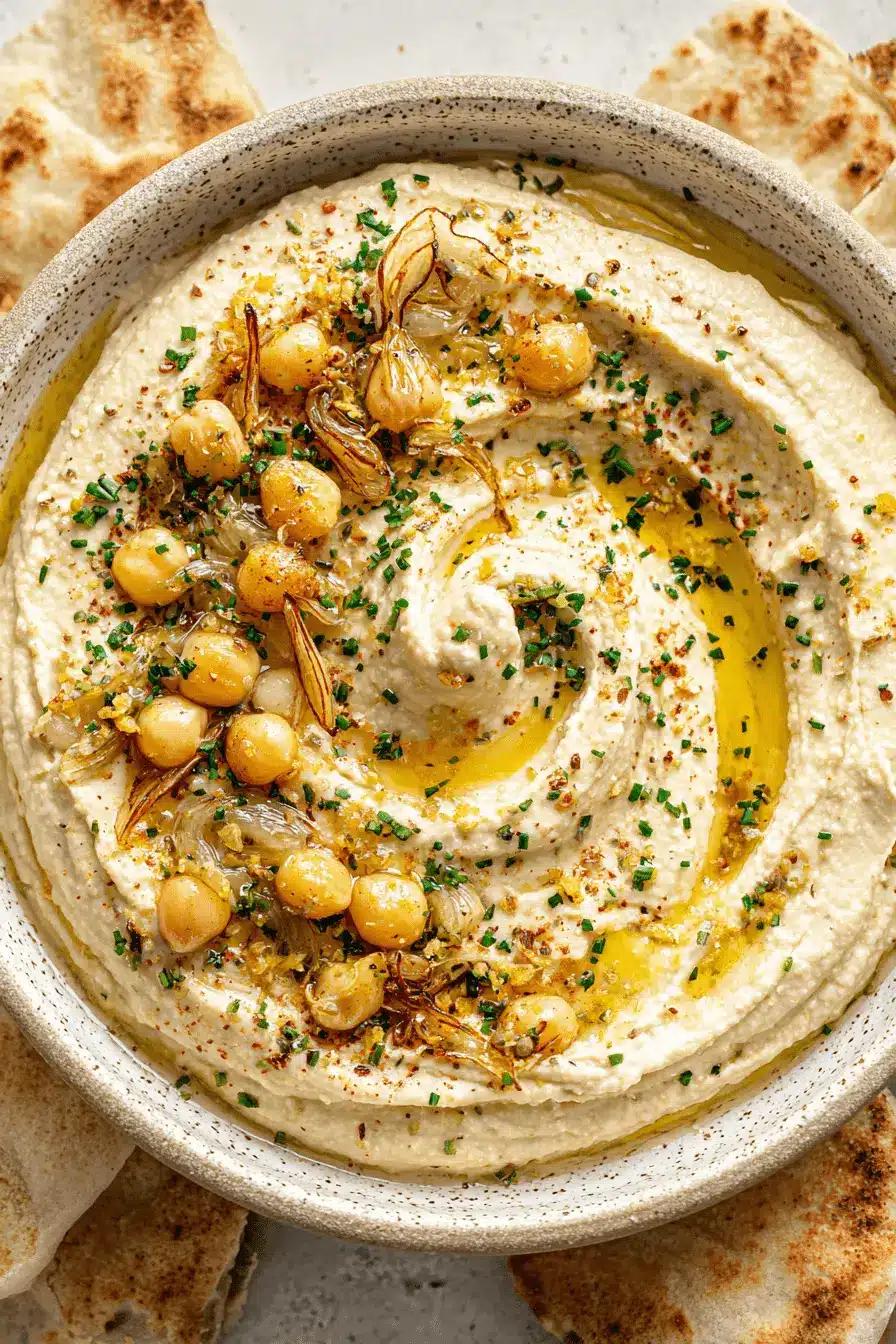
- Make the Fried Lemon-Garlic Topping. Fit a fine-mesh sieve over a bowl. Add the olive oil to a medium frying pan and turn to medium heat. Once the oil is warm (but not too hot), add the thinly sliced garlic and cook, swirling the pan or stirring frequently, for 2 to 2 ½ minutes, until the garlic just turns golden (don’t wait until it browns—it will turn bitter). Add the lemon peel strips and cook for another 30 seconds, stirring almost constantly. Remove from the heat and pour the mixture into the strainer, reserving the oil in the bowl. Transfer the garlic and lemon zest to a plate and sprinkle them with a bit of flaky sea salt.
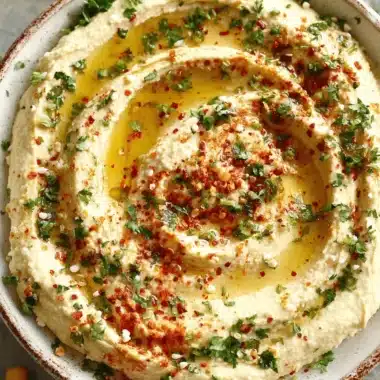
- Transfer the hummus to a shallow bowl or plate with a lip. Use the back of a spoon to make waves or a well in the center. Spoon the reserved oil into the ridges or into the well. Top with the fried garlic and lemon zest mixture. Top with chopped parsley and a few shakes of paprika or Aleppo pepper. Dig in with warm pita!
Pro-Tips for Perfect Homemade Hummus
Over the years, I’ve picked up a few extra tricks that take hummus from good to absolutely amazing. These are the little details that make a huge difference.
First, let’s talk chickpea prep. If you’re using canned chickpeas to save time, you can still get great results. Just drain and rinse them, then simmer them in a pot with a pinch of baking soda for about 15-20 minutes. This softens them up beautifully. Some people swear by peeling each chickpea, and while it does yield the silkiest texture, I find that cooking them until they are very soft works almost as well with much less effort.
Another key tip is to serve your hummus at room temperature or even slightly warm. When hummus is cold, the flavors are muted. Letting it sit out for about 30 minutes before serving allows the nutty tahini and bright lemon to really shine through.
If you find raw garlic too harsh, try this: blanch the cloves. Just drop them in boiling water for about 60 seconds, then transfer them to an ice bath. This simple step mellows the sharp bite of the garlic, giving you a smoother, more balanced flavor. And finally, don’t skimp on the tahini. A high-quality, runny tahini made from 100% sesame seeds is essential for that authentic, rich taste.
Ingredient Deep Dive: Choosing the Best for Your Homemade Hummus
The beauty of a simple recipe like hummus is that the quality of each ingredient really matters. Let’s break down the key players.
- Chickpea Choices: I personally prefer using dried chickpeas for the best texture. Soaking them overnight and cooking them from scratch gives you ultimate control over their softness. However, canned or jarred chickpeas are a fantastic shortcut. Just make sure to rinse them well and simmer them with baking soda as I mentioned above to soften them up.
- Tahini Talk: Good tahini should be smooth, pourable, and have a rich, nutty flavor, not a bitter one. Brands can vary wildly, so you might need to try a few to find your favorite. I look for brands that come from Lebanon or Israel, and I always stir it well before using, as the oil can separate.
- Lemon Love: Always, always use fresh lemon juice. The bottled kind just doesn’t have the same bright, zesty flavor. Look for lemons that are heavy for their size and have thin, smooth skin, as they tend to be the juiciest.
- Olive Oil Excellence: For the topping and for drizzling, a good-quality extra virgin olive oil makes all the difference. A fruity olive oil will add a nice, mellow richness, while a more peppery one can add a little kick. I use my best stuff for the finishing drizzle.
Equipment Matters: Food Processor vs. Blender for Homemade Hummus
The machine you use to blend your hummus can definitely impact the final texture. Both a food processor and a high-speed blender can do the job, but they work a bit differently.
A food processor is the traditional choice and what I use most often. Its wide base and S-shaped blade are great for breaking down the chickpeas and creating a thick, creamy paste. You’ll need to stop and scrape down the sides a few times, but it gives you great control over the final texture.
A high-speed blender, like a Vitamix or Blendtec, can create an even smoother, almost whipped texture because of its incredible power. The key is to use the tamper to keep the mixture moving and avoid air pockets. You may need to add a touch more liquid to get it going, but the result is unbelievably silky. Either machine will work, so use what you have!
Customizing Your Homemade Hummus: Flavor Variations & Toppings
This classic recipe is a perfect canvas for your own creativity. Once you’ve mastered the basic technique, it’s so much fun to play with different flavors and toppings.
For flavor variations, try blending in a roasted red pepper, a few sun-dried tomatoes, or a chipotle pepper for a smoky kick. I also love adding a big handful of fresh herbs like cilantro or dill for a vibrant, green hummus.
The toppings are where you can really have fun. Go beyond a simple drizzle of oil and try a sprinkle of za’atar, some toasted pine nuts, or crumbled feta cheese. The fried lemon-garlic topping in this recipe is a game-changer, but you could also infuse the oil with different herbs or spices.
Serving Suggestions: What to Pair with Your Homemade Hummus
Of course, warm pita bread is the classic companion for hummus, and for good reason. I also love serving it with a big platter of fresh, crunchy vegetables like carrots, cucumbers, and bell peppers for a healthier option. Crackers and pita chips are always a hit, too.
But don’t stop there! I often use hummus as a delicious and healthy spread for sandwiches and wraps instead of mayonnaise. You can also thin it out with a little extra water and lemon juice to create a fantastic salad dressing. One of my favorite quick lunches is a “hummus bowl,” with a big scoop of hummus topped with grilled chicken, quinoa, and delicious roasted vegetables.
Troubleshooting Your Homemade Hummus: Common Issues & Fixes
Even with a simple recipe, things can sometimes go sideways. Don’t worry, most common hummus problems are easy to fix.
- Hummus is bitter: This is usually caused by low-quality tahini or overcooked garlic in your topping. Make sure your tahini tastes good on its own, and watch the garlic closely so it only turns golden, not brown.
- Hummus is gritty: The chickpeas probably weren’t cooked long enough. They should be very soft and fall apart easily. For a shortcut fix, you might need to blend it for a few extra minutes.
- Hummus is too lemony/garlicky: It’s easier to add than to take away. Start with a little less next time. To fix the current batch, you can try blending in a handful more chickpeas or a bit more tahini to balance the flavors.
- Hummus is too thick/stiff: This is an easy one! Just stream in more ice water, one tablespoon at a time, with the processor running until you reach your desired consistency.
- Hummus is too runny: You may have added too much liquid. You can thicken it by blending in more tahini or a few more chickpeas if you have them on hand.
Storing & Meal Prepping Homemade Hummus
Homemade hummus is perfect for meal prep, and it stores beautifully if you know a couple of simple tricks.
It will last for up to a week in an airtight container in the refrigerator. To keep it from drying out, I like to pour a thin layer of olive oil over the top before I put the lid on. This creates a seal that keeps it fresh and moist.
You can also freeze hummus! I portion it into smaller containers or even ice cube trays. It will last in the freezer for up to three months. Just let it thaw in the refrigerator overnight. After refrigerating or freezing, hummus can get a bit dense. To bring back that fluffy texture, just give it a vigorous stir, maybe with a splash of water or a squeeze of lemon juice, to “re-fluff” it.
Frequently Asked Questions about Homemade Hummus
- Can I make this homemade hummus without tahini? Yes, you can, but the flavor and texture will be different. Tahini gives hummus its signature nutty taste. You could substitute it with a neutral oil, Greek yogurt, or even a nut butter like cashew butter, but it won’t be a traditional hummus.
- How can I make this homemade hummus low-sodium? To reduce the sodium, you can use no-salt-added canned chickpeas or simply omit the salt when cooking your dried chickpeas. You can also reduce the amount of salt you add during blending, tasting and adjusting with other flavor boosters like lemon juice, cumin, or a pinch of smoked paprika.
- Can I scale this homemade hummus recipe? Absolutely! This recipe is easy to double or halve. Just make sure your food processor is large enough to handle a double batch, or process it in two separate batches to avoid overflowing. Keep the ratios of the ingredients the same.
- What kind of food processor or blender do you recommend for the best homemade hummus? A powerful food processor (at least an 8-cup capacity) or a high-speed blender will give you the best, creamiest results. The more powerful the motor, the smoother your hummus will be. However, any standard food processor will work, you just might need to blend it for a bit longer.
- How long does homemade hummus last? Homemade hummus will stay fresh in an an airtight container in the refrigerator for about 5 to 7 days. You can also freeze it for up to 3 months for longer storage.
Conclusion
I truly hope this recipe shows you just how simple and satisfying making hummus at home can be. There’s something so wonderful about taking a few humble ingredients and transforming them into a dip that’s creamy, flavorful, and so much better than anything from a store. It’s a small effort that brings a lot of comfort and joy to the table.
Now I’d love to hear from you! What is your absolute favorite thing to top your hummus with? Leave a comment below and share your creative ideas, or ask any questions you might have. I can’t wait to see you fall in love with making your own hummus.
Homemade Hummus
Ingredients
Equipment
Method
- Combine chickpeas with cold water and ½ teaspoon baking soda in a large bowl, then soak for 8 hours or overnight. Afterward, drain and rinse the chickpeas thoroughly.
- Cook drained chickpeas with ½ teaspoon baking soda and 6 cups water in a medium saucepan for 30 minutes at a rapid simmer. Add 1 teaspoon kosher salt and continue cooking for 10-15 minutes until very soft, then drain.
- Transfer the drained, cooked chickpeas to a food processor and blend for 1-2 minutes until a smooth puree forms, scraping down the sides as needed.
- Add tahini, lemon juice, garlic, cumin, salt, and pepper to the food processor. While blending, gradually stream in ice water, adjusting the amount until the hummus is smooth and creamy, then taste and adjust seasonings.
- Place a fine-mesh sieve over a bowl. Heat olive oil in a medium frying pan, then cook thinly sliced garlic until golden for 2-2.5 minutes, followed by lemon peel for 30 seconds. Strain the mixture, reserving the oil, and transfer the fried garlic and lemon zest to a plate to sprinkle with flaky sea salt.
- Transfer hummus to a shallow bowl, create a well or waves, and spoon in the reserved oil. Garnish with the fried garlic and lemon zest, chopped parsley, and paprika or Aleppo pepper, then serve with warm pita.