
Sometimes, the best recipes are the ones that feel a little bit like magic. This avocado hummus is exactly that. It’s a beautiful blend of creamy, classic hummus and the rich, buttery flavor of fresh guacamole. I know how hectic life can get, and finding a snack or appetizer that’s quick, healthy, and incredibly delicious can feel like a huge win.
This recipe is my secret weapon for everything from last-minute get-togethers to a simple, satisfying lunch. It whips up in minutes, boasts a stunning vibrant green color, and has a texture so smooth it’s hard to believe it’s homemade. I’ve designed this guide to be completely foolproof, so you can make the perfect batch every single time, without any stress.
Why You’ll Love This Avocado Hummus Recipe
I’ve tried a lot of dips in my day, but I always come back to this one. It’s a recipe I’m truly proud of, and I think it will quickly become a favorite in your kitchen too.
- Unbelievably Creamy Texture: My method ensures an ultra-smooth consistency. By blending the chickpeas and liquids first before adding the avocado, you get a silky base that makes the final dip incredibly luxurious.
- Vibrant Green that Lasts: Say goodbye to brown, unappetizing dip! I’m sharing my best foolproof tips, including the power of lime juice, to keep your hummus bright green and fresh-looking for longer.
- A Healthy, Versatile Powerhouse: This dip isn’t just delicious; it’s packed with healthy fats, protein, and fiber. It’s perfect as a snack with veggies, a spread on sandwiches, or a dollop on your favorite grain bowl.
- Ready in Minutes: Life is busy, and you don’t have time for complicated recipes. This entire dish comes together in a food processor in less than 10 minutes, making it the ultimate solution for quick and easy flavor.
The Secret to the Creamiest Avocado Hummus
The key to a truly luscious, smooth hummus lies in the blending process. I’ve found that the order of operations makes all the difference. Instead of throwing everything into the food processor at once, I always start with the chickpeas, olive oil, tahini, lime juice, and garlic.
I let the food processor run for a solid two minutes, stopping once or twice to scrape down the sides. This step breaks down the chickpeas into a super-smooth paste, creating the perfect foundation. Only after this base is silky do I add the avocados and pulse again until just combined and creamy. This prevents the avocado from being overworked and ensures the final texture is perfect.
Ingredients
- 1 (15 ounce / 425 g) can chickpeas, well drained
- 2 medium ripe avocados (about 13 ounces / 370 g before cored and peeled), cored and peeled
- 3 Tablespoons (45 ml) olive oil, plus more for serving if desired
- 1 ½ Tablespoons (22.5 ml) tahini
- 3 Tablespoons (45 ml) fresh lime juice
- 1 clove garlic, peeled
- Salt and freshly ground black pepper, to taste
- ⅛ Teaspoon cumin
- 1 to 2 Tablespoons (15-30 ml) finely chopped cilantro leaves, for topping
- Red pepper flakes, for topping
Instructions
- Pulse chick peas, olive oil, tahini, lime juice, and garlic in a food processor until smooth, about 2 minutes. Season with salt and pepper to taste (I did a scant ½ tsp salt and about ⅛ tsp pepper), add cumin and avocados and pulse mixture until smooth and creamy, about 1-2 minutes longer.
- Serve topped with more olive oil if desired and sprinkle with cilantro and red pepper flakes. Serve with pita chips or tortilla chips.
How to Choose the Perfect Avocado
Picking the right avocado is the most important step for this recipe. A perfect avocado will give you that creamy texture and buttery flavor we’re looking for. Look for one that has a dark green, bumpy skin and yields to gentle pressure in the palm of your hand. It should feel soft but not mushy.
Another great trick is the stem test. Try to flick off the small brown stem at the top. If it comes off easily and you see a vibrant green color underneath, you’ve found a winner. If it’s hard to remove, the avocado needs more time to ripen. If you see brown underneath, it’s likely over-ripe and may have brown spots inside.
If your avocados are still hard, you can speed up the ripening process. Just place them in a brown paper bag with a banana or an apple for a day or two. The ethylene gas released by the fruit will help them soften up perfectly.
Preventing Avocado Hummus from Turning Brown
We’ve all seen it happen, that beautiful green dip slowly turns an unappealing shade of brown. This happens because of oxidation, a natural reaction when the avocado flesh is exposed to air. Luckily, I have a few simple tricks to keep your hummus looking fresh.
The lime juice in the recipe is your first line of defense. The acid creates a barrier that slows down the browning process. For storage, the key is to prevent air from touching the surface of the hummus. I like to press a piece of plastic wrap directly onto the entire surface of the dip before putting the lid on my container.
You can also pour a thin layer of olive oil over the top to create an airtight seal. And here’s a classic trick that really works: place one of the avocado pits in the center of the hummus before storing it. The pit releases enzymes that help keep the dip green and vibrant.
Avocado Hummus Flavor Variations & Swaps
This recipe is a fantastic starting point, but it’s also incredibly easy to customize. I love playing around with different flavors depending on my mood or what I have on hand.
| Variation/Swap | Purpose/Benefit | Notes |
|---|---|---|
| Roasted Garlic | Adds depth and sweetness | Roast 3-4 cloves of garlic until soft, then add to the food processor with other ingredients. |
| Spicy Kick | Introduces heat | Add a pinch of cayenne pepper, a dash of hot sauce, or a few slices of jalapeño to the food processor. |
| Fresh Herbs | Brightens flavor, enhances aroma | Stir in chopped fresh mint, dill, or parsley after blending. Use as a topping for an extra burst of freshness. |
| Sun-Dried Tomatoes | Adds a sweet, tangy, and savory note | Add 2-3 rehydrated, oil-packed sun-dried tomatoes (drained) to the food processor. |
| Nutritional Yeast | Cheesy/Umami flavor (Vegan-friendly) | For a “cheesy” depth, add 1-2 tablespoons of nutritional yeast. |
| Vegan/Dairy-Free | Ensures recipe is fully plant-based | This recipe is already vegan. If you were to add extra creaminess (like Greek yogurt in competitor recipes), consider using silken tofu or an extra tablespoon of tahini/aquafaba in place of dairy. |
| Nut-Free Alternative | Addresses nut allergies (if applicable) | Tahini is made from sesame seeds, not nuts. For a sesame allergy, consider sunflower seed butter or a blend of white beans and olive oil for creaminess, though flavor will differ. |
Serving Suggestions
While pita chips and tortilla chips are classic pairings, this avocado hummus is so much more than just a dip. I use it in all sorts of ways to make my meals more exciting and nutritious.
It makes a fantastic spread for sandwiches and wraps, adding moisture and a huge boost of flavor. I love adding a big dollop to a grain bowl with roasted vegetables and some quinoa. It also works beautifully as a creamy, healthy dressing for salads.
For a simple and healthy snack, I serve it with an array of fresh vegetable sticks like carrots, cucumbers, and bell peppers. You can even use it as a delicious topping for grilled chicken or fish, adding a touch of creaminess that complements the savory protein perfectly.
Storage Tips & Making Ahead
To store your avocado hummus, transfer it to an airtight container. Use one of my anti-browning tricks, like pressing plastic wrap directly onto the surface, before sealing it. Stored properly, it will stay fresh and green in the refrigerator for up to 3 days.
You might be wondering if you can freeze it, and the answer is yes, you can! While the texture may change slightly upon thawing, it’s a great option for making a big batch. To freeze, portion the hummus into an ice cube tray or small airtight containers. Thaw it in the refrigerator overnight. Once thawed, give it a vigorous stir, and you may want to add a fresh squeeze of lime juice or a drizzle of olive oil to liven it up.
Troubleshooting Your Avocado Hummus
Even the simplest recipes can have a hiccup now and then. Here are a few common issues and how to fix them.
- Why is my hummus gritty? This usually means it wasn’t blended long enough. Make sure to process the chickpeas and liquids until they are completely smooth before adding the avocado. Some people also peel their chickpeas for an extra-silky texture, but I find that a powerful food processor makes this unnecessary.
- Why is it too watery? This can happen if your avocados are overly ripe and mushy. To fix it, you can try adding a few more chickpeas to thicken it up. Be careful not to add too much extra liquid at the beginning.
- How to fix a bitter taste? Bitterness often comes from tahini that’s a bit old or from the garlic’s germ. Always use fresh, good-quality tahini. You can also remove the small green sprout from the center of the garlic clove to reduce any harshness.
- My hummus isn’t vibrant green! This goes back to using perfectly ripe avocados and preventing oxidation. Refer back to my tips on choosing avocados and keeping the hummus from browning.
Frequently Asked Questions About Avocado Hummus
- Can I use frozen chickpeas? Absolutely. Just make sure to thaw them completely and pat them dry before adding them to the food processor. This will prevent your hummus from becoming too watery.
- What type of tahini is best, and why? I prefer using a light, runny tahini made from hulled sesame seeds. It has a milder, less bitter flavor that doesn’t overpower the other ingredients. Good quality brands will have a smooth consistency and a nutty aroma.
- Is avocado hummus freezer-friendly? Yes! As I mentioned in the storage section, you can freeze it. The best method is to use small, airtight containers or an ice cube tray for single servings. Thaw in the fridge and stir well to refresh the texture.
- What are common mistakes beginners make, and how to avoid them? The biggest mistakes are not blending the chickpea base long enough, using under-ripe or over-ripe avocados, and not adding enough salt or lime juice to bring out the flavors. Take your time with the blending, choose your avocados wisely, and always taste and adjust the seasoning at the end.
- Do I need a food processor or can I use a high-speed blender? A food processor is generally my top choice for hummus because it creates a great texture without needing a lot of extra liquid. However, a high-speed blender like a Vitamix or Blendtec will also work well. You may just need to scrape down the sides more often and perhaps add a tiny bit more olive oil or lime juice to get things moving.
Conclusion
I truly hope you love this avocado hummus as much as I do. It’s one of those simple recipes that delivers big on flavor and makes any meal feel a little more special. It’s proof that you don’t need a lot of time or complicated ingredients to create something comforting and delicious.
I would be so happy to hear how it turns out for you! Please leave a comment below to share your experience or ask any questions you might have. And tell me, what’s your favorite way to enjoy it? Welcome to the AishaRecipes community, where we keep things simple and always find joy in the kitchen.
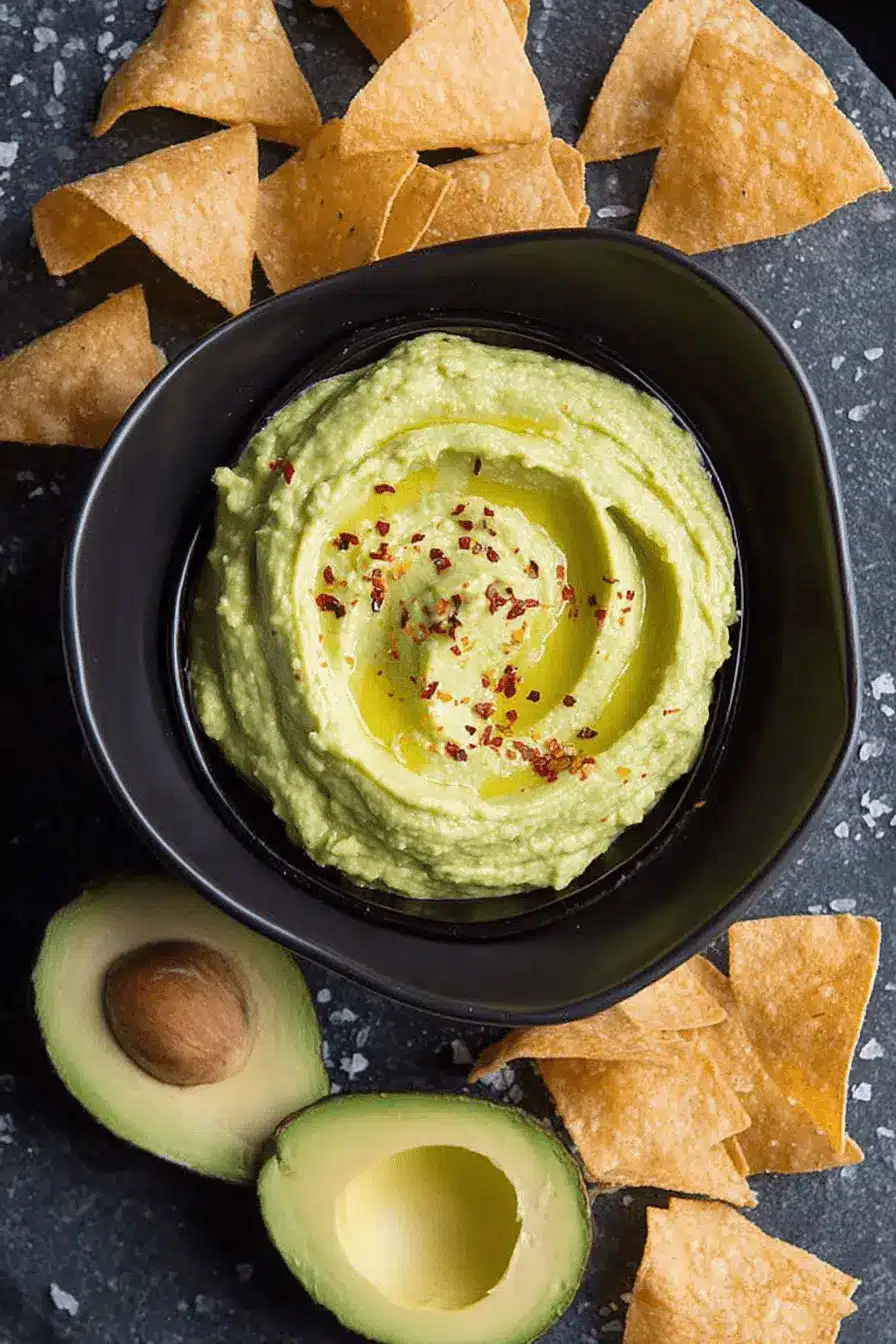
avocado hummus
Ingredients
Equipment
Method
- In a food processor, combine chickpeas, olive oil, tahini, lime juice, and garlic; pulse until smooth. Season with salt and pepper, then add cumin and avocados, blending until the mixture is smooth and creamy.
- Serve the hummus garnished with extra olive oil, cilantro, and red pepper flakes, accompanied by pita chips or tortilla chips.