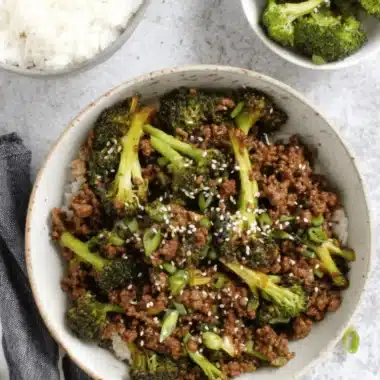

When life gets hectic, the last thing I want is a complicated dinner. I know that feeling all too well: juggling work, family, and everything in between, only to be met with the dreaded “what’s for dinner?” question. That’s why I am so excited to share this Korean Beef Bowl recipe with you. It’s my go-to for a fast, flavorful, and completely stress-free meal that brings a little excitement to the weeknight table.
This dish is proof that you don’t need a lot of time or fancy ingredients to create something truly comforting and delicious. The sweet and savory sauce comes together in minutes, coating the savory ground beef perfectly. Piled high over a bed of fluffy rice with crisp, fresh veggies, it’s a complete meal that feels special without any of the fuss. So, if you’re looking for a dinner win, you’ve found it right here.
Why You’ll Love This Easy Korean Beef Bowl
- Ready in Under 20 Minutes: Seriously! This is one of the fastest meals in my rotation. From browning the beef to stirring in the sauce, you can have a complete, delicious dinner on the table in less time than it takes to order takeout.
- Incredibly Flavorful Sauce: The sauce is the star here. It’s a perfect balance of savory, sweet, and tangy with a gentle kick of spice. It tastes complex and delicious, but it’s made with simple pantry staples you likely already have.
- Perfect for Busy Weeknights: I designed this recipe with busy people in mind. It uses simple ingredients and straightforward steps, making it an ideal solution for those days when you feel too tired or overwhelmed to cook.
- Easily Customizable: This bowl is a fantastic starting point. You can easily swap the protein, add your favorite veggies, or adjust the sweetness and spice to make it exactly how you like it.
Key Ingredients for Your Flavorful Korean Beef Bowl (and Why They Work!)
The magic of this Korean Beef Bowl comes from a handful of simple but powerful ingredients. The low-sodium soy sauce is the foundation, providing that essential salty, umami depth. Fresh ginger brings a bright, zesty warmth that cuts through the richness, while garlic adds that can’t-live-without aromatic base. Finally, a drizzle of sesame oil at the end adds a wonderfully nutty and fragrant finish.
When it comes to the beef, I always reach for lean ground beef, like 93% lean. It gives you all the savory flavor without leaving excess grease in the pan, which means you don’t have to worry about draining it. This keeps the process quick and the final dish clean-tasting.
Red Pepper Flakes: Customizing Your Spice Level
The red pepper flakes add a lovely, gentle warmth to the sauce. I find that the amount in the recipe is just right for a little background heat, but you have total control here. If you love spice, feel free to add a bit more. If you’re sensitive to heat or cooking for kids, you can reduce it or leave it out completely.
For those who enjoy a more traditional Korean flavor, you could also experiment with Gochujang (a fermented Korean chili paste). While it’s not in my simple version here, adding a teaspoon to the sauce would give it a deeper, more complex heat.
Soy Sauce Variations (and Gluten-Free Options)
I use low-sodium soy sauce because it allows me to control the saltiness of the final dish. If you only have regular soy sauce, that works too; just be mindful when tasting and adding more at the end. For a gluten-free version, tamari is a fantastic one-to-one substitute. If you need a soy-free or Paleo-friendly option, coconut aminos are a great choice and will give the sauce a slightly sweeter flavor.
Ingredients for Your Quick Korean Beef Bowl
- 1 pound (450g) lean ground beef (I used 93% lean)
- 3 tablespoons low sodium soy sauce (plus additional to taste, divided)
- 1 1/4 cups (300ml) minced scallions (both green and white parts (from about 1 small bundle), divided)
- 1 tablespoon (15ml) minced garlic (about 3 cloves)
- 2 tablespoons (30ml) rice vinegar
- 2 tablespoons (30ml) honey
- 2 tablespoons (30ml) minced or finely grated fresh ginger
- 1/4 teaspoon red pepper flakes (plus additional to taste)
- 1 tablespoon (15ml) sesame oil (plus additional to tase)
- Cooked brown rice (quinoa, or cauliflower rice)
- 1 1/2 cups (360ml) shredded carrots (see recipe notes to pickle them for an upgrade)
- Thinly sliced seedless cucumbers (Persian-style or English/hot house)
- Toasted sesame seeds
Step-by-Step Instructions to Make Your Korean Beef Bowl
- Pickle the carrots and/or cucumbers if desired (see recipe notes—I highly recommend).
- In a large skillet, brown the beef over medium-high heat, breaking it into small pieces, until it is browned and cooked through, about 5 or so minutes. When the beef is about halfway finished cooking, add 1 tablespoon of the soy sauce and 2/3 of the scallions. Once the beef is completely browned, stir in the garlic and cook 30 seconds.
- While the beef cooks, in a small bowl, stir together the rice vinegar, honey, ginger, red pepper flakes, and remaining soy sauce.
- Pour over the browned beef. Stir and cook for 2 minutes. Remove from the heat, then stir in the sesame oil. Sprinkle the remaining green onion over the top. Taste and add extra soy sauce or red pepper flakes as desired (I added a bit more of each).
- Serve the beef hot, over rice, topped generously with the carrots, cucumber, and sesame seeds.
Customizing Your Korean Beef Bowl: Substitutions & Variations
One of the best things about this recipe is how easy it is to adapt. Here are some of my favorite ways to switch things up based on what I have in my kitchen or what I’m in the mood for.
| Component | Original (Recipe) | Substitution/Variation Options | Notes |
|---|---|---|---|
| Protein | Lean Ground Beef | Ground chicken, ground turkey, sliced sirloin steak, firm tofu (pressed & crumbled), lentils, mushrooms. | Adjust cooking times accordingly. For tofu/lentils/mushrooms, brown until slightly crispy for best texture. |
| Sweetener | Honey | Brown sugar, maple syrup, agave nectar. | Adjust to taste; some might be sweeter than honey. |
| Spice Level | Red Pepper Flakes | Gochujang (Korean chili paste – start with 1 tsp), Sriracha, a pinch of cayenne pepper. | Gochujang adds a complex, fermented chili flavor. Start small and add more! |
| Base | Brown Rice | Quinoa, cauliflower rice (for low-carb), white rice, rice noodles, zoodles (zucchini noodles), lettuce wraps. | Choose a base that fits your dietary preferences or what you have on hand. |
| Vegetables | Shredded Carrots, Cucumber | Shredded cabbage, bell peppers, spinach, kimchi, avocado, edamame. | Add fresh, crunchy vegetables for texture and nutrients. Kimchi adds a fermented, tangy kick. |
| Gluten-Free | Soy Sauce | Tamari, coconut aminos. | Ensure all other ingredients (e.g., honey) are naturally gluten-free. |
| Lower Sodium | Low Sodium Soy Sauce | Coconut aminos. | Reduce or omit additional salt if using regular soy sauce. |
Serving Suggestions: What to Pair with Your Korean Beef Bowl
I love serving this Korean beef over a simple bed of fluffy brown rice. It soaks up all that delicious sauce perfectly. For a change, quinoa is a great protein-packed option, and cauliflower rice is fantastic if you’re looking for something low-carb. You could even serve the beef over rice noodles or inside crisp lettuce cups for a lighter meal.
To finish the bowl, don’t skimp on the toppings! The fresh, crunchy texture of shredded carrots and sliced cucumbers is the perfect contrast to the savory beef. I also love to add a sprinkle of toasted sesame seeds for a little extra nutty flavor and a pop of texture. A side of steamed broccoli or edamame also works beautifully.
Meal Prep, Storage, and Reheating Tips for Korean Beef Bowl
This recipe is a meal prepper’s dream. The cooked beef stores beautifully in an airtight container in the refrigerator for up to 4 days. When you’re ready to eat, simply reheat it in the microwave or in a skillet over medium-low heat until warmed through. You may want to add a tiny splash of water to the skillet to keep it from drying out.
For longer storage, the cooked beef freezes wonderfully. Just let it cool completely, then store it in a freezer-safe bag or container for up to 3 months. Thaw it overnight in the refrigerator before reheating.
How to Prevent Soggy Toppings When Meal Prepping
The key to a great meal-prepped bowl is to keep the components separate until you’re ready to eat. I store the cooked beef in one container, the rice in another, and the fresh toppings (cucumbers and carrots) in their own small container or bag. This ensures the veggies stay crisp and fresh, preventing them from getting soggy from the sauce.
Troubleshooting Common Korean Beef Bowl Issues
Even the simplest recipes can have a hiccup or two, but don’t worry! Here’s how to fix a few common issues.
- My sauce is too thick or too thin: If the sauce seems too thick after simmering, you can thin it out with a tablespoon of water or a little extra rice vinegar. If it’s too thin, let it simmer for another minute or two on the stove to help it reduce and thicken up slightly.
- My ground beef is steaming instead of browning: This usually happens when the pan is overcrowded or not hot enough. Make sure your skillet is properly heated before adding the beef, and use a pan that’s large enough to give the meat some space. This allows the moisture to evaporate so the beef can get a nice, savory sear.
- The final dish tastes a little dry: If you’re using extra-lean ground beef, it can sometimes taste a bit dry. A quick fix is to stir in an extra teaspoon of sesame oil right at the end or add a little more of the sauce.
Essential Equipment for Your Korean Beef Bowl
You don’t need any fancy gadgets for this recipe, which is part of its charm. A large skillet is the most important tool; a 10 or 12-inch non-stick or cast-iron skillet works perfectly for browning the beef without crowding.
I also recommend a microplane or fine grater for the fresh ginger and garlic. It creates a paste-like consistency that melts right into the sauce, distributing the flavor evenly. Other than that, all you need is a good knife for the scallions and cucumber, and a small bowl for mixing the sauce.
A Touch of Culture: The Korean Beef Bowl’s Inspiration
This simple recipe is my modern, weeknight-friendly take on the incredible flavors found in traditional Korean dishes like Bulgogi. Bulgogi is typically made with thinly sliced, marinated beef that’s grilled to perfection. My ground beef version is a shortcut that captures that irresistible sweet-and-savory flavor profile in a fraction of the time.
It’s a wonderful example of how classic flavors can be adapted for busy home cooks like us. It allows me to bring a taste of something globally inspired to my dinner table without needing special ingredients or hours of prep, which is what my style of cooking is all about.
Kid-Friendly Korean Beef Bowl Modifications
If you’re cooking for little ones, this recipe is very easy to adapt. I recommend reducing or omitting the red pepper flakes entirely to keep the spice level mild. You can also add an extra teaspoon of honey to the sauce to make it a little sweeter, which kids often love.
Another great trick is to serve the components separately, like a build-your-own-bowl bar. I’ll put out the rice, the cooked beef, the shredded carrots, and the sliced cucumbers, and let my family assemble their own bowls. This gives them control and makes mealtime more fun.
Beyond the Bowl: Creative Ways to Use Leftover Korean Beef
Leftover Korean beef is a fantastic ingredient to have on hand for quick meals later in the week. You can use it as a filling for tacos by adding some shredded cabbage and a drizzle of spicy mayo. It’s also delicious in a wrap with some fresh spinach and cucumber, or even as a filling for quesadillas with a little shredded cheese. I’ve even used it as a savory topping for a simple rice-and-egg scramble for a hearty breakfast.
Frequently Asked Questions about Korean Beef Bowl
- What kind of ground beef is best for a Korean Beef Bowl?
I prefer using lean ground beef (90% or 93% lean) because it’s flavorful without being overly greasy. You won’t have to drain off any fat, which makes the recipe even faster.
- Can I make this Korean Beef Bowl spicier or milder?
Absolutely! To make it spicier, add more red pepper flakes or a dash of sriracha to the sauce. To make it milder, simply reduce or omit the red pepper flakes.
- What’s the best way to get a good sear on the ground beef?
Make sure your skillet is nice and hot before you add the beef. Don’t overcrowd the pan, and let the beef sit for a minute or two without stirring to develop a brown crust before you start breaking it apart.
- Can I use different vegetables in my bowl?
Yes, please do! This bowl is a great way to use up whatever veggies you have. Sautéed bell peppers, steamed broccoli, edamame, or even some wilted spinach would all be delicious additions.
- Is this recipe gluten-free?
To make this recipe gluten-free, you just need to swap the soy sauce for tamari or coconut aminos. Ensure all your other ingredients are certified gluten-free as well.
- Can I freeze cooked Korean Beef?
Yes, it freezes beautifully. Let the cooked beef cool completely, then store it in a freezer-safe airtight container or bag for up to 3 months.
Conclusion
I truly hope this Korean Beef Bowl becomes a new favorite in your home. It’s a perfect example of how cooking can be simple, comforting, and joyful, even on the busiest of days. It’s proof that you can put a delicious, satisfying dinner on the table without any stress.
Making food that my family loves is one of my greatest joys, and I hope this recipe brings a little of that joy to your kitchen, too. If you try it, I would absolutely love to hear from you! Leave a comment below, ask any questions you have, or share a photo of your creation. Let’s find the joy in cooking together.
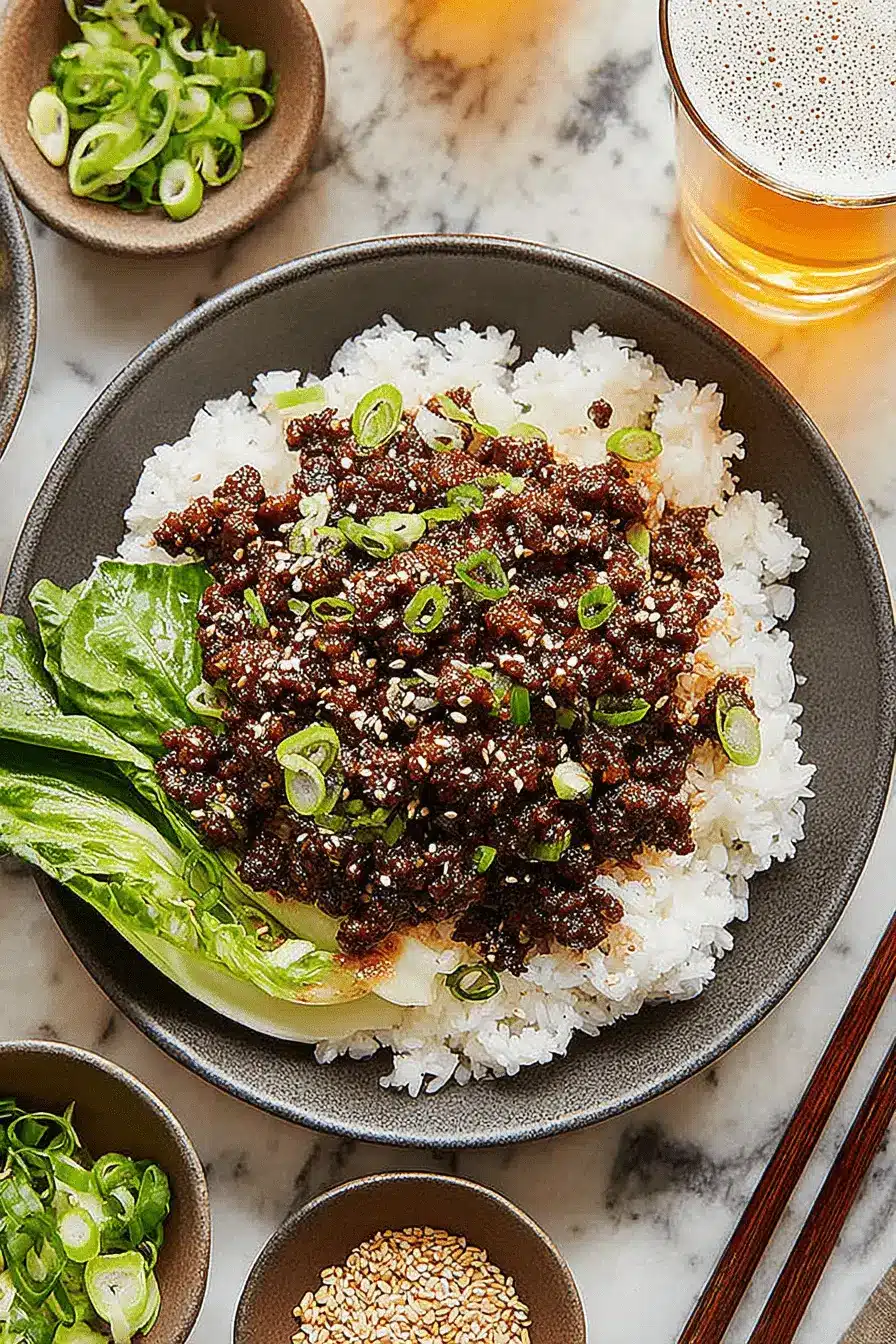
Korean Beef Bowl
Ingredients
Equipment
Method
- Optional: Pickle carrots and/or cucumbers as desired, referring to recipe notes for guidance.
- Brown the ground beef in a large skillet over medium-high heat for about 5 minutes, breaking it into small pieces. Add 1 tablespoon soy sauce and 2/3 of the scallions when almost done, then stir in garlic for 30 seconds after beef is browned.
- While the beef cooks, combine rice vinegar, honey, ginger, red pepper flakes, and the remaining soy sauce in a small bowl.
- Pour the sauce over the cooked beef, stir, and cook for 2 minutes before removing from heat. Stir in sesame oil, sprinkle with remaining green onion, and taste to adjust seasoning with extra soy sauce or red pepper flakes if needed.
- Serve the hot beef mixture over rice, generously topped with shredded carrots, sliced cucumbers, and toasted sesame seeds.