
The moment I pulled my first golden, crispy sourdough baguette from the oven, I felt like a baking pro, and I want you to feel that too. This ultimate sourdough baguette recipe is your masterclass for creating bakery-quality loaves right at home. Ready to bake a crusty, flavorful baguette that fills your kitchen with irresistible aroma? Let’s get started!
Table of Contents
Why You’ll Love This Sourdough Baguette Recipe
- Guaranteed crispy crust that crackles with every bite
- A deep dive into the dough’s science for no-fail results
- Rich, complex flavor developed through a long, cold fermentation
- Designed for busy home bakers seeking hands-on guidance and success
A Beginner’s Glossary of Baguette Baking Terms
- Autolyse: A rest period where flour and water mix before adding other ingredients, improving dough texture.
- Levain: A naturally fermented sourdough starter used to leaven the bread.
- Bulk Fermentation: The long rise after mixing when the dough develops flavor and strength.
- Proofing: The final rise of shaped dough before baking.
- Scoring: Making slashes on the dough’s surface to control expansion and create beautiful crust patterns.
- Lame: A sharp blade or razor used for scoring dough.
- Oven Spring: The rapid rise of dough in the oven due to yeast activity and steam.
Essential Equipment (and Common Kitchen Alternatives)
- Baking Scale: For precise measurement; use measuring cups but weigh if possible for accuracy.
- Lame (scoring tool): A razor blade or very sharp knife works well.
- Couche (linen cloth): Substitute with a well-floured thick linen or tea towel.
- Baking Stone/Steel: A preheated heavy-duty baking sheet serves as a good alternative.
Understanding the Ingredients for the Best Sourdough Baguette
- Flour: Use high-protein white bread flour for strong gluten development, supporting a chewy crumb and structure.
- Water: Filtered water improves dough consistency and supports yeast activity without interference from chlorine.
- Sourdough Starter: A bubbly, active starter with lots of tiny bubbles indicates health and readiness, key for rise and flavor.
- Salt: Enhances flavor and regulates fermentation speed, balancing the dough’s taste and texture.
Sample Baking Schedule for Your Sourdough Baguette Recipe
| Time | Activity |
|---|---|
| Day 1, Morning | Mix starter with water and flour, autolyse for 1 hour |
| Day 1, Afternoon | Add salt water, perform stretch and folds, rest afterward |
| Day 1, Evening | Repeat stretch and folds twice, then start bulk fermentation for 2 hours |
| Day 1, Night | Divide, shape dough, place in couche, refrigerate for 18–36 hours |
| Day 2, Morning | Remove from fridge, do room temp proof if needed, bake |
Adjust the timing for ambient temperature: warmer kitchens speed up fermentation, whilecooler ones slow it down.
Ingredients
- 450 g white bread flour
- 280 g water (divided: 250 g + 30 g)
- 100 g active sourdough starter
- 15 g salt
- 80 g flour (white bread or rice flour for couche dusting)
- 80 g semolina (for couche dusting)
How to Make Sourdough Baguettes: A Step-by-Step Guide
Step 1: Mixing and Developing the Dough
- Combine starter and water. Mix 250 grams of water with 100 grams of bubbly, active sourdough starter.
- Add flour and mix. Incorporate 450 grams white bread flour until fully mixed.
- Rest (autolyse). Cover and let dough rest for 1 hour.
- Prepare salt water. Dissolve 15 grams of salt in remaining 30 grams water.
- Mix salt water into dough. Stir well until smooth.
- Perform stretch and fold. Pull one side of dough and fold over, repeat all sides.
- Form ball and rest. Place in lightly oiled bowl, cover with damp cloth, rest 1 hour.
Step 2: Bulk Fermentation
- Repeat stretch and folds twice. Perform stretch and fold two more times, resting 1 hour after the second.
- Bulk ferment for 2 hours. Cover dough again with a damp cloth and let rise.
Step 3: Shaping the Baguettes
- Divide dough. Place dough on floured surface; divide into 4 pieces for demi baguettes or 2 for longer ones.
- Flatten and pat air out. Gently shape into rectangles.
- Fold edges with tension. Fold far side over while pushing down and away with thumbs.
- Roll into sausage shape. Keep tension and roll until tight.
- Seal seam and shape ends. Press seam down, pinch closed, roll from center outwards to form pointy ends.
Step 4: The Final Proof
- Prepare couche or cloth. Mix semolina and flour 50/50 or use rice flour; flour thick linen cloth well.
- Place shaped dough seam-side up. Arrange baguettes into folds to hold shape.
- Sprinkle with flour. Cover with plastic wrap or inverted baking sheet.
- Cold proof in fridge. Refrigerate for 18 to 36 hours.
- Room temperature proof if needed. Remove and let rise if flat.
Step 5: Scoring and Baking
- Preheat oven. Set to 250°C (480°F).
- Add steam. Place container with boiling water in oven bottom.
- Heat baking surface. Place tray or pizza stone in oven.
- Dust tray with semolina. Transfer baguettes seam-side down onto tray.
- Score with lame. Make 30–45° angled slashes 1.5 cm deep along dough length.
- Bake 30 minutes. Rotate tray and lower oven to 220°C (428°F) after 15 minutes.
- Cool and enjoy. Let baguettes cool slightly, then savor their crunchy crust and soft crumb.
Mastering the Details: A Visual Guide to Success
- Dough Development: After stretches and folds, dough should feel smooth and elastic. Bulk fermentation dough looks puffy and jiggles slightly with visible bubbles.
- Shaping Technique: Create tension by pushing dough down and away from you with your thumbs; this tight skin is key for oven spring and loaf shape.
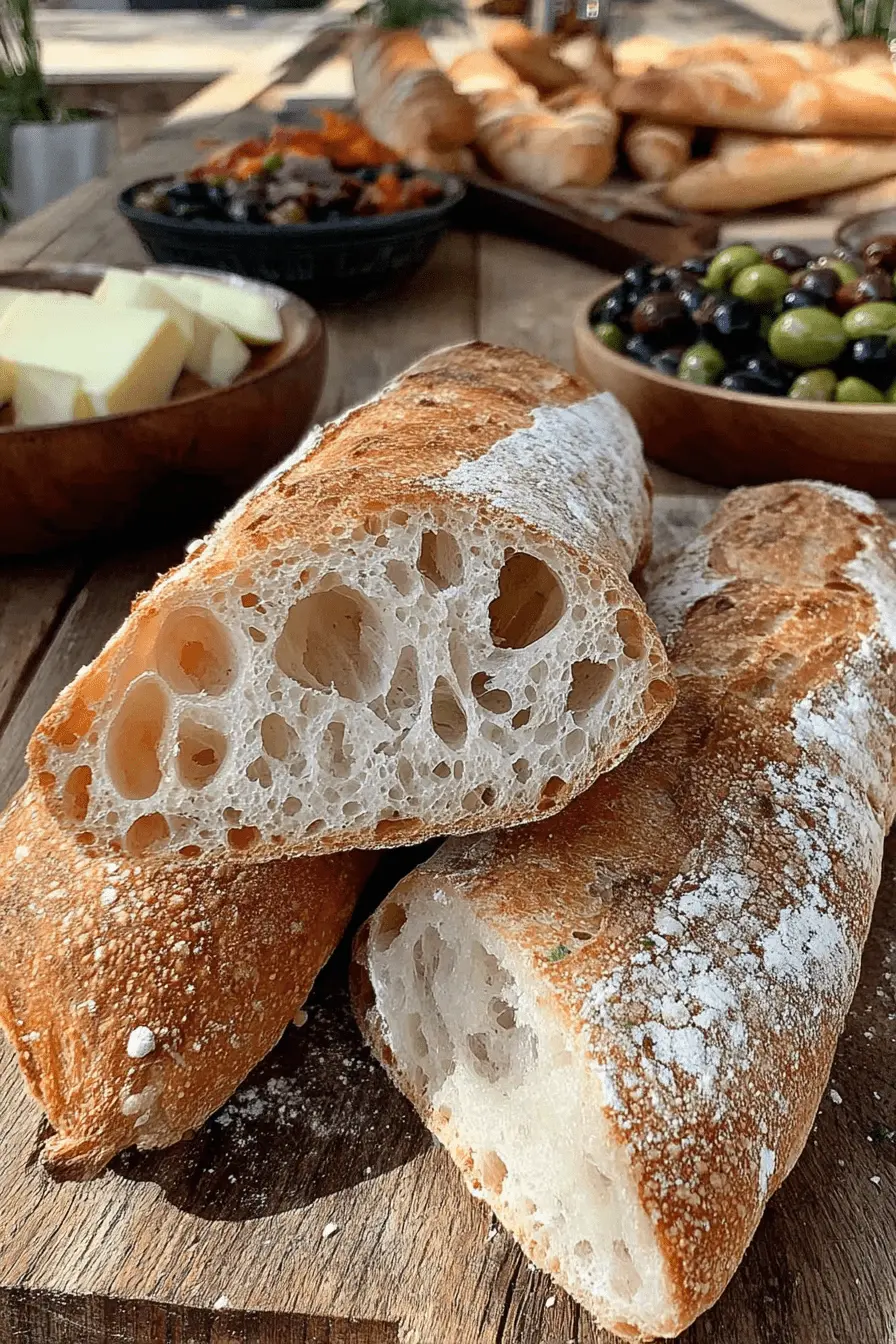
How to Get a Perfectly Crispy Crust and Open Crumb
- For the Crust: Steam keeps the crust moist early in baking for a shiny, crackling finish.
- Boiling water pan: Reliable steam, easy to maintain.
- Ice cubes: Less consistent, may cool oven more; better for small home ovens.
- For the Crumb: Use a strong starter, avoid over-proofing, and handle dough gently during shaping to keep air pockets and an open crumb.
Common Mistakes and How to Prevent Them
| Common Mistake | Likely Cause | How to Prevent It Next Time |
|---|---|---|
| Flat Baguettes | Under-proofed or insufficient stretch and folds | Ensure proper rises, perform all folds |
| Dense Crumb | Over-proofed or degassed dough | Watch fermentation times, handle dough gently |
| Pale/Soft Crust | Too little steam or low oven temp | Use boiling water for steam, preheat oven properly |
Flavor Variations and Add-Ins
| Add-In Idea | Amount to Use | When to Add It |
|---|---|---|
| Roasted Garlic & Rosemary | 1 tablespoon each | During last stretch and fold |
| Parmesan & Black Pepper | 50 grams cheese, 1 tsp pepper | Fold in during shaping |
| Sun-dried Tomatoes | 60 grams chopped | Mix in before bulk fermentation |
Storing Your Baguettes and Using Leftovers
- Store baguettes in a paper bag at room temperature for up to 2 days.
- Freeze leftover baguettes wrapped tightly for up to 3 months.
- Use day-old bread for:
- Homemade croutons: Cube and toast with olive oil and herbs
- Bruschetta base: Toast slices and top with fresh tomatoes and basil
- Crostini: Thinly slice and crisp under broiler with toppings
Frequently Asked Questions
How do I know if my sourdough starter is active enough for this recipe?
It should be bubbly, doubled in size within 4-6 hours at room temperature, and smell pleasantly yeasty.
Can I use a different type of flour for this sourdough baguette recipe?
White bread flour is best, but you can substitute part with whole wheat or rye just expect a denser crumb.
My dough seems very sticky, what should I do?
Stickiness varies; add small amounts of flour on your hands or work surface but avoid over-flouring.
How do I adjust this recipe if my starter has a different hydration level?
Adjust water amounts slightly; reduce water if your starter is very wet to maintain dough consistency.
My baguettes didn’t get much ‘oven spring.’ Why?
Possible reasons include under-proofing, dull starter activity, or insufficient oven heat and steam.
Conclusion
Now that you have this step-by-step sourdough baguette recipe, you’re ready to bake loaves that rival any bakery. Remember, each step builds your kitchen confidence and makes baking feel friendly and achievable. I’d love to see your beautiful baguettes! Leave a comment below with any questions, or tag me on Instagram with your results. Your feedback helps other bakers too!
Sourdough Baguette Recipe
Ingredients
Equipment
Method
- Combine 250g water and sourdough starter, then mix in flour until fully incorporated. Cover and rest for one hour, dissolving salt in the remaining 30g water during this time.
- Incorporate the salty water into the dough, mixing until smooth. Perform a stretch and fold, then form the dough into a ball, place in an oiled bowl, cover, and rest for one hour.
- Complete two more sets of stretch and folds, resting for an hour after the second set. Following the third set of folds, allow the dough to bulk ferment for two hours, keeping it covered.
- Transfer the dough to a floured surface and divide it into either four demi-baguette pieces or two longer pieces, depending on your oven and equipment.
- Gently flatten each dough piece into a rectangle, then roll it tightly from the far side, maintaining tension to form a sausage shape. Secure the seam by pressing and pinching it closed, then roll from the center outwards to create pointed ends.
- Prepare a baking sheet with a well-floured couche or thick linen cloth, folding it to create support for the baguettes.
- Position the baguettes seam-side up in the couche folds, sprinkle with more flour mix, and cover. Proof in the refrigerator for 18 to 36 hours.
- Take baguettes from the fridge, allow to prove at room temperature if needed, and preheat oven to 250°C/480°F with boiling water for steam and a hot baking surface. Dust the hot tray with semolina, transfer baguettes seam-side down, and slash them at a 30-45 degree angle, 1.5 cm deep.
- Bake baguettes for 30 minutes, rotating the sheet and reducing oven temperature to 220°C/428°F after 15 minutes. Cool slightly before serving and enjoying.