
The Ultimate Pineapple Coconut Cake: Your Tropical Getaway in Every Bite!
Hello, busy bakers! Ready to whisk away to a tropical paradise without leaving your kitchen? This pineapple coconut cake recipe is your ultimate ticket to an island escape, designed to bring joy and confidence to every adult who loves to bake. Prepare to be amazed by its incredible moistness and delightfully fluffy texture – a truly sensational tropical dessert that’s surprisingly easy to achieve. With an estimated total time of about 6-7 hours (including chilling) but only 1.5-2 hours of active prep, you’ll be serving a slice of heaven in no time!
Why You’ll Love This Pineapple Coconut Cake
This isn’t just another cake recipe; it’s the definitive guide to a perfectly moist & fluffy pineapple coconut layer cake. We’ve cracked the code to ensure your baking experience is seamless and utterly delicious.
- Foolproof Techniques: Discover simple yet effective strategies for achieving beautifully even cake layers and a stable, stunning presentation every single time.
- Flavor-Boosting Secrets: Learn how to infuse every bite with an explosion of tropical flavor, from the rich coconut cake to the tangy pineapple filling and luscious cream cheese frosting.
- Perfectly Moist & Fluffy: Say goodbye to dry cakes! Our recipe guarantees an incredibly tender crumb and a melt-in-your-mouth texture that will have everyone asking for more.
- Impressive Simplicity: Create a dessert that looks and tastes like it came from a professional bakery, yet is surprisingly straightforward to make, perfect for bakers of all skill levels.
Essential Ingredients for the Perfect Pineapple Coconut Cake
Every ingredient in this pineapple coconut cake recipe plays a crucial role in achieving its perfect texture and unforgettable flavor. Understanding the ‘why’ behind each choice empowers you to bake with confidence and mastery.
| Ingredient | Why it’s Essential / What it Does |
|---|---|
| All-Purpose Flour | Provides structure to the cake. |
| Unsalted Butter | Contributes richness and tenderness; room temperature for proper creaming. |
| Canned Unsweetened Coconut Milk | Adds intense coconut flavor and ensures a moist, tender crumb. |
| Coconut Extract | Boosts the tropical coconut flavor significantly. |
| Egg Whites | Creates a light, airy, and fluffy texture in the cake. |
| Crushed Pineapple | Forms the delicious, tangy filling, adding moisture and tropical sweetness. |
| Cornstarch | Thickens the pineapple filling to the perfect consistency. |
| Cream Cheese | Forms the base of the rich, tangy, and irresistible frosting. |
| Powdered Sugar | Sweetens and thickens the cream cheese frosting. |
| Shredded Sweetened Coconut | Adds texture, flavor, and visual appeal to the frosting and garnish. |
Your Baking Toolkit: Recommended Equipment for Pineapple Coconut Cake Success
While basic kitchen tools are always a start, having the right equipment can truly elevate your baking experience and ensure fantastic results without added stress. For this pineapple coconut cake, here are a few recommended items that will make your journey smooth and successful:
- Stand Mixer with Paddle Attachment: A stand mixer is invaluable for creaming butter and sugar evenly, and for mixing the batter without overworking it. The paddle attachment is ideal for cake batters.
- Light-Colored Aluminum Cake Pans (8-inch): These pans conduct heat more evenly than dark-colored pans, preventing over-browning on the edges and ensuring a tender, uniformly baked cake.
- Parchment Paper: Crucial for lining your cake pans, it guarantees easy release and intact layers every time.
- Offset Spatula: This handy tool makes spreading batter, filling, and especially frosting incredibly smooth and effortless, ensuring a professional finish.
- Cake Leveler or Serrated Knife: For perfectly even cake layers, a cake leveler is a game-changer. If you don’t have one, a sharp serrated knife and a steady hand will do the trick for torting.
Ingredients
For the Pineapple Coconut Cake:
- 2 cups all-purpose flour (250g)
- 1 Tablespoon baking powder (12g)
- 1 teaspoon salt (6g)
- 1/2 cup unsalted butter (113g, room temperature)
- 2 cups granulated sugar (400g)
- 13.5 ounces canned unsweetened coconut milk, divided (400 ml)
- 1 1/2 teaspoons coconut extract (7.5 ml)
- 5 large egg whites
For the Pineapple Filling:
- 20 ounce can crushed pineapple (567 g)
- 2/3 cup granulated sugar (134g)
- 2 Tablespoons cornstarch (16 g)
For the Coconut Cream Cheese Frosting:
- 1/2 cup butter (113g, room temperature)
- 8 ounces cream cheese, room temperature (226g)
- 4-5 cups powdered sugar (480g-600g)
- 1 – 2 Tablespoons leftover coconut milk, regular milk (15-30 ml)
- 1 cup shredded sweetened coconut (85g)
Instructions
- Preheat oven to 350 degrees F. Line the bottom of two 8 inch cake pans with parchment paper and spray the bottom and sides of the pan lightly with cooking spray.
- Mix dry ingredients: In a mixing bowl; flour, baking powder and salt. Set aside.
- In a separate mixing bowl beat the butter on medium speed with an electric hand mixer or stand mixer for 1 minute, until light and fluffy. Add sugar and mix until well creamed together. Add 1 1/4 cups canned coconut milk and coconut extract and mix.
- Gradually add flour mixture and mix on medium speed for 2 minutes.
- Beat egg whites in a separate bowl until stiff peaks form. Fold the egg whites into the batter until incorporated.
- Bake: Divide cake batter evenly between prepared cake pans. Bake at 350 degrees F for 25-35 minutes, or until a toothpick inserted in the center of the cake comes out clean, or with few moist crumbs. Remove the pans from the oven and allow to cool for 5 minutes before inverting them onto a cooling rack to cool completely.
- Torte Cakes: Once cakes have cooled, use a sharp serrated knife to torte/cut each cake round in half horizontally, so that you end up with four thin cake rounds.
- Pineapple Filling: Add all ingredients to medium saucepan over medium heat. Stir well to combine. Cook, stirring frequently, until mixture thickens and looks “glossy”, about 5-8 minutes. Pour filling into a container and place a piece of plastic wrap directly on the surface of the filling. Once cooled, cover container and refrigerate until ready to use, up to one week.
- Coconut Cream Cheese Frosting: Beat butter and cream cheese together until smooth. Add powdered sugar and a splash of remaining coconut milk and mix until smooth and fluffy, about 3 minutes. Add a little more milk, to thin, or powdered sugar to stiffen, if needed, until you reach your desired frosting consistency. Stir in coconut flakes, saving some for sprinkling on the sides and top of the cake, if desired.
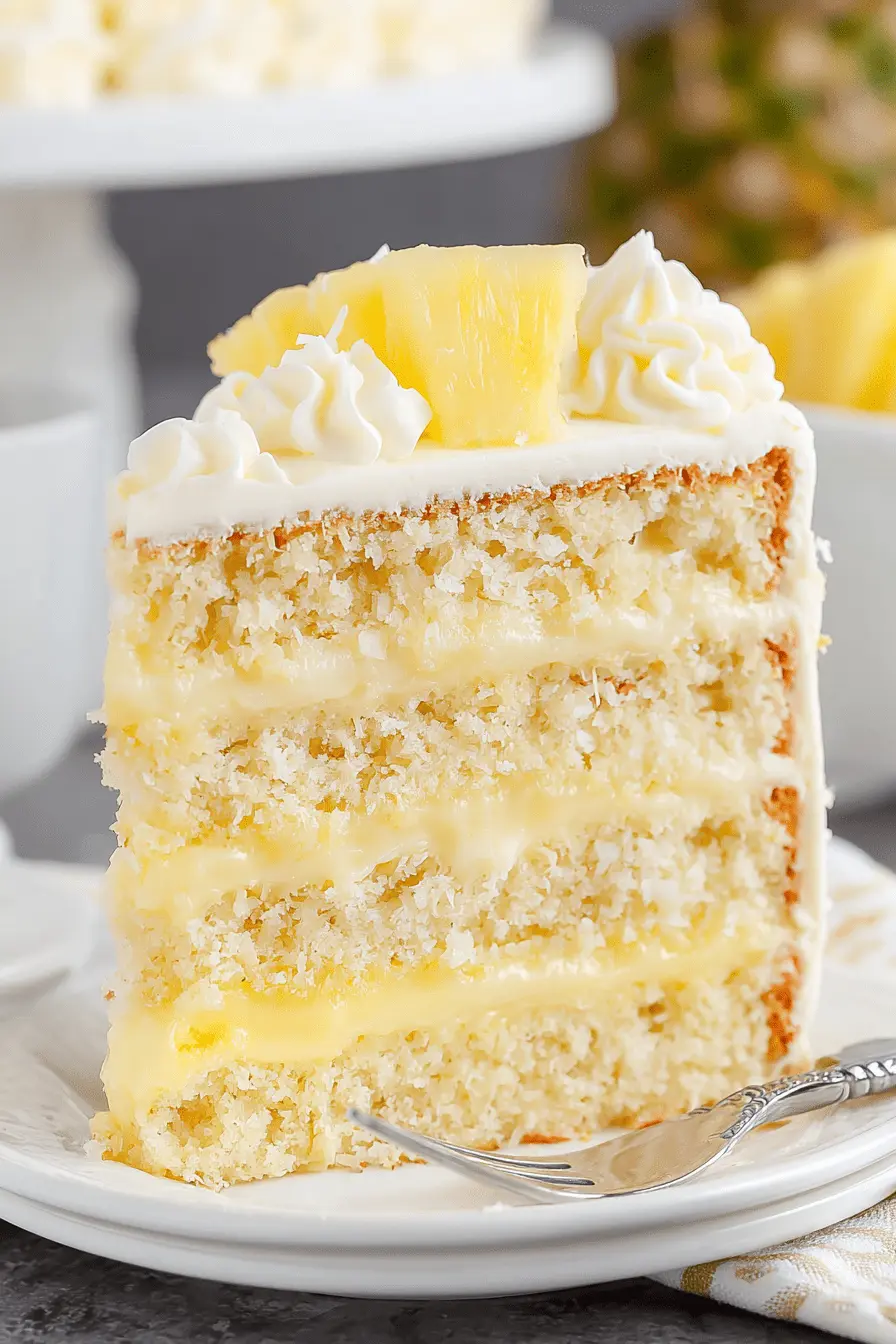
- Assemble: Place one cake layer on serving plate. Spread half of the pineapple filling over it. Top with another cake layer, and smooth a layer of cream cheese frosting over it. Top with third cake layer. Spread remaining half of the pineapple filling over it. Top with last (4th) cake layer. Frost the sides and top of the cake with coconut cream cheese frosting. Sprinkle outsides of cake with shredded coconut, if desired.
- Refrigerate for at least 4 hours, before serving. (Tastes even better the next day!)
Pro Tips for a Flawless Pineapple Coconut Cake
Getting Your Ingredients Ready for Success
Achieving a perfectly blended batter and smooth frosting often starts before you even turn on your mixer. Ensure your unsalted butter, cream cheese, and eggs are at true room temperature. This means they should be soft enough to indent easily but not melted or greasy. For butter and cream cheese, this usually takes about 30-60 minutes out of the fridge. Room temperature ingredients emulsify better, leading to a smoother batter and a more uniform texture in your pineapple coconut cake.
When it comes to crushed pineapple for the filling, the choice matters. Opt for good quality canned crushed pineapple in its own juice, not syrup. Draining off most of the juice before adding it to the saucepan will give you better control over the filling’s final consistency and sweetness. Different brands can vary in how finely crushed the pineapple is, but for this recipe, any standard crushed pineapple will work beautifully as long as it’s well-drained.
Mastering the Batter: No More Overmixing!
Overmixing is the enemy of a tender cake! After gradually adding your flour mixture, mix on medium speed for just 2 minutes, and then only until the ingredients are just combined. The goal is to develop enough gluten for structure without making the cake tough. A correctly mixed batter will look smooth and cohesive, but not overly elastic. If you see streaks of flour, give it a few more gentle stirs. Once you fold in the egg whites, be extra gentle, incorporating them until no white streaks remain. Overmixing here will deflate the air you’ve worked so hard to build, resulting in a dense cake rather than the fluffy pineapple coconut cake you’re aiming for.
Baking for Perfection: How to Know Your Cake is Done
Beyond the trusty toothpick test, there are other cues to ensure your pineapple coconut cake layers are baked to perfection. When gently pressed, the center of the cake should spring back. The edges will pull slightly away from the pan, and the top will be a light golden brown. For the most accurate result, use an instant-read thermometer; the internal temperature of a perfectly baked cake layer should register between 200-210°F (93-99°C). Under-baked cakes can collapse in the center and have a gummy texture, while over-baked cakes will be dry and crumbly. Trust your senses and these indicators to pull your cakes at just the right moment for ideal moistness and fluffiness.
The Secret to Silky Pineapple Filling
The key to a luscious, spreadable pineapple filling lies in proper thickening and understanding the ingredients. Canned pineapple is actually preferred over fresh for this cooked filling because fresh pineapple contains bromelain, an enzyme that can break down proteins and prevent gelatinization, resulting in a runny filling. The cooking process in canned pineapple deactivates this enzyme. When cooking the filling, stir frequently over medium heat until it visibly thickens and takes on a “glossy” appearance – this indicates the cornstarch has fully activated. If your filling seems watery, ensure you’ve cooked it long enough and that the cornstarch has had time to work its magic. Remember to press plastic wrap directly onto the surface to prevent a skin from forming as it cools and chills.
Perfecting Your Coconut Cream Cheese Frosting
Achieving the ideal cream cheese frosting consistency is essential for easy spreading and a beautiful finish. Begin by beating your room temperature butter and cream cheese until they are truly smooth and light, with no lumps, which might take 2-3 minutes. Gradually add the powdered sugar, mixing on low speed to avoid a sugar cloud, then increase to medium until light and fluffy. If your frosting is too stiff, add the leftover coconut milk (or regular milk) one tablespoon at a time until it reaches a spreadable yet firm consistency. If it’s too loose, add more powdered sugar, a quarter cup at a time, until it holds its shape. For grainy frosting, ensure your butter and cream cheese were truly softened, and beat them longer at the initial stage. The perfect frosting will be silky, easy to spread with an offset spatula, and firm enough to create distinct layers.
Assembling Your Stunning Pineapple Coconut Cake
Layering your pineapple coconut cake like a pro is simpler than you think! After your cakes are completely cooled, use a sharp serrated knife or a cake leveler to torte (slice horizontally) each cake round in half, yielding four even layers. This ensures a balanced distribution of cake, filling, and frosting. For stability, always start with a small dollop of frosting on your serving plate to anchor the first layer. Spread half of your chilled pineapple filling evenly over the first cake layer, leaving a small border. For the frosting layers, apply a generous amount and use an offset spatula to smooth it out. Don’t worry about perfection on the sides initially; a thin “crumb coat” of frosting helps trap any loose crumbs. Chill the cake for 15-20 minutes after the crumb coat, then apply your final, thicker layer of frosting. This technique prevents crumbly cake layers from showing through and ensures a polished, beautiful finish.
Make-Ahead & Storage Tips for Your Pineapple Coconut Cake
How to Store Leftover Cake
To keep your delicious pineapple coconut cake fresh and moist, proper storage is key! If storing at room temperature (only recommended for up to a day in a cool environment), place the cake under a cake dome or in an airtight container. For longer storage, refrigerate the cake. Wrap any leftover slices or the entire cake tightly in plastic wrap, then place in an airtight container. This protects it from absorbing fridge odors and drying out. Stored this way, your pineapple coconut cake will stay delightfully fresh for up to 5-7 days in the refrigerator. Remember, cream cheese frosting requires refrigeration!
For more general guidance on food safety, you can refer to the USDA’s cold food storage charts.
Freezing Options
This pineapple coconut cake is wonderfully freezer-friendly, making it perfect for preparing components in advance or saving leftovers. You can freeze individual unfrosted cake layers: once completely cooled, wrap each layer tightly in plastic wrap, then in aluminum foil, and store in a freezer bag for up to 2-3 months. The pineapple filling can also be frozen in an airtight container for up to 1 month. For the frosting, freeze it in an airtight container for up to 2 weeks, then thaw in the fridge and re-whip before use.
To freeze a fully assembled pineapple coconut cake, first flash freeze the cake on a baking sheet until the frosting is firm (about 1-2 hours). Then, wrap it tightly in several layers of plastic wrap, followed by aluminum foil. It can be frozen for up to 1 month. To thaw, unwrap the cake and let it sit in the refrigerator overnight, then bring it to room temperature for about an hour before serving for the best texture.
A Strategic Make-Ahead Timeline
Baking can be stress-free, even for a showstopper like this pineapple coconut cake, with a little planning! Here’s a make-ahead timeline to break down the process:
- Up to 1 Week Ahead: Prepare the pineapple filling. Once cooked and cooled, store it in an airtight container in the refrigerator. It will be ready to go when you are.
- 2-3 Days Ahead: Bake the cake layers. Once completely cooled, wrap them tightly in plastic wrap and store them at room temperature or refrigerate. You can even freeze them at this stage (see “Freezing Options” above) if you need more time.
- 1 Day Ahead: Make the coconut cream cheese frosting. Store it in an airtight container in the refrigerator. On assembly day, let it come to room temperature for about 30 minutes, then re-whip it briefly until light and fluffy.
- Baking Day: Assemble your cake! With all components ready, torting the cakes, layering with filling and frosting, and applying the final touches will be a breeze. Remember to allow the cake to chill for at least 4 hours (or overnight) before serving to let the flavors meld beautifully.
This thoughtful approach ensures that you can enjoy the baking process and still have a spectacular dessert ready for any occasion!
Pineapple Coconut Cake Variations & Substitutions
Flavor Boosters & Creative Twists
While this pineapple coconut cake is utterly delicious as is, feel free to experiment with these creative twists and flavor boosters to customize it to your liking and add an extra layer of tropical indulgence!
| Variation / Substitution | Description & Impact |
|---|---|
| Rum Enhancement | Add 1-2 tablespoons of dark rum to the pineapple filling or frosting for an extra tropical kick. |
| Toasted Coconut Garnish | Lightly toast shredded coconut in a dry skillet until golden for added crunch and depth of flavor. |
| Lime Zest | Incorporate fresh lime zest into the frosting or filling for a bright, tangy counterpoint. |
| Pineapple Curd Twist | Replace the simple pineapple filling with a homemade pineapple curd (adjusting for sweetness). |
| Different Cake Sizes | Bake in a 9×13 inch pan for a sheet cake or as cupcakes, adjusting baking times accordingly. |
Dietary Adaptations for Your Pineapple Coconut Cake
Making delicious treats accessible to everyone is important! Here are some tried-and-true adaptations to ensure your pineapple coconut cake can be enjoyed by those with specific dietary needs.
| Dietary Adaptation | How to Modify |
|---|---|
| Gluten-Free | Use a 1:1 gluten-free all-purpose flour blend specifically designed for baking (ensure it contains xanthan gum). |
| Dairy-Free (Cake) | Ensure butter is a high-quality dairy-free butter stick, and coconut milk is full-fat canned. |
| Dairy-Free (Frosting) | Use dairy-free cream cheese and dairy-free butter sticks for the frosting. Adjust powdered sugar as needed for consistency. |
Serving Suggestions for Your Tropical Pineapple Coconut Cake
This vibrant pineapple coconut cake is a showstopper on its own, but pairing it with the right accompaniments can elevate your dessert experience even further. For a refreshing balance, consider serving slices with a tall glass of iced tea, sparkling water with a squeeze of lime, or a light rum-based cocktail to complement its tropical notes. If you’re hosting a gathering, consider offering a refreshing vibrant mango pineapple smoothie as a non-alcoholic option. For a dessert spread, this cake pairs wonderfully with other small, delightful treats like amazing strawberry kiss cookies or delightful lemon blueberry cookies, creating a diverse and irresistible spread for your guests.
Frequently Asked Questions about Pineapple Coconut Cake
What type of canned pineapple works best and why?
For this pineapple coconut cake filling, crushed pineapple is definitely your best bet. Crushed pineapple provides a uniform texture that blends smoothly into the filling, creating a luscious spread without chunky bits. Pineapple tidbits or chunks might leave your filling too lumpy. Opt for pineapple packed in its own juice rather than heavy syrup to control the sweetness and avoid an overly sugary filling. This ensures a consistent, delicious texture and flavor for your cake.
Can I use fresh or frozen pineapple instead of canned?
While fresh pineapple offers a bright flavor, it’s generally not recommended for the cooked filling in this pineapple coconut cake recipe. Fresh pineapple contains bromelain, an enzyme that can prevent the cornstarch from thickening properly, resulting in a runny filling. If you absolutely wish to use fresh pineapple, you would need to cook it thoroughly on its own first to deactivate the enzyme before combining it with the other filling ingredients, which adds an extra step. Frozen pineapple, once thawed and drained, can be used as a substitute for canned crushed pineapple, but ensure it’s well-drained to avoid excess moisture in the filling.
How do I prevent cake layers from sticking to the pans?
Preventing your precious cake layers from sticking is crucial for beautiful results. Beyond lining the bottom with parchment paper, make sure to lightly grease both the parchment and the sides of the pan with cooking spray. For extra insurance, you can lightly flour the greased pans after spraying, tapping out any excess. For pans with intricate designs or very sticky batters, some bakers use a homemade “cake goop” (equal parts flour, shortening, and vegetable oil). Using light-colored aluminum pans also helps, as they distribute heat more evenly and reduce the chance of sticky, overly browned edges.
My cream cheese frosting is too runny/stiff, what should I do?
Don’t fret! Cream cheese frosting can be a bit finicky, but it’s usually fixable. If your frosting is too runny, it’s often because the butter or cream cheese was too warm, or too much liquid was added. To thicken it, gradually add more powdered sugar, a quarter cup at a time, until it reaches your desired consistency. You can also try chilling the frosting in the refrigerator for 15-30 minutes, then re-whipping it. If your frosting is too stiff, it might be due to too much powdered sugar or ingredients being too cold. Add a tiny bit more liquid (leftover coconut milk or regular milk), half a tablespoon at a time, until it loosens up. Always make adjustments gradually!
Can I adjust the sweetness of the pineapple coconut cake?
Absolutely! This pineapple coconut cake is wonderfully versatile when it comes to sweetness. To reduce the sweetness of the cake, you can slightly decrease the granulated sugar by about 1/4 to 1/2 cup, but be mindful that sugar also contributes to moisture and texture. For the pineapple filling, you can reduce the granulated sugar by up to 1/4 cup. In the cream cheese frosting, start with 4 cups of powdered sugar and add more only if needed for consistency and taste. Remember that the shredded sweetened coconut also adds sweetness, so opting for unsweetened shredded coconut (and perhaps toasting it) can also help balance the flavors.
How long will Pineapple Coconut Cake last?
Your delicious pineapple coconut cake, due to its cream cheese frosting and moist filling, is best stored in the refrigerator. When properly covered or stored in an airtight container, it will remain fresh and delicious for about 5-7 days. At room temperature, it’s generally safe for only about a day, especially in warmer environments. For more detailed information on food storage, refer to the cold food storage charts from FoodSafety.gov.
Can I freeze pineapple coconut cake with the filling and frosting?
Yes, you absolutely can freeze the fully assembled and frosted pineapple coconut cake! This is a fantastic option for make-ahead convenience or saving leftovers. To do so, first place the entire cake (uncovered) in the freezer for 1-2 hours until the frosting is firm. This “flash freeze” prevents the frosting from sticking to the wrapping. Once firm, wrap the cake tightly in several layers of plastic wrap, followed by a layer of aluminum foil to prevent freezer burn. It can be frozen for up to 1 month. To thaw, simply unwrap the cake and place it in the refrigerator overnight. For the best texture and flavor, allow it to sit at room temperature for about an hour before serving.
Your Slice of Paradise Awaits!
There you have it! Your comprehensive guide to baking the most incredible pineapple coconut cake – a true slice of tropical paradise right in your own home. With these step-by-step instructions, expert tips, and helpful variations, you’re now equipped to create a dessert that will impress and delight everyone fortunate enough to get a bite. Don’t be shy, dive into the kitchen and bring this moist, fluffy, and utterly delicious cake to life! We’d love to hear about your baking adventure. Please leave a comment below with your experiences, any questions you might have, or simply share your stunning results on social media using #AishaRecipesPineappleCoconutCake. Happy baking!
Pineapple Coconut Cake
Ingredients
Equipment
Method
- Preheat the oven to 350°F (175°C) and prepare two 8-inch cake pans by lining the bottoms with parchment paper and lightly spraying with cooking spray.
- In a mixing bowl, combine flour, baking powder, and salt, then set aside.
- In a separate bowl, beat butter until light and fluffy, then add sugar and mix until well combined. Stir in 1 1/4 cups of canned coconut milk and coconut extract.
- Gradually add the dry flour mixture to the wet ingredients and mix on medium speed for 2 minutes.
- In another bowl, beat egg whites until stiff peaks form, then gently fold them into the cake batter until just incorporated.
- Divide the batter evenly between the prepared cake pans and bake for 25-35 minutes, or until a toothpick comes out clean. Let the cakes cool in the pans for 5 minutes before transferring to a rack to cool completely.
- Once cooled, use a serrated knife to horizontally cut each cake round in half, creating four thin layers.
- Combine all pineapple filling ingredients in a medium saucepan over medium heat, stirring frequently until the mixture thickens and becomes glossy, about 5-8 minutes. Pour the filling into a container, cover its surface directly with plastic wrap, and refrigerate once cooled.
- Beat butter and cream cheese together until smooth. Gradually add powdered sugar and a splash of coconut milk, mixing until smooth and fluffy, adjusting consistency with more milk or sugar if needed. Stir in shredded coconut, reserving some for garnish.
- Place the first cake layer on a serving plate, spread half of the pineapple filling, then top with a second cake layer and a layer of cream cheese frosting. Add the third cake layer, spread the remaining pineapple filling, then top with the final cake layer. Frost the sides and top of the entire cake with the coconut cream cheese frosting and sprinkle with reserved shredded coconut if desired.
- Refrigerate the assembled cake for at least 4 hours before serving for optimal flavor and setting.