
When I first moved to the U.S., I missed the flavors of home but didn’t have hours to spend in the kitchen. Pan seared shrimp became my go-to quick and comforting dinner that felt like a small victory on busy nights. Today, I’m excited to share my foolproof recipe that brings restaurant-quality shrimp right to your table in under 20 minutes.
A Quick and Impressive Weeknight Meal
Pan seared shrimp can feel intimidating, but I promise it’s easier than you think. With just a few simple ingredients and a hot pan, you can create juicy, flavorful shrimp with a perfect sear that rivals your favorite seafood spots. This recipe is perfect for busy weeknights when you want a quick dinner that’s both comforting and impressive. From prep to plate takes about 20-25 minutes, making it an ideal choice for beginners and seasoned cooks alike.
Recipe Highlights
- Achieve a perfect golden sear every time, locking in juices and flavor without overcooking.
- Ready in under 25 minutes, it fits seamlessly into even the busiest schedules.
- Versatile seasoning with fresh lemon and herbs enhances shrimp without overwhelming, making it great for a variety of dishes.
- Clear, step-by-step instructions with photos and tips ensure your success, from thawing to plating.
Choosing Your Shrimp Wisely (Fresh, Frozen, & Sizing)
For the best pan seared shrimp, choose raw, preferably shelled and deveined shrimp with the tail on. Fresh shrimp offer great flavor but can be tricky to find; frozen shrimp are equally good when properly thawed. Wild shrimp often have a firmer texture and more flavor, while farmed shrimp are widely available and budget-friendly.
Shrimp sizes matter: jumbo shrimp (16-20 per pound) take longer to cook, while medium (41-50 per pound) cook quickly but may lack that bold shrimp bite. For pan searing, large shrimp (31-40 per pound) hit the perfect balance of cook time and texture. Always check if shrimp are peeled and deveined for easier preparation; if not, remove shells and veins before cooking to avoid grit and toughness.
Essential Tools for Pan Searing Shrimp
A sturdy pan is essential for that perfect sear. Cast iron skillets are my favorite because they hold heat evenly and develop a wonderful crust on shrimp. Stainless steel pans work well too, providing a great sear with proper preheating. Avoid non-stick pans for searing since they don’t develop a crisp exterior as well.
Ingredients for Flavorful Pan Seared Shrimp
- 1 pound Raw Shrimp (about 23 shrimp per pound, preferably shelled and deveined with tail on)
- 1 1/2 tbsp Olive Oil
- Oil Spray
- 1 whole Lemon (1 tsp zest + juice as needed)
- 1/4 tsp Dried Thyme
- 1/4 tsp Dried Tarragon
- 3 tbsp Chopped Parsley
- 1/2 tsp Crushed Red Pepper Flakes (optional)
- 1/4 tsp Black Pepper
- 1/2 tsp Kosher Salt (or pink salt)
The Step-by-Step Process
Step 1: Thaw & Prepare Your Shrimp
If using frozen shrimp, place them in a bowl of cold water, changing the water every 10 minutes. This should defrost the shrimp in 20-30 minutes depending on room temperature. For fresh or already defrosted shrimp, rinse under cold running water in a bowl to remove any residue. Drain thoroughly.
Blot the shrimp dry with clean paper towels and transfer to a dry bowl. Removing all moisture is critical because damp shrimp will steam instead of sear, preventing that beautiful crust you want. If your shrimp aren’t peeled or deveined, now’s the time to remove the shells and veins for the best texture and taste.
Step 2: Season Your Pan Seared Shrimp to Perfection
Chop the parsley and set most aside. Add lemon zest, dried thyme, dried tarragon, crushed red pepper flakes, kosher salt, black pepper, one tablespoon of fresh parsley, and olive oil to the shrimp. Gently fold the seasonings into the shrimp with a spoon until they are nicely coated.
Letting the shrimp rest at room temperature for 10-30 minutes is optional, but doing so helps the flavors meld beautifully.
Step 3: Preheat Your Pan (The Secret to a Perfect Sear)
Spray your skillet with oil spray and place it over medium-high heat. Let it preheat for 2-3 minutes until hot. You’ll know your pan is ready when the oil shimmers and may just begin to smoke lightly. Using a high smoke point oil like olive oil ensures your shrimp can sear quickly without burning.
Step 4: Searing Your Shrimp in Batches
Add half the shrimp to the hot pan, making sure not to crowd them. Leaving space between each shrimp lets them sear properly rather than steam.
Watch for the shrimp color to change from translucent to opaque about halfway up the side, which takes roughly 1-2 minutes. This is your cue to flip each shrimp individually.
Step 5: Flipping, Finishing, and Doneness Cues
Flip each shrimp one at a time as soon as the first side is set. As you flip, squeeze fresh lemon juice over the shrimp—you’ll hear a satisfying sizzle. Cook for an additional 30 seconds to 1 minute, checking for doneness.
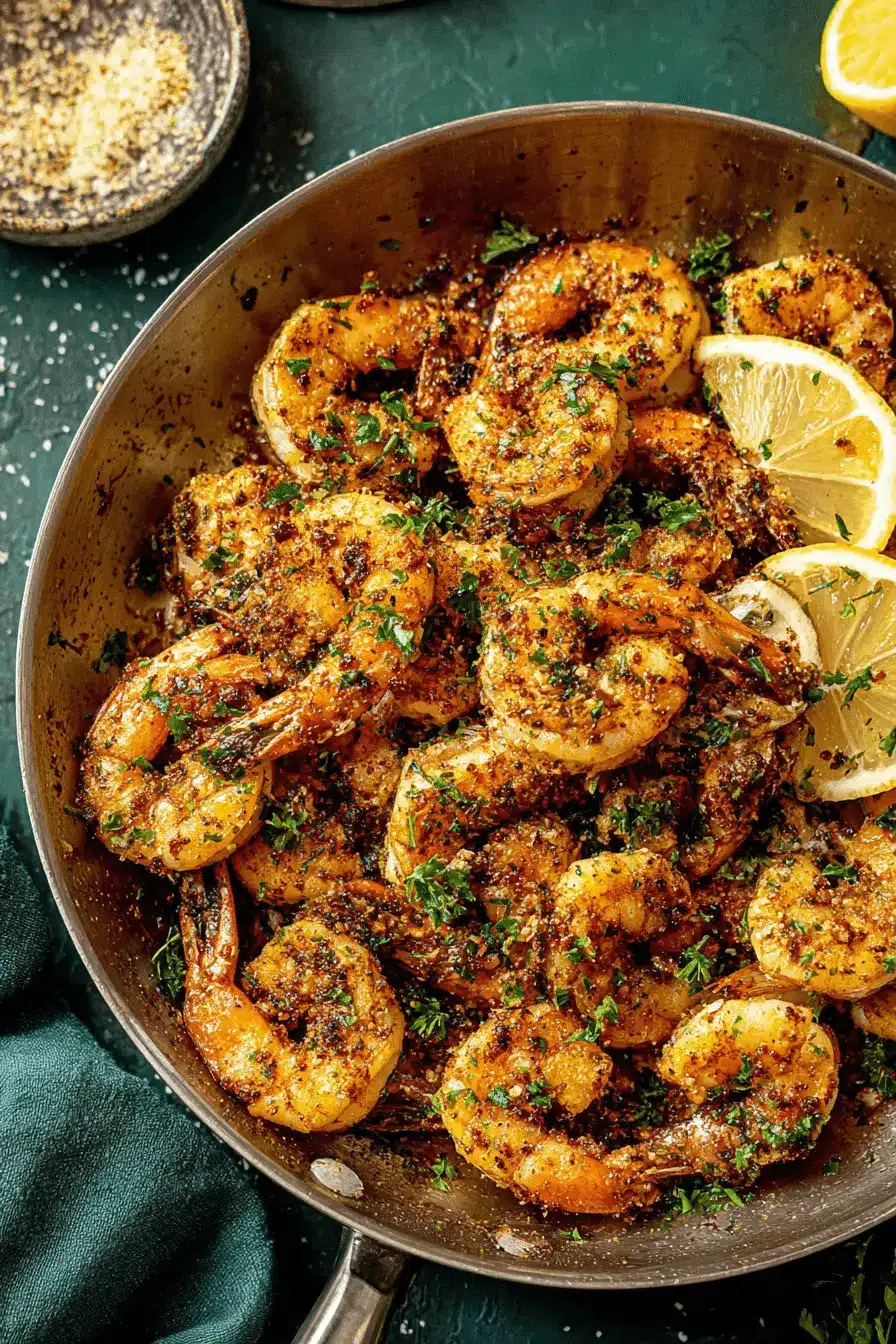
Perfectly cooked shrimp turn opaque and pink with red tails and form a gentle “C” shape with a slight gap between head and tail. Avoid overcooking, which makes shrimp curl tightly into an “O” shape and become rubbery.
Remove shrimp immediately when they look done, as they continue to cook off the heat (carryover cooking).
Step 6: Serve Immediately!
Sprinkle the remaining fresh parsley over your pan seared shrimp and serve right away. The fresh herbs and bright lemon take this dish from simple to stunning.
Expert Tips for the Best Results
Achieving the Ultimate Sear and BROWNING
Ensure shrimp are extremely dry before seasoning. Consider a quick dry brine with salt for 15 minutes before cooking to enhance flavor and moisture retention. Use neutral or high smoke point oils and a cast iron skillet for the best crust development.
Avoiding Rubbery Shrimp (Common Mistakes & Solutions)
- Don’t overcrowd the pan, or the shrimp will steam instead of sear.
- Make sure your pan is hot enough before adding shrimp.
- Dry shrimp very well to promote a crisp exterior.
- Remove shrimp as soon as they turn opaque and pink to prevent overcooking.
Maintenance and Variations
Properly Cleaning Your Cast Iron Pan After Cooking Shrimp
Rinse cast iron with hot water (no soap), scrub gently with a non-metal brush or sponge to remove residue, and dry thoroughly. Apply a light coat of oil to maintain seasoning and prevent rust, especially after cooking seafood.
Flavor Variations to Try
| Variation Name | Key Ingredients/Description |
|---|---|
| Lemon-Garlic Butter | Fresh lemon juice, minced garlic, melted butter, fresh parsley |
| Cajun Spice | Paprika, cayenne, garlic powder, onion powder, thyme |
| Asian-Inspired | Soy sauce, grated ginger, garlic, sesame oil, green onions |
| Spicy Chili-Lime | Chili powder, lime zest, crushed red pepper, cumin |
| Herby Garlic Butter | Minced garlic, fresh thyme, rosemary, melted butter |
Serving and Storage
What to Serve with Pan Seared Shrimp
Pair your shrimp with quick sauces like a lemon-garlic butter sauce, vibrant chimichurri, fresh basil pesto, or a classic cocktail sauce. For sides, consider garlic butter rice, roasted veggies, or a crisp salad. These pairings bring out the shrimp’s brightness and make any meal feel complete.
Storage and Reheating Tips
Store leftover shrimp in an airtight container in the refrigerator for up to 2 days. Reheat gently in a covered skillet over low heat or quickly in the microwave to avoid overcooking. Avoid reheating multiple times to maintain texture and flavor. Always check for freshness before eating leftovers.
Frequently Asked Questions (FAQ)
Can I use frozen cooked shrimp for this recipe?
This recipe is designed for raw shrimp to achieve proper searing. Using pre-cooked frozen shrimp can result in rubbery texture since they only require reheating. If using pre-cooked, warm them quickly in a pan with seasoning but skip searing steps.
What type of pan should I use for pan searing shrimp?
Cast iron and stainless steel pans are best for searing because they hold and distribute heat evenly. Non-stick pans don’t provide the crust and browning that make pan seared shrimp delicious.
How do I know when pan seared shrimp are perfectly cooked?
Look for shrimp that are opaque pink with red tails and form a loose “C” shape. For ultra-precision, use a meat thermometer aiming for an internal temperature between 120-145°F (49-63°C).
How do different shrimp sizes affect cooking time?
Smaller shrimp cook faster, usually within 1-2 minutes per side. Jumbo shrimp take a bit longer, up to 3 minutes per side. Adjust cooking time accordingly to avoid over- or undercooking.
What are common reasons for rubbery pan seared shrimp?
Rubbery shrimp result from overcooking, overcrowding the pan causing steaming, and not drying shrimp properly before cooking.
More Simple Recipes to Enjoy
- Garlic Butter Salmon with Asparagus
- Quick Air Fryer Chicken Thighs
- Creamy One-Pot Cajun Pasta
- Easy Lemon Herb Air Fryer Tilapia
- Spicy Honey Garlic Glazed Chicken
Conclusion: Happy Cooking!
I can’t wait for you to try this pan seared shrimp recipe—it’s a total game changer for busy nights! Share your delicious wins by tagging your photos with #AishaRecipes on social media. Drop a comment below to tell me your favorite seasoning blend or ask any questions you have. Don’t forget to sign up for my newsletter to get your free 5-Day Seafood Meal Plan, packed with tips and recipes just like this one. Cooking doesn’t have to be hard—let’s keep it simple, tasty, and joyful together!
Pan Seared Shrimp
Ingredients
Equipment
Method
- Defrost frozen shrimp in cold water for 20-30 minutes, changing water every 10 minutes (skip if using fresh/defrosted).
- Rinse shrimp under cold running water, then drain well and blot thoroughly dry with paper towels to ensure proper searing.
- Chop parsley and set aside; this will be used for seasoning and garnish.
- Add lemon zest, dried herbs, crushed red pepper, salt, pepper, 1 tbsp parsley, and olive oil to the shrimp and gently fold until coated.
- Optionally, let the seasoned shrimp sit at room temperature for 10-30 minutes to absorb the flavors.
- Spray your pan with cooking oil and heat over medium-high heat for 2-3 minutes until hot.
- Working in batches, add half of the shrimp to the hot pan, ensuring not to overcrowd, and cook for approximately 1-2 minutes per side.
- Flip each shrimp individually when halfway opaque, squeezing fresh lemon juice over each piece as you do.
- Cook for another 30 seconds to 1 minute until just done, characterized by an opaque, pink color and a gentle “C” shape.
- Immediately remove each shrimp from the pan as it finishes cooking to prevent overcooking due to carryover heat.
- Add the remaining fresh parsley to the cooked shrimp and serve immediately.