
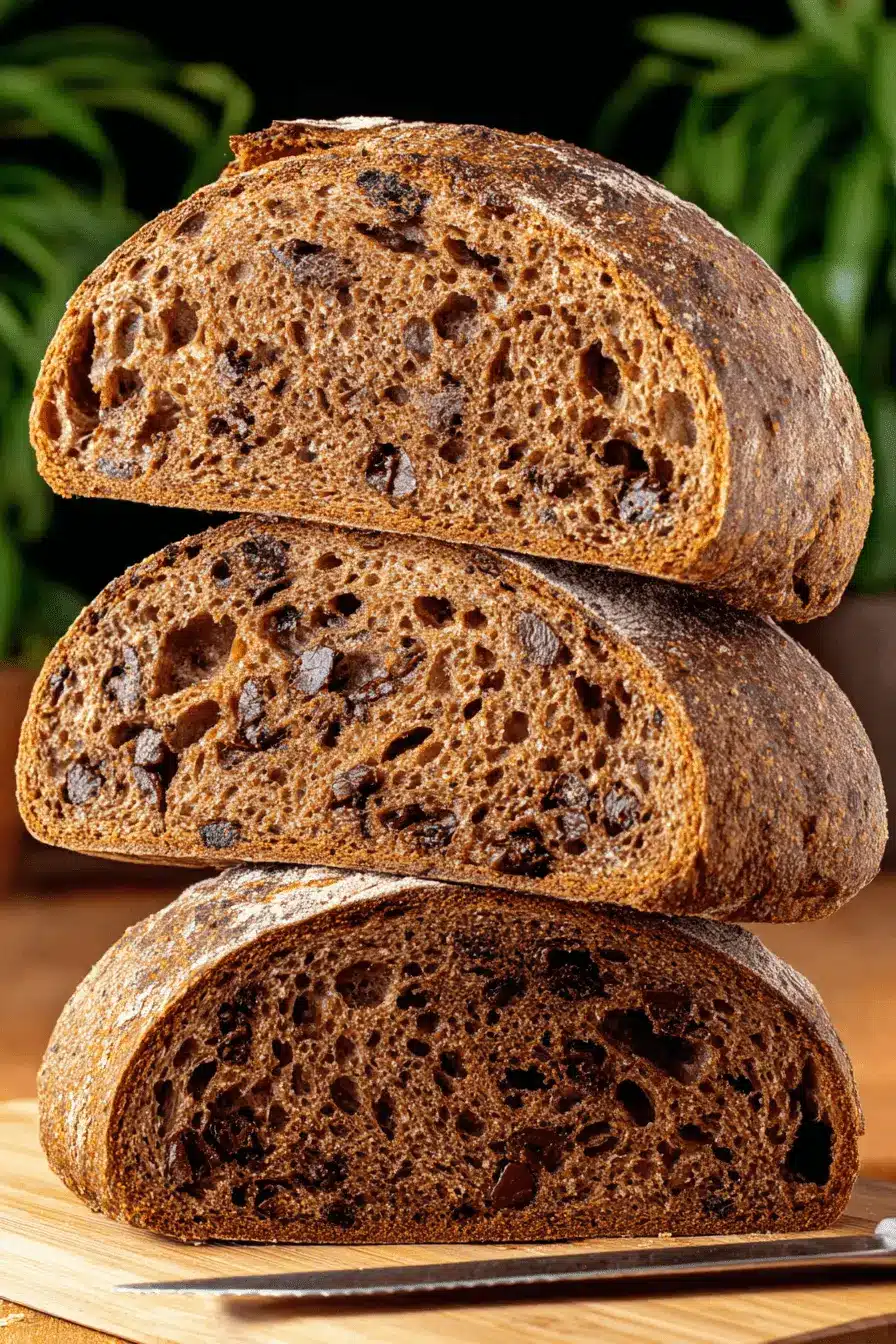
I still remember the first time I smelled chocolate sourdough bread baking in my kitchen, the rich aroma filling every corner felt like a warm hug after a long day. Baking this Chocolate Sourdough Bread has truly changed how I enjoy sourdough, blending deep cocoa flavor with a chewy, tender crumb. This guide will take you step-by-step through the process, making it approachable and enjoyable, even if you’re new to sourdough baking.
Table of Contents
Why This Is the Only Chocolate Sourdough Bread Recipe You’ll Need
- This recipe is a Master Class approach combining a perfect, crackly crust with a soft, chewy crumb deeply infused with chocolate flavor.
- It includes troubleshooting tips and unique techniques that ensure even beginners can achieve bakery-quality results.
- The guide breaks down the complex process into simple steps, making chocolate sourdough baking accessible and stress-free.
- Using a mature, active starter brings out nuanced flavors while the balanced ingredients create a loaf that’s both rich and light.
Key Ingredients and Their Roles
Each ingredient in this Chocolate Sourdough Bread recipe plays a special role:
- Unbleached all-purpose flour provides the main structure with good gluten development.
- Freshly ground whole wheat flour adds depth of flavor and texture, enriching the loaf with natural nuttiness.
- Bread flour (optional) intensifies gluten strength for better rise and chewiness.
- Brown sugar contributes sweetness and helps balance the natural tang of sourdough.
- Cocoa powder: Using natural (non-Dutch processed) cocoa powder enhances a brighter, sharp chocolate flavor and a deeper, rustic color. Dutch-processed cocoa powder will yield a milder, smoother taste but darker crumb.
- Mature sourdough starter: This is the heart of the recipe, providing leavening and fermenting flavors.
- Chocolate chips: Chips melt more evenly than chopped bars, reducing burning or sinking risks while distributing chocolate pockets throughout the loaf.
- Salt enhances flavor and regulates yeast activity.
- Water hydrates the flour to build dough structure.
Ingredients
- 250 grams unbleached all purpose flour
- 100 grams freshly ground whole wheat flour
- 125 grams bread flour (optional, can omit and add more all purpose)
- 10 grams salt
- 50 grams brown sugar
- 50 grams cocoa powder
- 100 grams mature starter (active and bubbly)
- 335 grams water
- 125 grams chocolate chips
Essential Baking Equipment
Here’s what you’ll need to bake this loaf perfectly:
- Dutch oven: Creates a mini-steam environment to develop a crispy crust.
- Kitchen scale: Precision is key; weighing ingredients ensures consistency.
- Dough whisk or mixing spoon: For combining ingredients efficiently.
- Banneton or bowl lined with tea towel: Provides shape and seam support for proofing.
- Razor blade or bread lame: For scoring crisp, attractive patterns.
- Plastic wrap or damp towel: To cover dough during fermentation.
- Thermometer: To check internal dough temperature for perfect bake.
How to Make Perfect Chocolate Sourdough Bread: A Step-by-Step Guide
Baking your Chocolate Sourdough Bread is a rewarding journey. Follow each step carefully, and soon you’ll have a loaf that smells like heaven.
Step 1: Activating Your Sourdough Starter
Feed your sourdough starter 4-12 hours before starting the dough with enough flour and water to make it bubbly and active. Look for a domed surface, web-like bubbles underneath, and passing the “float test,” where a small spoonful floats on water. These signs tell you your starter is ready to give life to this rich dough.
Step 2: Mixing the Dough & Autolyse
In a large bowl, combine 250 grams unbleached all purpose, 100 grams freshly ground whole wheat, and 125 grams bread flour with 50 grams brown sugar and 50 grams cocoa powder (excluding the salt). Add 335 grams warm water and 100 grams of your active starter. Mix until just combined. Let the dough rest for 30 minutes. This autolyse period helps flour hydrate and jumpstarts gluten formation.
Step 3: Adding Salt, Chocolate & Developing Strength
Sprinkle 10 grams of salt over the dough. Mix with your hands for 5 minutes until the dough comes together. Cover the bowl and rest for 30 minutes.
Next, add 125 grams chocolate chips. Perform the stretch and fold technique: grab the dough edge, pull upward, fold into the center, and turn the bowl. Repeat three times, spaced every 15 minutes, then again every 30 minutes for a total of six stretch and folds. This builds gluten strength needed for rise and supports the chocolate chips evenly.
Step 4: Bulk Fermentation
Cover the dough and let it bulk-ferment until it doubles in size. Timing varies by temperature: in a warm kitchen (78°F/25°C), expect 4-6 hours; in cooler spots (68°F/20°C), 8-12 hours. This slower fermentation enriches flavor and texture.
Step 5: Shaping Your Loaf
Turn your dough onto a floured surface. Spin it and gently pull the dough toward you multiple times forming a smooth ball. Leave uncovered for 15-20 minutes to let the surface dry slightly, creating a skin.
Fold the dough sides to the middle twice, smoothing the shape. Place into a floured banneton or bowl lined with a tea towel, seam side up. Embedding a short video or GIF here showing shaping and folding helps visualize this important step.
Step 6: The Final Proof
Let your dough proof for 1 hour at room temperature or cover and proof cold in the refrigerator for 12-15 hours. The longer cold proof deepens flavor complexity and develops crumb structure.
Step 7: Scoring & Baking Your Chocolate Sourdough Bread
Preheat your Dutch oven to 425°F (220°C) for 1 hour. Remove dough from fridge and dust lightly with flour. Score the top with a razor to control expansion. Simple patterns like a single slash or a leaf motif look beautiful on the dark crust.
Bake with the lid on for 20 minutes to trap steam and develop crust, then remove the lid and bake another 30 minutes for a golden finish. Cool completely before slicing.
Example Baking Schedule
| Time | Activity |
|---|---|
| Day 1 – 9 AM | Feed sourdough starter |
| Day 1 – 3 PM | Mix dough & autolyse (30 min) |
| Day 1 – 4 PM | Add salt, mix, rest (30 min) |
| Day 1 – 5 PM | Add chocolate, start stretch and folds |
| Day 1 – 7 PM | Bulk fermentation begins |
| Day 2 – 6 AM | Shape dough, rest uncovered (15-20 min) |
| Day 2 – 6:30 AM | Final proof (1 hour at room temp or cold proof overnight) |
| Day 2 – 7:30 AM | Preheat oven, bake loaf |
Pro Tips for the Best Chocolate Sourdough Bread
- For a soft crust, remove from the oven a bit earlier and wrap loaf in a towel while cooling. For crispy crust, let cool uncovered.
- To ensure even chocolate distribution, fold the chips gently but thoroughly during stretch and folds. Avoid adding chips too early as they can melt into the dough.
- Use a thermometer—aim for 200°F (95°C) internal temperature to guarantee the loaf is fully baked.
- If your dough is sticky, resist the urge to add excessive flour; instead, give extra stretch and folds for strength.
Recipe Variations and Substitutions
| Ingredient | Substitution | Notes |
|---|---|---|
| Bread Flour | Additional unbleached all-purpose flour | Adjust hydration slightly as needed |
| Brown Sugar | Coconut sugar or maple syrup | May alter sweetness and flavor |
| Chocolate Chips | Dairy-free vegan chocolate chips | Suitable for vegan/dairy-free versions |
Add flavor twists with:
- Zest of an orange for citrus warmth
- 1 teaspoon espresso powder to deepen chocolate notes
- Cinnamon for a spicy hint
- Toasted nuts like walnuts or hazelnuts for crunch
Storing and Using Your Bread
Store your loaf in a paper bag or bread box at room temperature for up to 3 days. For longer storage, wrap tightly and freeze slices. Use leftovers creatively:
- Make a decadent chocolate bread pudding by soaking cubes in custard.
- Whip up chocolate French toast with cinnamon syrup for a special breakfast.
- Cube and toast for chocolatey croutons—perfect for unique salads or soups.
Troubleshooting Common Issues
| Problem | Likely Cause | Solution |
|---|---|---|
| Dense or gummy crumb | Underproofed dough or inactive starter | Allow longer bulk fermentation and ensure starter is fully active |
| Loaf not rising (flat) | Weak gluten development or cold starter | More stretch and folds; use room temp starter |
| Chocolate chips burning | Using chopped chocolate or baking too hot | Use chocolate chips and monitor baking temperature |
| Weak sourdough flavor | Starter not mature or short fermentation | Feed starter well in advance, extend fermentation time |
Frequently Asked Questions about Chocolate Sourdough Bread
Does cocoa powder affect the sourdough starter or yeast?
No, cocoa powder does not harm the yeast or sourdough starter activity; it mostly influences flavor and color.
What are the best toppings or spreads for chocolate sourdough?
Try cream cheese, nut butters, or even a light raspberry jam for a delicious contrast.
How can I make the sourdough flavor more or less tangy?
Longer cold fermentation increases tanginess; shorter fermentations yield milder flavor.
Can I make this recipe dairy-free?
Yes, simply use dairy-free chocolate chips and all other ingredients are naturally dairy-free.
Why is my dough stiffer than regular sourdough?
Adding cocoa and chocolate chips makes the dough denser and stiffer, requiring more gentle handling and extended fermentation.
Conclusion
Baking Chocolate Sourdough Bread is such a joyful experience—its rich aroma and comforting flavor make every moment worth it. Remember, each loaf is a learning step, and I’m here cheering you on. Don’t forget to leave a comment with your results, ask questions.
Chocolate Sourdough Bread
Ingredients
Equipment
Method
- Feed your sourdough starter 4-12 hours prior to ensure it is active and bubbly.
- In a large bowl, mix all dry ingredients except salt.
- Add warm water and sourdough starter, combine, and rest for 30 minutes.
- Sprinkle salt over the dough.
- Using your hands, mix the dough for 5 minutes until it forms a cohesive mass.
- Cover the bowl with a damp towel or plastic wrap.
- Let the dough rest for 30 minutes.
- Incorporate chocolate chips and begin the stretch and fold process.
- Perform a stretch and fold: firmly pull the dough edge upwards, push it to the center, and repeat a quarter turn for a total of four times.
- Repeat the stretch and fold technique three more times, with 15-minute intervals between each.
- Continue with three additional stretch and fold rounds, waiting 30 minutes between each.
- Cover the dough and allow it to bulk-ferment until doubled in size; timing varies with room temperature and starter activity.
- Shape the dough by spinning and pulling it towards you repeatedly until a ball forms.
- Leave the dough uncovered for 15-20 minutes to develop a skin.
- Transfer the dough to a clean surface and shape it by folding opposite sides towards the middle.
- Place the dough, seam side up, into a floured banneton or a tea towel-lined bowl.
- Perform a second rise for one hour at room temperature or proof in the refrigerator for 12-15 hours.
- Preheat a Dutch oven to 425°F for one hour.
- Once the Dutch oven is preheated, remove the dough from the refrigerator.
- Optionally, dust the top of the dough with flour.
- Score a design into the dough using a razor.
- Bake the dough in the covered Dutch oven for 20 minutes.
- Remove the lid and continue baking for an additional 30 minutes.
- Allow the bread to cool completely before slicing.