

Do you ever feel intimidated by the idea of making your kitchen basics from scratch? I used to think homemade broths were only for professional chefs or people with endless free time, but I promise that is not the case! Creating a rich, flavorful chicken stock recipe at home is completely achievable, even on a busy schedule.
By using the bones and skin from a store-bought rotisserie chicken, you bypass so much prep work while locking in incredible flavor. The total time for this delicious stock is approximately 2 hours and 15 minutes, and most of that is entirely hands-off. It is incredibly rewarding to transform everyday leftovers into a liquid gold that makes all your future meals taste phenomenal.
Why Homemade Chicken Stock is a Game Changer for Busy Cooks
When I first started cooking to survive busy weeknights, I relied heavily on store-bought cartons just to get dinner on the table. But once I discovered how to make this chicken stock recipe from leftover rotisserie chicken bones, my entire routine completely transformed. The flavor you get from simmering it yourself is undeniably richer and far more robust than anything you can buy in a grocery store.
Cooking this yourself also gives you total control over the ingredients, meaning absolutely no unnecessary preservatives, artificial colors, or hidden sodium. Furthermore, saving those bones and vegetable scraps makes this a highly cost-effective habit for any home cook looking to stretch their budget. Keeping a batch of this comforting magic in the fridge creates a simple foundation that elevates your everyday meals and eliminates so much dinnertime stress.
Chicken Stock vs. Chicken Broth: Understanding the Difference
I often get asked why I specifically call this a stock rather than a broth, and the secret lies primarily in the foundational ingredients. Stock is made by simmering bones, which slowly releases natural collagen and creates a fuller, slightly gelatinous texture. Broth, on the other hand, is usually simmered with mostly meat and results in a lighter, thinner liquid.
Because stock stews the bones over a longer period, it builds an incredibly rich mouthfeel that makes homemade sauces and gravies feel luxurious. Broth cooks relatively quickly and is wonderful for a light soup base or sipping straight from a mug when you feel under the weather. Understanding this simple difference gives you the complete confidence to choose exactly the right liquid to make your dinners shine.
Essential Ingredients for Your Flavorful Chicken Stock Recipe
The true beauty of this comforting foundation lies in its absolute simplicity. You only need a few humble items to create something spectacular, and starting with good quality cold water is crucial for coaxing out all those wonderful flavors. Here is everything you need for my favorite chicken stock recipe:
- 1 rotisserie chicken (, meat removed so you’re only left with bones and skin)
- 2 ribs celery (, with leaves, cut into chunks)
- 2 medium carrots (, cut into chunks)
- 2 medium onions (, cut into chunks)
- 2 bay leaves
- 1/2 teaspoon dried rosemary
- 1/2 teaspoon dried thyme
- 10 whole peppercorns
- 8 cups cold water
- 2 Tablespoons Better than bouillon chicken paste* (, or 6 chicken bouillon cubes )
Step-by-Step: How to Make This Easy Chicken Stock Recipe on the Stovetop
I know you have a lot on your plate every single day, so I keep this cooking process as straightforward as possible. Follow these simple steps to build deep comfort and flavor without the stress:
- Place rotisserie chicken, vegetables, spices and water into a large soup pot.
- Slowly bring to a boil over medium heat. Skim off any foam that rises to the surface.
- Reduce heat, cover and simmer on low heat for at least 2 hours or longer.
- Remove from heat and allow to cool.
- Strain stock through a fine sieve strainer, discarding all vegetables and seasonings so you are only left with the stock. Season with chicken boullion paste, to taste.
- Store in the fridge for up to 3-4 days. Skim off the fat that rises to the top. If not using within a few days, freeze for up to 3 months.
Beyond the Stovetop: Instant Pot and Slow Cooker Chicken Stock Variations
While the stovetop method is a wonderful classic, I absolutely love leaning on my kitchen appliances when life gets overwhelmingly busy. Adapting this chicken stock recipe to a pressure cooker or a slow cooker is delightfully easy and saves precious energy.
Instant Pot Chicken Stock
First, gather the exact same ingredients from the recipe and place them directly into the stainless steel insert of your Instant Pot. Secure the lid, ensure the valve is set to the sealing position, and cook on high pressure for exactly 45 minutes. Once the cooking cycle completes, allow the pot to perform a full natural pressure release for about 20 minutes before carefully opening the lid. Let the liquid cool slightly, strain it through your fine sieve to discard the solids, and then season it to taste with your bouillon paste.
Slow Cooker Chicken Stock
For a wonderfully hands-off approach, the slow cooker is undeniably a busy cook’s best friend. Toss the rotisserie chicken bones, vegetables, spices, and cold water right into your slow cooker basin. Cover it tightly and set the temperature to low, letting it simmer safely for 8 to 10 hours while you go about your day or sleep peacefully. Simply turn off the heat, let it cool down slightly, and carefully pass the liquid through a fine strainer before seasoning it.
Tips for Achieving Perfectly Clear and Flavorful Chicken Stock
I completely understand the desire for a beautiful, clear final product, and I am here to share a few easy secrets to help you achieve exactly that. Always start the process with cold water, because this helps the proteins release incredibly slowly and yields a much cleaner result. It is also vital to maintain just a gentle simmer on the stove; bringing the pot to a harsh, rolling boil will emulsify the fats and quickly turn the liquid cloudy.
Make sure to grab a spoon and gently skim off any foam that rises during those first few minutes to keep the flavor pure. Try your hardest to resist the urge to stir the ingredients as they bubble away, as excessive agitation breaks down the soft vegetables and muddies the water. Finally, always allow the stock to cool completely before you strain and store it to gently lock in that flawless clarity.
Troubleshooting Common Chicken Stock Issues
Even the most experienced home cooks run into tiny hiccups in the kitchen, but I assure you that every problem has a simple fix!
- Cloudy Stock: As I mentioned earlier, boiling the pot too vigorously or stirring it aggressively are the main culprits for a cloudy finish. If this happens, please do not worry, because it will still taste absolutely delicious in your weeknight stews! If you ever want truly outstanding clarity for a special occasion, you can try an advanced technique of mixing in stiffly beaten egg whites to form a raft that traps impurities, though I usually skip this step for everyday meals.
- Lack of Gelatin (Not Gelling): A rich, gelatinous texture comes entirely from the collagen in the bones breaking down over time. If your final product stays watery in the fridge, it likely needed a slightly longer simmer or perhaps a higher ratio of cartilage-rich pieces. Fortunately, since I use an entire leftover rotisserie carcass for this recipe, you usually have excellent odds of achieving that wonderful, jiggly gel.
- Bland Flavor: Sometimes the finished liquid simply needs a little extra coaxing to reach its glorious full potential. If the taste feels a bit flat, allowing it to simmer uncovered for an extra hour will gently evaporate the water and concentrate the savory flavor beautifully. Alternatively, simply adjusting your finishing seasoning with a touch more delicious bouillon paste usually does the trick instantly.
Storing and Freezing Your Homemade Chicken Stock
Knowing exactly how to safely store your culinary creations gives you the ultimate freedom to cook completely on your own schedule. I love keeping a stash of this magic liquid ready to go at all times.
- Refrigeration: Once you successfully strain and cool the liquid, it is completely safe to keep in the refrigerator for up to 3 to 4 days. Always remember to quickly skim off the distinct layer of solidified fat that inevitably rises to the top right before you reheat it.
- Freezing: If you do not plan to use it within a few days, placing it in the freezer is incredibly smart and extends its shelf life for up to 3 months. I personally love pouring it into flexible silicone ice cube trays for when I only need a tiny splash for a quick weeknight pan sauce. For larger amounts, heavy-duty freezer bags laid flat or safe plastic deli containers work perfectly; just thaw them gently in the fridge overnight before you plan to cook.
- Best Containers: For typical fridge storage, I highly recommend using sturdy glass mason jars with tight-fitting lids to preserve the ultimate freshness. When freezing, flexible silicone molds or freezer-proof plastic containers are absolutely ideal because the liquid will naturally expand slightly as it turns to solid ice.
Creative Ways to Use Your Homemade Chicken Stock
Having a hidden stash of this comforting base in your fridge feels exactly like having a secret weapon for dinner. It is undeniably perfect for building classic homemade soups or dropping into deep, hearty stews when the weather finally turns chilly. I also adore using it as the foundational liquid for rich sauces and savory gravies, bringing a restaurant-quality depth to simple meats.
Swapping out plain water for this flavorful bone base when cooking rice, quinoa, or risottos completely transforms those simple grains into the true star of the plate. It does absolute wonders for tenderizing tough cuts of meat and dense root vegetables during a low, slow braise in the oven. You can also splash a few tablespoons into a hot skillet after searing chicken to loosen the tasty browned bits for an instant pan sauce, or truly use it anywhere a basic recipe needs a quick punch of savory goodness.
Customize Your Chicken Stock Recipe: Flavor Variations
Cooking should always feel playful, and I highly encourage you to tweak these fun flavors to match whatever comforting meal you are craving. Take a look at this table for some easy ideas to switch up your standard routine:
| Variation | Additions | Flavor Profile |
|---|---|---|
| Herbal Boost | Fresh parsley, thyme, rosemary (bunched) | More aromatic, classic French |
| Spicy Kick | A few slices of fresh ginger, star anise, peppercorns | Asian-inspired, warming, unique |
| Umami Richness | A handful of dried shiitake mushrooms, kombu | Deeper, savory, intensely flavorful |
| Sweet & Savory | A roasted apple or pear half (no core), cinnamon stick | Subtle sweetness, comforting autumn notes |
| Brown Chicken Stock | Roast chicken bones and vegetables until deeply caramelized before simmering | Richer, deeper color, intense roasted flavor |
Frequently Asked Questions about Chicken Stock
Over the years, I have received so many wonderful questions from beginner cooks trying this out for the very first time. I am always thrilled to help clear up any confusion and build up your kitchen confidence!
- What are the best types of bones to use for maximum collagen and flavor?
While a standard rotisserie chicken is delightfully convenient, adding extra wings, necks, or feet to the pot introduces a massive amount of extra collagen. These cartilage-heavy pieces guarantee that beautiful, rich texture when nicely chilled. - Can I roast the bones first for a deeper, richer brown chicken stock?
Yes, absolutely! Placing the raw bones and chopped vegetables on a sheet pan to roast until deeply caramelized before boiling creates a stunningly dark, intensely flavored brown stock base. - What’s the ideal ratio of bones to water for homemade stock?
I find that using enough cold water to just barely cover the bones and vegetables is the absolute sweet spot. For a standard rotisserie carcass, eight cups of water generally yields a beautifully concentrated and highly flavorful result. - How long is too long to simmer chicken stock?
If you leave it on the stove for over four or five hours, the flavor actually begins to break down and taste a bit muddy or overly extracted. Two to three hours on the stovetop is genuinely all you need to extract the goodness from everyday poultry bones. - Is it safe to store chicken bones and vegetable scraps in the freezer for later use?
It is incredibly safe and highly encouraged! I keep a large, resealable bag in my freezer constantly, tossing in onion peels, carrot ends, and spare bones until I have enough gathered for a cozy brewing day. - How do I safely scale this chicken stock recipe up or down?
You can easily double the ingredients if you have an extra-large stockpot, simply keeping the water ratio just slightly above the solid ingredients. If you only have half a chicken carcass available, just halve the water and vegetables; the simmering exact time remains perfectly the same. - Does homemade chicken stock offer specific health benefits?
Simmering bones naturally releases highly beneficial amino acids and minerals directly into the warm liquid. Sipping a mug of it offers great hydration and often feels incredibly soothing whenever you need a gentle, comforting lift.
Conclusion
Making this chicken stock recipe from scratch is truly one of the simplest, most rewarding routines you can ever start in your kitchen. It requires virtually no hands-on effort, completely prevents food waste, and guarantees that every meal you cook moving forward will taste absolutely incredible. I sincerely hope this guide gives you the courage to finally skip the store-bought cartons and try simmering your own comforting batch this weekend. Please share your happy stock-making adventures in the comments below, ask me any lingering questions you might have, or tag Aisha Recipes on social media with your delicious creations!
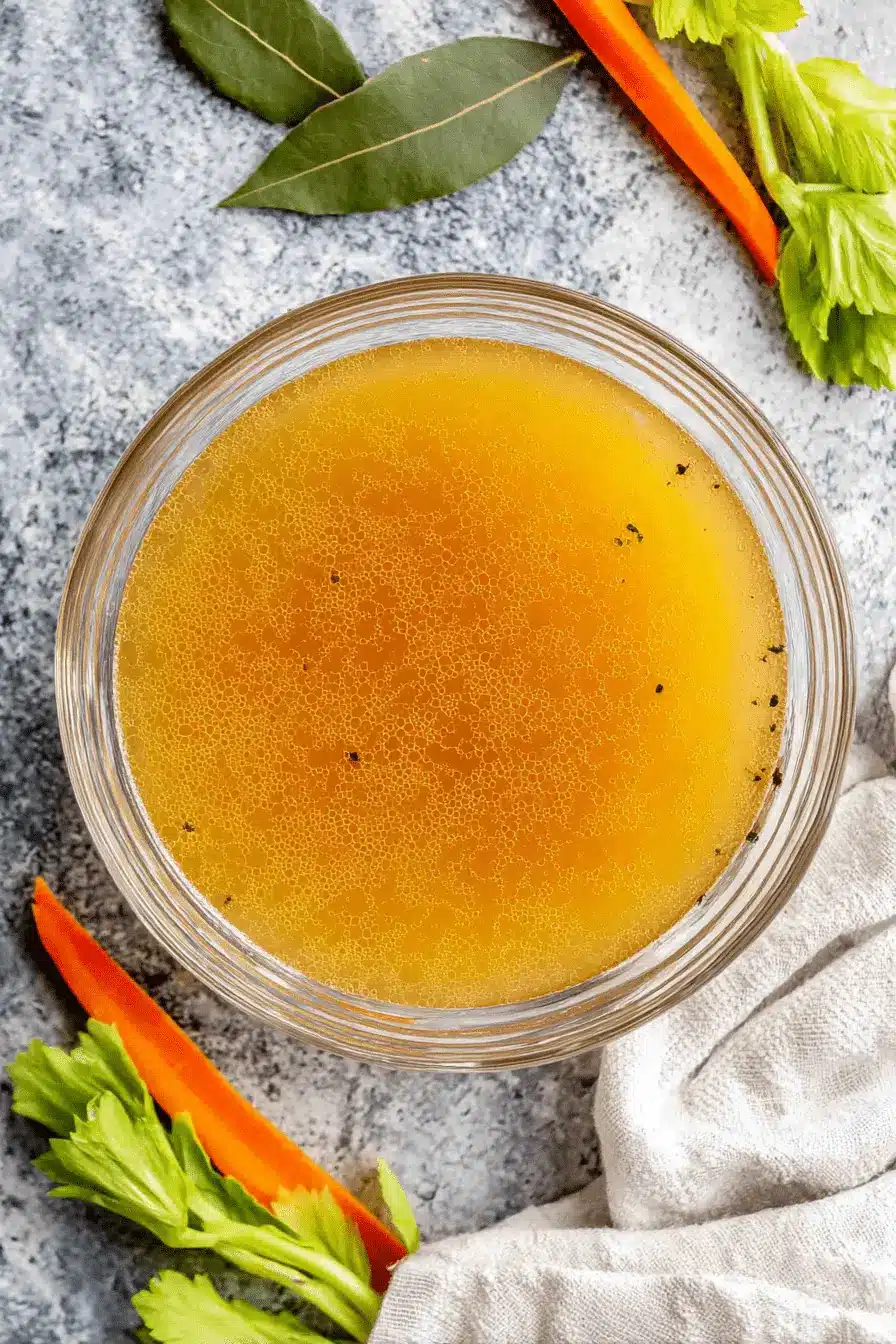
Chicken Stock Recipe
Ingredients
Equipment
Method
- Place the rotisserie chicken bones, vegetables, spices, and cold water into a large soup pot.
- Slowly bring the mixture to a boil over medium heat, then skim off any foam that rises to the surface.
- Reduce the heat, cover the pot, and simmer on low heat for at least 2 hours or longer.
- Remove the pot from the heat and allow the stock to cool completely.
- Strain the cooled stock through a fine sieve, discarding all solids, and then season with chicken bouillon paste to taste.
- Store the finished stock in the fridge for up to 3-4 days, skimming off any fat that rises to the top, or freeze for up to 3 months for longer storage.