
The first crisp day of fall always pulls me back to the kitchen, craving something warm and cozy. I remember when I first made this butternut squash soup—simple, creamy, and bursting with flavor. It quickly became my go-to comfort food after busy days. This recipe is foolproof and perfect for anyone wanting that rich taste without fuss. If you’re short on time, feel free to jump to the recipe below!
Table of Contents
Why This is the BEST Butternut Squash Soup Recipe
- This recipe guides you through every step, from selecting the perfect squash to troubleshooting common issues.
- Roasting the butternut squash enhances flavor through caramelization, creating a deeper, richer taste you won’t get from simmering alone.
- It’s easily adaptable to different diets, whether you prefer vegan, vegetarian, or gluten-free options.
- Designed with busy cooks in mind, it balances simplicity with a comforting, restaurant-quality result, much like our Amazing Cincinnati Chili: Quick 40-Minute Recipe.
How to Choose and Prepare Butternut Squash
Picking the right squash is half the battle. Look for one that feels heavy for its size, has a smooth, deep tan color, and no soft spots or blemishes. The skin should be firm and free of cracks.
Preparing your squash:
- Begin by cutting the squash in half vertically. Use a sturdy chef’s knife and a stable cutting board to keep safe.
- Scoop out the seeds with a spoon—this is easier when the squash is halved.
- If you want a step-by-step visual guide or GIF to help with this sometimes tricky prep, it’s a great idea to follow one for confidence.
Mastering these prep steps ensures a smooth cooking process and perfect soup texture.
Roasting vs. Simmering: Why Roasting Wins for Flavor
Many recipes simmer butternut squash directly in broth, but roasting brings something extra. When you roast, the heat triggers the Maillard reaction, caramelizing the squash’s natural sugars. This effect adds layers of complex, nutty sweetness and depth that simmering simply can’t create. Roasting also concentrates the flavor, making the soup rich and satisfying with minimal effort.
Ingredients You’ll Need
- 1 large butternut squash (about 3 pounds), halved vertically* and seeds removed
- 1 tablespoon olive oil, plus more for drizzling
- ½ cup chopped shallot (about 1 large shallot bulb)
- 1 teaspoon salt
- 4 garlic cloves, pressed or minced
- 1 teaspoon maple syrup
- ⅛ teaspoon ground nutmeg
- Freshly ground black pepper, to taste
- 3 to 4 cups (24 to 32 ounces) vegetable broth, as needed
- 1 to 2 tablespoons vegetable shortening, to taste
Beyond its delicious taste, butternut squash is also a powerhouse of essential vitamins and nutrients, contributing to various health benefits.
Ingredient Notes:
Shallots add a mild, slightly sweet onion flavor that mellows during cooking, perfect for layering flavor without overpowering the squash. Maple syrup cuts the earthiness with a subtle sweetness. Vegetable shortening or olive oil adds creaminess and a smooth mouthfeel, making the soup luxuriously rich even without cream.
A Guide to Perfect Creaminess
| Method | How to Use | Pros | Dietary Notes |
|---|---|---|---|
| Heavy Cream | Stir in after blending | Rich and silky texture | Not vegan; contains dairy |
| Full-fat Coconut Milk | Add during blending or after heating | Adds tropical flavor and creaminess | Vegan, dairy-free |
| Boiled Potato | Blend a small boiled potato with soup | Adds body without dairy | Vegan, gluten-free |
| Blended Cashews | Soak cashews, then blend into soup for richness | Creamy, nutty, good protein source | Vegan, dairy-free |
Choosing your creamy base depends on dietary needs and flavor preferences, but all bring a luscious mouthfeel to your soup.
How to Make Butternut Squash Soup
Preheat the oven to 425 degrees Fahrenheit and line a rimmed baking sheet with parchment paper. Place the butternut squash on the pan and drizzle each half with just enough olive oil to lightly coat the squash on the inside (about ½ teaspoon each). Rub the oil over the inside of the squash and sprinkle it with salt and pepper.
Turn the squash face down and roast until it is tender and completely cooked through, about 40 to 50 minutes (don’t worry if the skin or flesh browns—that’s good for flavor). Set the squash aside until it’s cool enough to handle, about 10 minutes.
Meanwhile, in a large soup pot, warm 1 tablespoon olive oil over medium heat until shimmering (if your blender has a soup preset, use a medium skillet to minimize dishes.) Add the chopped shallot and 1 teaspoon salt. Cook, stirring often, until the shallot has softened and is starting to turn golden on the edges, about 3 to 4 minutes. Add the garlic and cook until fragrant, about 1 minute, stirring frequently. Transfer the contents to your stand blender (see notes on how to use an immersion blender instead).
Use a large spoon to scoop the butternut squash flesh into your blender. Discard the tough skin. Add the maple syrup, nutmeg and a few twists of freshly ground black pepper to the blender. Pour in 3 cups vegetable broth, being careful not to fill the container past the maximum fill line (you can work in batches if necessary, and stir in any remaining broth later).
Securely fasten the lid. Blend on high (or select the soup preset, if available), being careful to avoid hot steam escaping from the lid. Stop once your soup is ultra creamy and warmed through.
If you would like to thin out your soup a bit more, stir in the remaining cup of broth. Add 1 to 2 tablespoons vegetable shortening or olive oil, to taste, and blend well. Taste and stir in more salt and pepper, if necessary.
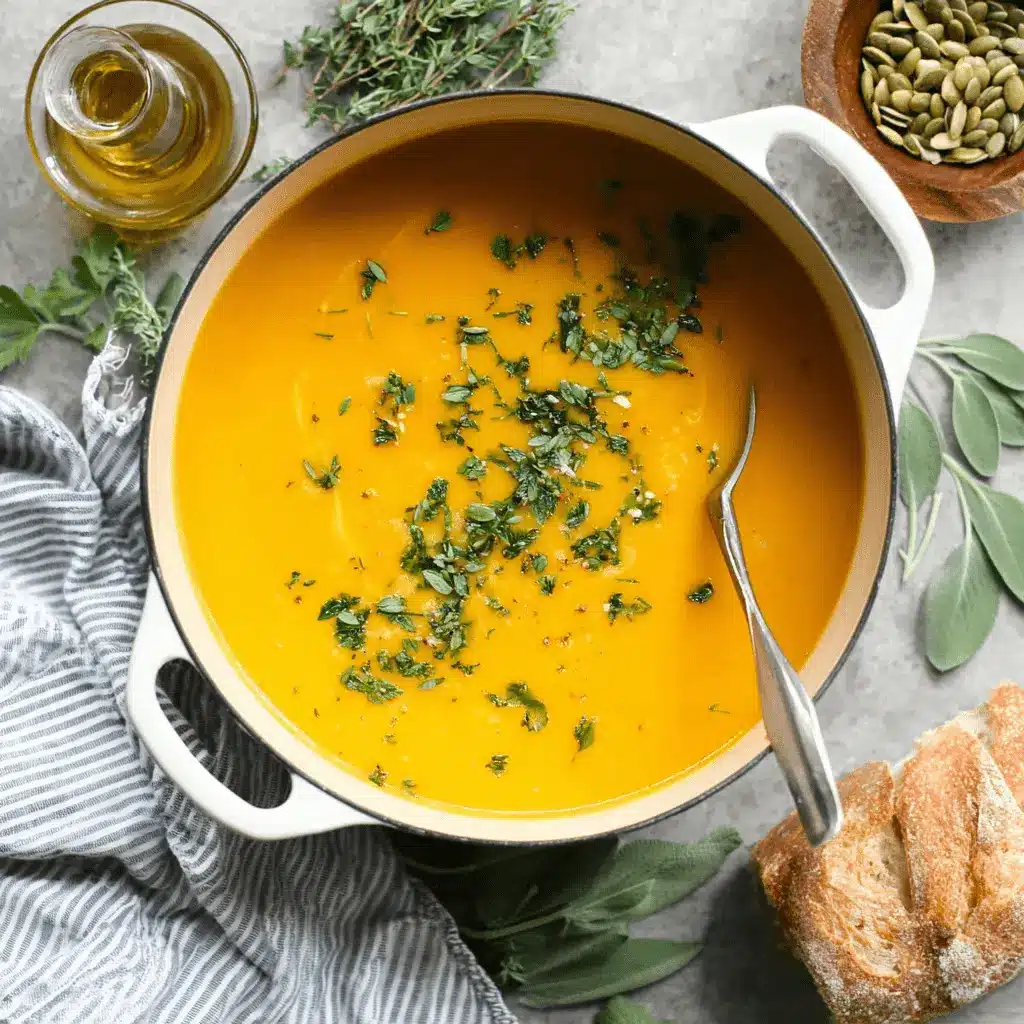
If your soup is piping hot from the blending process, you can pour it into serving bowls. If not, pour it back into your soup pot and warm the soup over medium heat, stirring often, until it’s nice and steamy. I like to top individual bowls with some extra black pepper.
How to Make Butternut Squash Soup in a Slow Cooker or Instant Pot
Slow Cooker Butternut Squash Soup:
Peel and cube your butternut squash. Add squash cubes, chopped shallots, garlic, salt, vegetable broth, maple syrup, nutmeg, and pepper into your slow cooker. Cook on low for 6 to 8 hours or high for 3 to 4 hours until the squash is soft. Blend using an immersion blender until creamy and smooth. Stir in vegetable shortening or olive oil for richness.
Instant Pot Butternut Squash Soup:
Cube the squash and add to the Instant Pot along with chopped shallots, garlic, salt, broth, maple syrup, nutmeg, and pepper. Seal the lid and pressure cook on high for 8 minutes. Perform a quick release, then blend the contents until smooth. Finish by stirring in vegetable shortening or olive oil for creaminess. If you enjoy making other hearty, easy-to-make meals in these appliances, check out our other recipes.
Flavor Variations for Your Butternut Squash Soup
| Flavor Profile | Ingredients to Add | Notes |
|---|---|---|
| Thai Curry | Red curry paste, coconut milk, lime juice | Adds spicy, creamy, tangy notes |
| Chipotle Lime | Canned chipotle in adobo, lime zest | Smoky and zesty with a kick |
| Apple & Ginger | One grated apple, fresh grated ginger | Sweet and warming, great for fall |
Experimenting with these variations can transform your soup for different moods and occasions.
What to Serve with Butternut Squash Soup
Here are some classic, comforting pairings that elevate your meal:
- Crusty bread or baguette for dipping
- Grilled cheese sandwiches for a nostalgic touch
- Simple green salad dressed with a tangy vinaigrette
- Homemade croutons seasoned with herbs and garlic
If you want to try quick side dishes or easy appetizer ideas, check out the other recipes here on AishaRecipes for easy ideas.
Storage, Freezing, and Reheating Instructions
- To Store: Let the soup cool completely. Store it in an airtight container in the refrigerator for up to 4 days.
- To Freeze: Portion the soup into freezer-safe containers or bags, leaving room for expansion. Freeze for up to 3 months.
- To Reheat: Thaw overnight in the fridge if frozen. Warm gently on the stove over low-medium heat, stirring often, until hot and steamy. Avoid boiling to retain creaminess.
Butternut Squash Soup
Ingredients
Equipment
Method
- Preheat oven to 425°F and line a rimmed baking sheet with parchment. Place squash cut-side up, drizzle and rub with olive oil, and season with salt and pepper.
- Turn squash cut-side down and roast until very tender, 40–50 minutes; let cool about 10 minutes.
- Meanwhile, heat 1 tablespoon olive oil in a large soup pot over medium. Sauté shallot with 1 teaspoon salt until softened and lightly golden, 3–4 minutes; add garlic for 1 minute, then transfer mixture to a blender.
- Scoop roasted squash flesh into the blender and discard skins. Add maple syrup, nutmeg, a few grinds of pepper, and 3 cups broth (work in batches if needed).
- Secure lid and blend on high until ultra-creamy and hot.
- Thin with remaining broth to desired consistency. Add 1–2 tablespoons vegetable shortening or olive oil, blend, and adjust salt and pepper to taste.
- If needed, return soup to the pot and warm over medium until steamy. Serve with extra black pepper.
Notes
Frequently Asked Questions (Troubleshooting Your Soup)
How do I fix my soup if it’s too thin?
Add a small handful of cooked potato or a spoonful of cashew cream and blend again. Alternatively, simmer gently to reduce the liquid.
How do I fix my soup if it’s too thick?
Stir in more vegetable broth or water to reach your desired consistency.
How do I fix my soup if it’s bland?
Adjust the salt and pepper, and consider adding a splash of maple syrup or a squeeze of lemon juice to brighten flavors.
How do I fix my soup if it’s stringy?
Make sure to blend thoroughly. If stringiness persists, blend longer or strain the soup for a smoother texture.
Can I use frozen or pre-cut butternut squash?
Yes, but roasting fresh squash enhances flavor better. If using frozen, thaw and roast if possible before blending to deepen taste.
Conclusion
This butternut squash soup recipe proves that you don’t need to be a professional chef to make something comforting and delicious. It’s quick enough for any weeknight yet impressive enough for guests. What did you think of the soup? Did you try any of the flavor variations or have one of your own? Leave a comment below, I love hearing from you!