

The magic of baking your own sourdough bread starts here with a simple, fail-proof sourdough starter recipe you can master even if you’re new to baking. I remember how daunting it felt at first, but with just a little daily care, this starter began to bubble and grow in my kitchen. It takes about a week total, but the daily effort is easy and low-stress, perfect for busy folks like us.
Table of Contents
Why This Sourdough Starter Recipe is The Only One You’ll Need
- I explain the why behind each step so you understand the process, not just follow instructions blindly.
- You’ll find simple, no-fuss directions that work even if your kitchen isn’t a perfect 75°F.
- I include a detailed troubleshooting guide to solve common starter problems quickly.
- This recipe uses easy-to-find ingredients and tools, making sourdough accessible to every beginner.
The Simple Science of a Sourdough Starter
Think of your starter like a tiny ecosystem of wild yeast and friendly bacteria captured from the flour and the air. When you mix flour and water, you’re inviting these microbes to feast and multiply. Around Day 3 or 4, you may notice the activity slows or “lulls.” This pause happens because the microbial environment is changing—some species take a breather while others catch up. It’s totally normal and actually a good sign that your starter is evolving healthily. Understanding this little science story helps keep any worries away while you wait for the starter to come alive.
Ingredients & Equipment
Ingredients
- 1x (5lb) bag all-purpose flour or bread flour (brands I use include KAF, Trader Joe’s, or Whole Foods)
- 1/2 cup (60g) whole wheat flour (I use KAF whole wheat)
- Water, preferably warm at around 85°F
Whole wheat flour introduces more wild yeast and nutrients to jump-start fermentation, while all-purpose flour provides a stable feeding base for your starter once it’s active. Your water should be free of chlorine; tap water is fine if you let it sit uncovered for a few hours to dechlorinate.
Equipment
- Large jar (a reused pickle jar works great!)
- Kitchen scale for precise measurements
- Fork and small rubber spatula for mixing and scraping
These simple tools keep the process easy and affordable.
How to Make a Sourdough Starter Recipe: A Day-by-Day Guide
Day 1: Creating the Mixture
Combine 60 g (1⁄2 cup) of whole wheat flour + 60 g (1⁄4 cup) of warm water in a large jar. Mix with a fork until smooth; the consistency will be thick and pasty. Cover with plastic wrap, reusable wax wrap, or a lid and let rest in a warm spot, about 70-75°F for 24 hours. Temperature is important.
Day 2: First Feeding
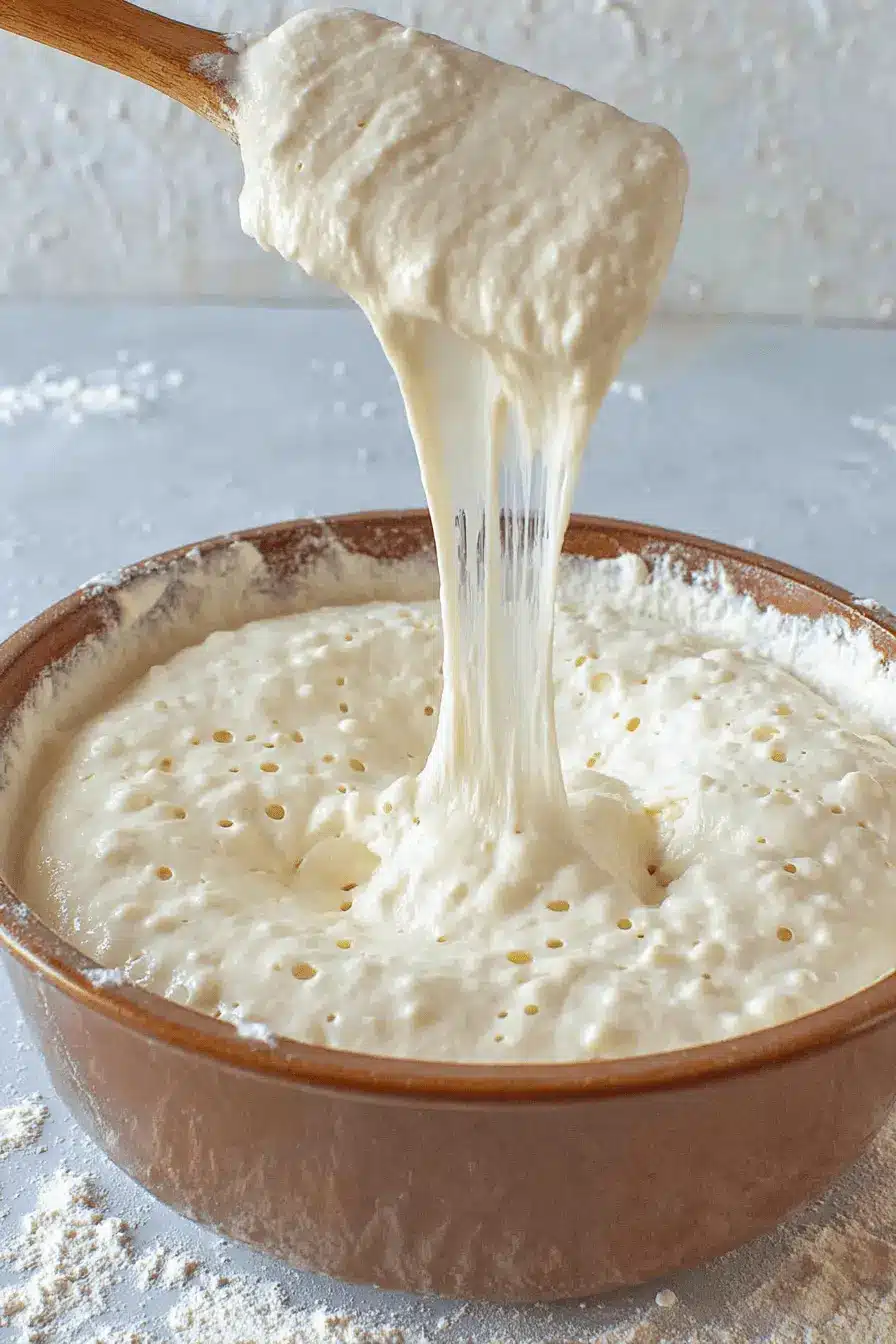
Remove and discard half (60g) of your sourdough starter from the jar. To do so: use a spoon to scoop it out, or pour it directly into a bowl to weigh (you can also just eyeball the amount it doesn’t have to be exact). The texture will be very stretchy. To the jar: Add 60 g (1⁄2 cup) of all-purpose flour + 60 g (1/4 cup) of water. Mix with a fork until smooth. Scrape down the sides with a small rubber spatula. The texture should resemble thick pancake batter or plain yogurt at this point. Cover and let rest in a warm spot, 70-75°F for 24 hours.
Days 3 – 7: Daily Feedings & Building Strength
Each day, remove and discard about half of the starter (90 g on Day 3, increasing slightly thereafter). Then add 60 g (1⁄2 cup) of all-purpose flour + 60 g (1/4 cup) of water to the jar. Mix well and scrape down the sides. Cover and let rest in a warm spot, 70-75°F for 24 hours. Don’t worry if activity dips around Day 3 or 4—that’s a normal lull as your starter’s microbial community shifts. Keep this routine going daily until your starter is lively and bubbly.
How To Know When Your Sourdough Starter is Ready
Look for these signs of maturity: your starter should double in size within 4 to 8 hours after feeding. It will have lots of bubbles throughout, a spongy, web-like texture, and a pleasantly sour smell reminiscent of yogurt or beer—not unpleasant or moldy. To confirm readiness, perform the float test: drop a spoonful of starter into a glass of water—if it floats, you’re ready to bake your first loaf!
Troubleshooting Your Sourdough Starter
What is this liquid on top? (A Guide to “Hooch”)
A dark liquid layer, called hooch, is a normal byproduct of a hungry starter. Stir it back in to maintain sourness or pour it off if you prefer a milder flavor.
My Starter Isn’t Bubbling or Rising
If your starter is sluggish, try moving it to a warmer spot, feeding it an extra time, or adding a small amount of whole wheat or rye flour to boost activity.
What if I See Mold?
Mold looks fuzzy or appears as pink or orange streaks and is dangerous. If you spot mold, discard your starter immediately and start fresh. Hooch is harmless and different from mold.
My Kitchen is Too Cold/Too Hot
If your kitchen is cold, try placing your starter jar on top of the fridge, near a running computer, or using a seedling mat for warmth. For hot kitchens, feed with slightly cooler water and find a cooler pantry or basement spot to rest your starter.
How to Maintain and Store Your Sourdough Starter
To keep your starter active for frequent baking, maintain it at room temperature and feed daily following the same feeding routine. If you bake less often, store the starter in the refrigerator and feed it weekly to keep it healthy. For even longer storage, drying or freezing the starter are good options, though they require reactivation steps before baking.
What to Do With Sourdough Discard
Sourdough discard is the portion you remove daily to keep your starter manageable. Don’t throw it away—it’s full of flavor and perfect for making quick sourdough discard recipes. Try Aisha’s Quick Sourdough Discard Pancakes: mix discard with a little flour, water or milk, an egg, and baking powder for simple, fluffy pancakes fast. You can also use discard for savory dishes or sweet treats like these sourdough discard muffins.
Frequently Asked Questions (FAQ)
Can I switch between different types of flour to feed my starter?
Yes, you can alternate flours, but whole wheat or rye flour can help boost starter activity.
What happens if I accidentally miss a feeding?
Your starter may become hungry and develop hooch. Feed as soon as possible and expect a slight delay in activity.
How much starter does this sourdough starter recipe yield in total?
Following this guide, expect about 230–236 g of starter at the end of the week.
Can I use regular tap water?
Yes, but let it sit out for a few hours to dechlorinate before use.
How long can I really leave my starter in the fridge without feeding it?
You can typically go about one week between feedings in the fridge.
Conclusion
Creating your own sourdough starter is such a rewarding journey. Now you hold the key to endless delicious bread, pancakes, and more. Remember, a little patience and daily care will bring your starter to life. If you have questions along the way, comment below
Sourdough Starter Recipe
Ingredients
Equipment
Method
- In a large jar, combine 60g (1/2 cup) whole wheat flour and 60g (1/4 cup) warm water, mixing with a fork until smooth and pasty.
- Cover the jar and let it rest in a warm spot (70-75 F) for 24 hours to begin activation.
- Discard 60g of starter. Add 60g (1/2 cup) all-purpose flour and 60g (1/4 cup) water to the jar, mix until smooth like thick pancake batter, then cover and let rest for 24 hours.
- Discard 90g of starter. Add 60g (1/2 cup) all-purpose flour and 60g (1/4 cup) water, mix well, then cover and rest for 24 hours.
- Discard 105g of starter. Add 60g (1/2 cup) all-purpose flour and 60g (1/4 cup) water, mix well, then cover and rest for 24 hours.
- Discard 112g of starter. Add 60g (1/2 cup) all-purpose flour and 60g (1/4 cup) water, mix well, then cover and rest for 24 hours.
- Discard 116.25g of starter. Add 60g (1/2 cup) all-purpose flour and 60g (1/4 cup) water, mix well, then cover and rest for 24 hours.