
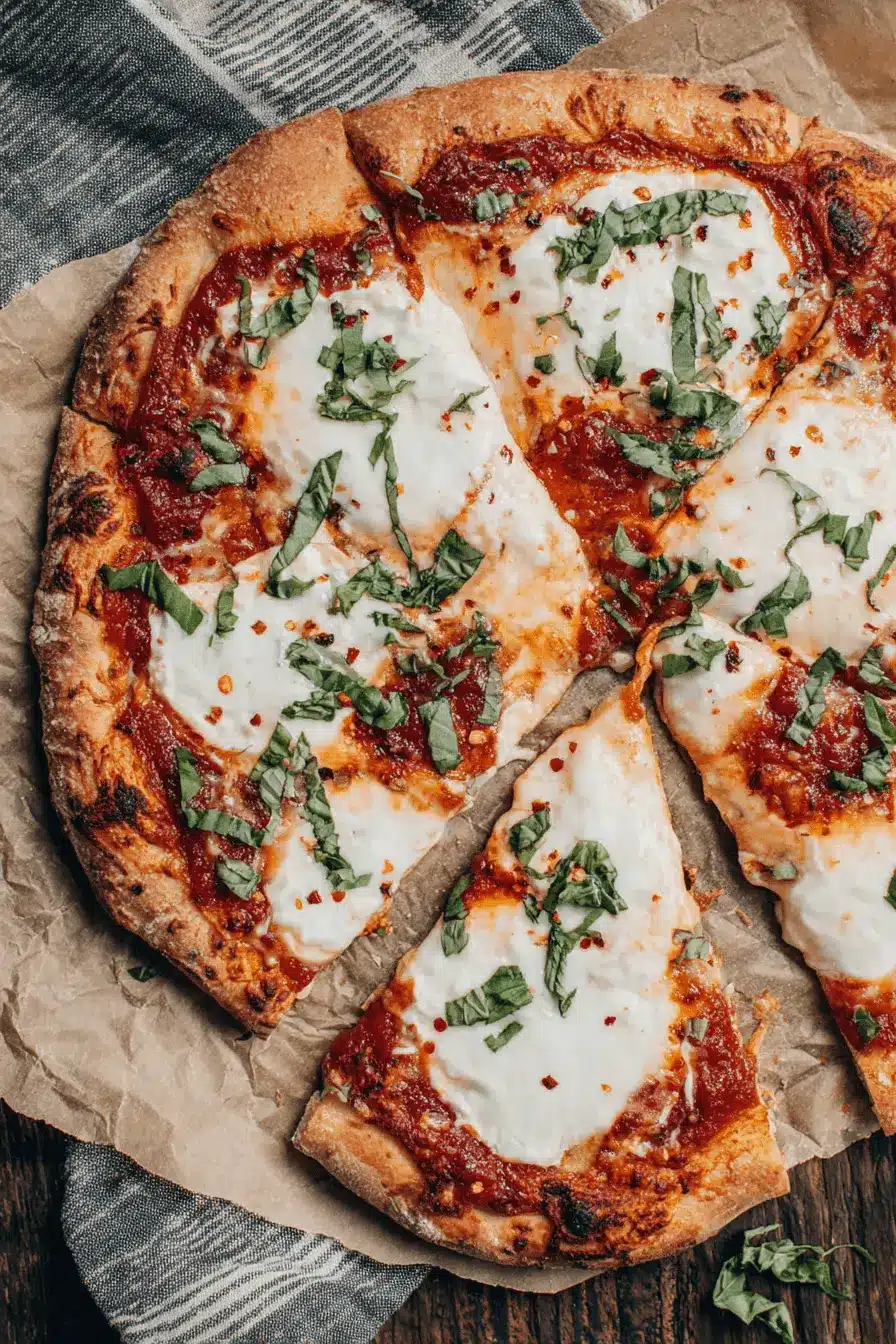
I remember when I first tried making sourdough pizza crust after moving to the U.S. it was intimidating but rewarding. This recipe quickly became my go-to for easy, flavorful pizza nights that fit perfectly into my busy life. Now, making homemade sourdough pizza brings comfort and joy without the stress, even on hectic days.
Table of Contents
Your Guide to Artisan Sourdough Pizza at Home
Making homemade pizza with sourdough crust is one of my favorite ways to bring family and comfort together. This sourdough pizza crust recipe is your ultimate guide to creating perfect pizzas at home, whether you use a cast iron skillet, a pizza stone, or baking steel. Designed for busy adults, it makes artisan-quality pizza both simple and satisfying.
- Foolproof and beginner-friendly, this recipe guides you to success no matter your experience level.
- Versatile baking options let you use your preferred method: cast iron skillet, pizza stone, or steel without compromising flavor or texture.
- The cold fermentation process develops deep, tangy flavor for that authentic sourdough crust everyone loves.
- Perfect for busy weeknights, it balances ease with impressive results to boost your cooking confidence.
Understanding Your Sourdough Starter
If you’re new to sourdough, here’s the scoop. An active sourdough starter is bubbly, slightly tangy, and doubles in size within hours of feeding. This is what gives your pizza crust its rise and flavor. “Discard” is the portion you remove when feeding your starter; this recipe uses discard to reduce waste, but can also work with active starter if you reduce the amount slightly. Feeding your starter regularly and keeping it at room temperature for a few hours before use will give you the best results.
Sourdough Pizza Crust Ingredients
- 1/3 cup sourdough starter discard (if you want to use active starter, reduce to 1/4 cup (50 g))
- 2 teaspoons fine sea salt (see notes if using a different type of salt)
- 2 tablespoons olive oil
- 1/3 cup + 1 tablespoon whole wheat flour
- 3 3/4 cups all-purpose flour (bread flour or 00 flour can be used, see notes)
- 1 1/3 cups + 1 teaspoon water (see notes)
- pizza sauce
- homemade pesto
- your choice of toppings
Ingredient Notes and Substitutions
- Flours: All-purpose flour is versatile and reliable, but bread flour will give you a chewier crust thanks to its higher protein. 00 flour helps create an authentic Neapolitan-style tender crust. Whole wheat adds flavor complexity and nutrition but results in a denser texture when increased.
- Salt: Fine sea salt dissolves evenly; if using kosher salt, remember its crystals are larger, so you might need a bit more by volume.
- Water: Hydration is key for the perfect dough texture and varies slightly by flour type; adjust as needed to get a soft, workable dough.
Essential Pizza Making Tools
- Digital Kitchen Scale: For precise measuring of ingredients.
- Large Mixing Bowl: To combine and ferment the dough comfortably.
- Straight-Sided Container: Ideal for bulk fermentation to watch your dough rise.
- Pizza Peel: Makes transferring your pizza onto stones or steels easier.
- Pizza Stone, Baking Steel, or Cast Iron Skillet: Any of these will give you a fantastic crust; cast iron offers a great stovetop-to-oven option, while stones and steels excel in heat retention.
Sourdough Pizza Crust Preparation Steps
- Mix dough ingredients the night before: Combine 1/3 cup sourdough starter discard, 2 teaspoons fine sea salt, 2 tablespoons olive oil, 1/3 cup + 1 tablespoon whole wheat flour, 3 3/4 cups all-purpose flour, and 1 1/3 cups + 1 teaspoon water in a large bowl. Mix by hand until fully combined. Cover and let ferment at room temperature overnight.
- Stretch and fold the next morning: Wet your hand to prevent sticking. Gently pull one side of the dough up and fold it over itself. Rotate and repeat on all sides until you’ve completed a full circle. Cover and refrigerate for 8 to 36 hours. You can use the dough immediately for pizza, but the cold ferment enhances flavor.
- Rest and shape the dough before baking: Remove dough from fridge and let rest at room temperature for 30 minutes. Divide into 4 equal pieces and shape each into a ball on a floured surface. Cover with a tea towel and rest for 30 minutes.
- Preheat your cooking setup: Turn the oven broiler to HIGH. Heat a cast iron skillet over medium to medium-high heat on the stove, adding a little oil if needed.
- Shape your dough: Press a dough ball into an 8″ circle on a floured surface using your hands. Use extra flour to prevent sticking. Let rest 15 minutes if dough resists shaping for gluten relaxation.
- Cook dough in skillet: Place dough in hot skillet, gently pressing edges to cover the bottom. Quickly add sauce and toppings. Cook for 5-6 minutes until the bottom chars. If too thick, cook longer at lower heat or broil briefly before toppings to avoid soggy center.
- Finish under the broiler: Transfer skillet to broiler for 2-4 minutes to bake toppings. Watch closely to prevent burning. Remove, slice, and serve hot.
- Alternatively, bake on pizza stone: Place pizza stone in cold oven, preheat to 450°F (232°C). Press dough into crusts and add toppings, dividing dough as preferred.
- Transfer pizza onto stone: Use a pizza peel or parchment paper to quickly move dough to the stone, preserving shape.
- Bake until done: Cook for 15-20 minutes until crust is cooked through and toppings are finished.
Sourdough Dough Handling Tips
- The Power of Stretch and Folds: Stretch and folds strengthen gluten, making your dough more elastic and easier to handle. You’ll notice it feels smoother and springs back when poked.
- Adapting Fermentation Times: Temperature affects rise times. Keep an eye on your dough’s look and feel—it should roughly double in size and feel airy, not just rely on timing.
- Hydration Adjustments: Different flours absorb water differently. Whole wheat needs more water, while 00 flour absorbs less. Adjust water amounts slightly to maintain tacky but not sticky dough.
- Reading Your Dough: After fermenting, your dough should look bubbly and jiggly. It’s well-risen and holds some indentation when poked gently.
- Stretching Dough Like a Pro: Stretch gently from the center outward, supporting with your knuckles. If it resists, let it rest for 15 minutes to relax gluten and try again to avoid tearing.
Baking Method Comparison
| Feature | Cast Iron Skillet | Pizza Stone or Baking Steel |
|---|---|---|
| Preheating | No long preheat needed, heats quickly on stove | Requires 30-60 minutes preheat in oven at 450°F |
| Heat Retention | Excellent heat on bottom for crisp crust | Exceptional heat retention for even baking |
| Cooking Method | Can start stovetop, finish under broiler | Direct bake in oven; requires peel for transfer |
| Crust Result | Crispy, slightly charred bottom | Crispy, evenly cooked crust with good rise |
| Convenience | Great for small batches, flexible | Best for traditional-style pizza, large pizzas |
When using cast iron, preheat skillet well and use broiler to finish toppings. For stone or steel, ensure thorough preheat for the best crust and work quickly when transferring dough.
Choosing Toppings to Avoid Soggy Crust
To keep your sourdough pizza crust from going soggy, choose toppings with balanced moisture levels. Avoid overly watery vegetables or drain them well beforehand. Classic combos like tomato sauce, mozzarella, basil, and prosciutto work wonderfully. For creativity, try homemade pesto with roasted veggies or a mix of cheeses. Aim for toppings that cook evenly with the crust to avoid underdone toppings or overcooked crusts.
Troubleshooting Common Pizza Issues
- Sticky or Unmanageable Dough: Add a little more flour or flour your hands and surfaces well during shaping.
- Sluggish or No Rise: Check your starter’s vitality and room temperature; warmer spots speed fermentation.
- Dense or Gummy Interior: Ensure full fermentation and avoid underbaking.
- Pale Crust: Increase oven temperature, use broiler for finishing, or preheat baking surface longer.
- Toppings Undercooked or Crust Overdone: Balance cooking times and consider partially cooking wet or dense toppings before adding.
Storing and Reheating Sourdough Pizza Dough
Store leftover dough balls in a sealed container in the fridge for up to 3 days. For longer storage, freeze raw dough balls in airtight bags for up to 2 months. Thaw in the fridge overnight, then rest at room temperature before shaping. Baked crusts reheat best in a hot oven or skillet to restore crispness.
Recipe Variations and Adjustments
| Ingredient/Goal | Substitution/Variation | Notes |
|---|---|---|
| All-Purpose Flour | Bread Flour or 00 Flour | Bread flour yields a chewier crust; 00 flour creates a tender Neapolitan-style crust. |
| Whole Wheat Flour | More all-purpose flour for a lighter crust | 100% whole wheat crusts require more water and result in denser texture. |
| Fine Sea Salt | Kosher Salt | Use 2.5-3 tsp kosher salt instead of 2 tsp fine sea salt due to larger crystals. |
| Sourdough Starter | Active, bubbly starter (50g) | Active starter accelerates rise, discard leads to slower but still effective fermentation. |
| Desired Texture | For thinner, crispier crust, stretch dough very thin. | For chewier, airy crust, keep dough slightly thicker and build a good “cornicione” (raised edges). |
Frequently Asked Questions (FAQ)
Can I use an active sourdough starter instead of discard?
Yes! Use 1/4 cup (50 g) active starter and reduce water slightly to balance hydration.
What’s the best flour for sourdough pizza crust and why?
All-purpose flour is versatile, bread flour adds chew, and 00 flour gives a tender, authentic texture.
How do I adjust fermentation for colder or warmer kitchens?
In colder spaces, expect longer rise times. In warmer ones, the dough will ferment faster—watch dough behavior over clock time.
My dough is too sticky or too stiff – what should I do?
For sticky dough, add a little flour while handling. For stiff dough, add small amounts of water next time or let it rest longer to hydrate fully.
How can I prevent my pizza from having a “gum line” or soggy middle?
Cook the crust partially before toppings, or use lower heat and longer cooking on the stovetop before broiling.
What are the best ways to reheat leftover sourdough pizza to keep it crispy?
Reheat in a hot oven or skillet rather than microwave to maintain crust texture.
Making this sourdough pizza crust recipe is easier than you think, and it brings so much joy and comfort to your table. Give it a try and make your pizza nights special with flavors you love. I’d love to hear your favorite topping combinations or any questions. Drop a comment below or connect with me on social media. Let’s keep discovering the joy of homemade pizza together!
Sourdough Pizza Crust Recipe
Ingredients
Equipment
Method
- The night before baking, combine sourdough starter, salt, olive oil, whole wheat flour, all-purpose flour, and water in a large mixing bowl. Mix until combined, then cover and let the dough ferment at room temperature overnight.
- The next morning, perform stretch and folds by pulling and folding the dough over itself, rotating the bowl to complete a full circle. Cover the bowl and refrigerate the dough for 8 to 36 hours, or use immediately for a quicker pizza.
- When ready to cook, remove the dough from the fridge and let it rest at room temperature for 30 minutes. Divide the dough into four equal pieces, shape each into a ball on a floured surface, cover with a tea towel, and let rest for another 30 minutes.
- Turn your oven’s broiler to HIGH and preheat a lightly oiled cast iron skillet over medium to medium-high heat on the stovetop.
- While the skillet preheats, press a dough ball into an 8-inch circle on a floured surface, using more flour if needed to prevent sticking. If the dough resists shaping, let it rest for 15 minutes.
- Place the dough in the hot skillet, gently pressing it to cover the bottom, then immediately add sauce and toppings. Cook for 5-6 minutes until the bottom begins to char, or longer at a lower temperature if the dough is thick.
- Transfer the skillet to the broiler for 2-4 minutes to finish baking the top, watching carefully to prevent burning. Remove, slice, and serve hot.
- For an alternative method, place a pizza stone in a cold oven and preheat to 450°F (232°C), then press the dough into a crust and add toppings.
- Once heated, carefully transfer the shaped and topped dough onto the pizza stone using a pizza peel, or use parchment paper for easier transfer.
- Bake the pizza for 15-20 minutes, or until the toppings are cooked and the crust is thoroughly baked.