

When I moved to the U.S., I missed home’s familiar flavors but lacked the energy for detailed cooking routines. I wanted warmth without the stress. This lemon blueberry sourdough bread balances that desire for comfort with modern simplicity. It is a small victory I love sharing; a zesty, sweet loaf that makes my kitchen feel like home.
Why You’ll Love This Lemon Blueberry Sourdough Bread
If you are looking for a rewarding baking project that delivers a high reward for your effort, this is it. I remember the first time I pulled this loaf out of the oven; the aroma of zest and fresh bread instantly brightened my mood.
First, the flavor profile is incredible. The tartness of the lemon zest cuts through the richness of the dough, while the sugar and blueberries add a sweetness that makes this perfect for breakfast or a snack. It transforms a standard loaf into a special treat.
Second, the texture is magnificent. By following my method for “stretch and folds,” you achieve an artisan-style open crumb that is soft and airy, despite the heavy fruit inclusions.
Finally, this recipe builds confidence. It marries the time-tested tradition of sourdough with accessible steps for busy modern cooks. You do not need to be a professional baker to get that bakery-quality crust and rise.
The Art & Science of Perfect Lemon Blueberry Sourdough
Baking with fruit inclusions requires a little bit of bread science, but I promise to keep it simple. The sugar in this recipe does more than just sweeten the loaf; it provides food for the yeast and, crucially, helps the crust caramelize into that beautiful deep golden brown you see in photos.
The lemon zest is added early in the process. This allows the essential oils to infuse the dough entirely without inhibiting the fermentation process. However, the blueberries are added later during the “stretch and fold” phase. If we added them too early, the mixing process would crush them, dyeing your dough purple and inhibiting the gluten network from forming strongly.
Balancing the hydration is also key. The sugar and fruit juice can make the dough sticky, so we handle it gently to keep the structure intact while ensuring the yeast remains active and happy.
Understanding Your Sourdough Levain (Starter)
Before we start mixing, look at your starter. For this recipe, you need a levy or starter that is ripe, bubbly, and active.
A naive starter will result in dense, flat bread. You want to use yours when it is at its “peak.” This means it has doubled or tripled in size after feeding, the surface is domed or covered in bubbles, and it smells fresh and yeasty, not like harsh vinegar.
If you drop a small spoonful of your leaven into a glass of water and it floats, you are ready to bake. If it sinks, it needs more time to feed and rise.
Essential Ingredients for Lemon Blueberry Sourdough Bread
Here are the exact ingredients you need. Please stick to these measurements for the best results.
Levain Ingredients
- 45 grams sourdough starter ripe, bubbly and active (about 3 Tablespoons)
- 45 grams all-purpose or bread flour (about 6 Tablespoons)
- 45 grams water (about 3 Tablespoons)
Dough Ingredients
- 120 grams levain ripe (bubbly and active, about ½ cup, see recipe notes)
- 330 grams water (1 cup plus 6 Tablespoons)
- 55 grams granulated sugar (about 1/4 cup)
- 12 grams lemon zest (about 2 Tablespoons from 2 medium-sized lemons)
- 10 grams salt (about 1.5 teaspoons)
- 500 grams bread flour (about 3.5 cups)
- 150 grams fresh blueberries (about 1 cup)
Choosing Your Ingredients Wisely
For the lemons, I adore using Meyer lemons when they are in season because they have a sweeter, floral aroma. However, standard Eureka lemons work beautifully and provide that classic lemon zestiness we all love.
For the blueberries, fresh and firm berries are best. They hold their shape better during the folding process. If you must use frozen berries, keep them frozen until the exact moment you add them to the dough to prevent the juices from bleeding excessively.
I highly recommend using a strong bread flour with a protein content of 12% or higher. Sourdough with heavy mix-ins like fruit needs that extra strength to hold its shape and rise.
Step-by-Step: Crafting Your Lemon Blueberry Sourdough
- Prepare the Levain. Mix together ripe/active sourdough starter with all-purpose or bread flour and water. Cover loosely and let sit 3-4 hours at 78-80°F until doubled, bubbly & peaked. Note: If you have a ripe, bubbly, active sourdough starter that is fed equal parts flour and water – you can substitute 120 grams of it for the levain in this recipe.
- Mix Dough. To a large bowl, mix together ripe levain with water, granulated sugar and lemon zest. Whisk together. Then add salt and bread flour. Mix together using a dough whisk or spoon until a wet and sticky dough forms and the ingredients are fully combined. Cover and let rest for 30 minutes.
- Perform Stretch and Folds. After the dough has rested, you will perform a series of “stretch and folds” over the next 1 ½ hours. The goal is to strengthen the dough through a gentle kneading process. You will also add the blueberries into the dough during this process which will evenly disperse them throughout the dough. To “stretch and fold,” wet your hand (so it doesn’t stick to the dough). Reach around the dough down to the bottom of the bowl, pull the dough up and over and place it on top of the dough. Turn the bowl a quarter turn and repeat the stretch and fold. Turn another quarter turn and repeat. Perform one more quarter turn, stretching and folding the dough. Cover and set aside. Take note of how the dough feels through this process. It will go from feeling a little shaggy to smooth and elastic. Cover the bowl and wait about 30 minutes between stretch and folds.
- Complete the Folding Schedule.
- Stretch and fold #1: 30 minutes into bulk fermentation.
- Stretch and fold #2: 30 minutes later, the dough will spread out. Add the fresh blueberries. Stretch and fold again, beginning to incorporate the blueberries into the dough.
- Stretch and fold #3: 30 minutes later, stretch and fold again. The blueberries will continue dispersing throughout the dough. Be gentle so you don’t squash the berries, releasing their juices. We want the blueberries to stay as whole as possible.
- Stretch and fold #4: 30 minutes later, stretch and fold again. You should notice the dough feeling more cohesive and strong during this stretch and fold and not needing very much folding to come together. If your dough still feels loose, add in another couple stretch and folds to help strengthen and tighten the gluten strands.
- Rest the Dough. Cover the dough and let rise for 2-2.5 more hours at 78ºF. You’ll know the dough is ready to shape when the dough is puffed up about 40%, jiggles when you shake the bowl, and has scattered bubbles visible on the sides and top. If your dough is cooler, this will take longer and you will want to look for a larger percentage rise before shaping the dough.
- Pre-shape the Loaf. Tip the bowl upside down, allowing the dough to fall onto a clean counter surface. Be gentle to avoid degassing the dough as much as possible. Wet your hands and the bench knife if needed and push the bench knife under the dough on one side and your free hand on the other side to tuck the dough under itself. The goal is to introduce some tension into the dough. Repeat this process, going around in a circle until you have a ball of dough. Do your best not to break any of the blueberries open.
- Bench Rest. Let the dough rest uncovered for about 30 minutes at room temperature. The dough will flatten a little as it sits. This allows the gluten in the dough to relax and prepares the dough to be shaped.
- Shape the Dough. Prepare a bowl or banneton. Place a kitchen towel or hair net in the bowl and liberally flour as needed. Sprinkle a little flour on top of the dough if desired. Using a bench knife, lift the dough up off the counter and place it on top of the countertop – floured side down. This ensures that the flour is staying mainly on the outside of the dough. Going around in a circle, pull the dough sideways towards you and then fold up to the top of the round. Move 90 degrees and repeat the same process pulling the dough sideways and then folding up to the top. As you continue this process around the dough, increase the tension as you pull. Gather the bread into a circle and place into a lined bowl. If any of the blueberries pop out of the bread, remove them or stick them on the bottom side of the bread dough. Note: It is possible to shape the dough without any extra flour. The dough can stick to the kitchen towel but doesn’t stick to the hair nets if cold proofed.
- Cold Fermentation. Cover the dough with the tea towel/shower cap/plastic wrap and refrigerate overnight or up to 14-20 hours. If you want to bake the same day, you can let the dough rise for about 2-3 hours until puffed up and risen. Then bake according to recipe directions.
- Preheat the Oven. Put a Dutch oven (top and all) into the oven and preheat to 450°F for 20 minutes. You are working with very high temperatures, so make sure you have some good hot pads. Once preheated for 20 minutes, pull the loaf out of the refrigerator. Remove the covering. Place a piece of parchment paper on top of the dough. Flip the dough over so it is now sitting on the parchment paper. Take off the bowl/banneton and the kitchen towel.
- Score the Dough. Use a very sharp knife or bread lame to score the dough. Take the bread lame and score on one side of the dough, at a shallow angle about 30º and 1 inch deep. Score straight from the refrigerator on the cold dough for best results. This is not a loaf for intricate scoring – the blueberries will burst during baking which will be the focal point of your loaf.
- Bake the Bread. Carefully remove the Dutch oven from the 450°F oven. Take the lid off and place your bread into the Dutch oven (including parchment paper – this helps with the transfer). Put the lid on and put it back in the oven. Lower the temperature to 425°F and bake for 25 minutes. After 25 minutes, take the lid off the Dutch oven and lower the temperature again to 400ºF for the remainder of the bake. The sugar in the dough can lead to a crispier crust, so I like to decrease the temperature for the last 20 minutes of baking. Once the loaf reaches 200-210ºF, remove the bread from the Dutch oven to a cooling rack and let the bread cool completely before slicing. Enjoy!
Expert Tips for Perfect Blueberry & Lemon Zest Distribution
The biggest challenge with add-ins is ensuring they do not sink to the bottom or burn on the outside.
To prevent sinking, make sure your dough has developed enough strength during the first fold before adding the fruit. The gluten web needs to be strong enough to suspend the berries.
When you fold in the blueberries during the second set of stretch and folds, use a gentle hand. Imagine you are folding a delicate blanket. If you crush them now, the juice will make the dough slippery and harder to shape later.
If a blueberry pops out onto the surface during the final shaping, poke it gently back into the dough or move it to the bottom seam. Exposed berries on the surface are more likely to scorch in the hot oven.
Your Flexible Sourdough Baker’s Timeline
One thing I love about this recipe is its flexibility. You can adjust the timing to fit your busy schedule.
- Day 1 Morning (8:00 AM): Feed your starter. It needs 3-4 hours (if warm) or longer (if cool) to peak.
- Day 1 Afternoon (12:00 PM): Mix the dough. Start your autolyse and hydration process.
- Day 1 Afternoon (1:00 PM – 3:00 PM): Perform your stretch and folds. Add blueberries during the second fold. Watch for the dough to become smooth and elastic.
- Day 1 Late Afternoon (3:00 PM – 5:30 PM): Let the dough bulk ferment. Look for signs of readiness like a 40% rise and a jiggly texture.
- Day 1 Evening (6:00 PM): Shape the dough and place it in the banneton. Move it to the fridge for cold fermentation. This long cold rest develops flavor and makes the dough easier to score.
- Day 2 Morning (Any time): Preheat your Dutch oven and bake straight from the fridge.
Common Substitutions & Variations
Cooking should work for you, not the other way around. Here is a table to help you adapt this recipe.
| Ingredient/Step | Substitution/Variation | Impact/Notes |
|---|---|---|
| All-Purpose Flour | Can replace part of the bread flour (up to 50%) | The crumb may be softer and less chewy. You may need slightly less water as AP flour absorbs less liquid. |
| Whole Wheat Flour | Substitute up to 100g of bread flour | Adds a nutty flavor but absorbs more water. You might need to add 10-15g extra water. |
| Sugar | Honey or Maple Syrup (same weight) | Adds a different flavor profile. The crust may brown even faster, so watch the oven temperature. |
| Smaller Loaf | Halve all ingredients | Reduces baking time by 5-10 minutes. Use a smaller Dutch oven if possible for good oven spring. |
| Lemon Zest | Orange or Lime Zest | Changes the citrus profile completely. Orange pairs wonderfully with blueberries as well. |
Storing Your Lemon Blueberry Sourdough Bread
Because of the fresh fruit, this bread has a higher moisture content than a plain loaf.
Room Temperature: Store the bread in a paper bag or a bread box for up to 2 days. Avoid plastic bags at room temperature, as the moisture from the berries can soften the crust and encourage mold.
Freezing: This bread freezes beautifully. Slice the entire loaf once it has cooled completely. Place sheets of parchment paper between slices and store them in a freezer-safe bag.
Reheating: To enjoy later, simply pop a frozen slice directly into your toaster. It will crispy up the edges and make the warm blueberries jammy and delicious.
Sourdough Troubleshooting for Success
My loaf turned out flat.
This usually happens if the bulk fermentation went too long. The dough over-proofs and loses its structure. Next time, watch the dough, not the clock. If it looks very bubbly and foamy, shape it immediately.
The crumb is dense and gummy.
This can be a sign of under-baking or cutting into the loaf while it is still hot. The bread continues to cook as it cools. Wait until it is completely cool before slicing.
The bottom is burnt.
The sugar content makes this crust brown quickly. Placing a baking sheet on the rack below your Dutch oven can act as a heat shield. Also, ensure you lower the temperature to 400ºF for the second half of the bake as instructed.
The dough is too sticky to handle.
High hydration dough requires wet hands. Keep a bowl of water nearby and dip your hands before every fold. A bench scraper is also your best friend for moving the dough without it sticking to your fingers.
Beyond the Loaf: Serving Suggestions
This bread is a star on its own, but you can elevate it further.
Serve a thick slice toasted with a generous smear of salted butter. The salt contrasts perfectly with the sweet blueberries. For a decadent brunch, use stale slices to make French toast; the lemon zest adds a wonderful brightness to the custard. It also pairs lovely with fresh cheeses like ricotta or goat cheese, drizzled with a little honey, or a tall glass of vibrant homemade iced tea.
Frequently Asked Questions (FAQs) About Lemon Blueberry Sourdough
Can I use frozen blueberries?
Yes, you can. However, do not thaw them. Add them frozen during the second stretch and fold. If you thaw them, they will release too much juice and turn your dough into a purple, sticky mess that is hard to bake.
My dough is tearing when I stretch it.
If the dough tears, the gluten is not relaxed enough. Cover the bowl and let it rest for another 10 to 15 minutes. This rest allows the gluten to relax so you can stretch it without breaking the structure.
How do I store extra lemon zest?
If you zested too many lemons, you can freeze the extra zest in a small airtight container or mix it with sugar to make lemon sugar for future tea or baking recipes.
Share Your Lemon Blueberry Sourdough Success!
I hope this recipe brings a little extra joy and comfort to your kitchen this week. Don’t worry if it isn’t picture-perfect on the first try; the flavor is what matters most!
I would love to see your beautiful creations. Please leave a comment below with any questions or let me know how it turned out. Snap a photo of your loaf and tag me @AishaRecipes on social media so I can cheer you on!
And if you want more simple, comforting recipes delivered straight to your inbox, sign up for my newsletter today. Let’s keep cooking simple and delicious together.
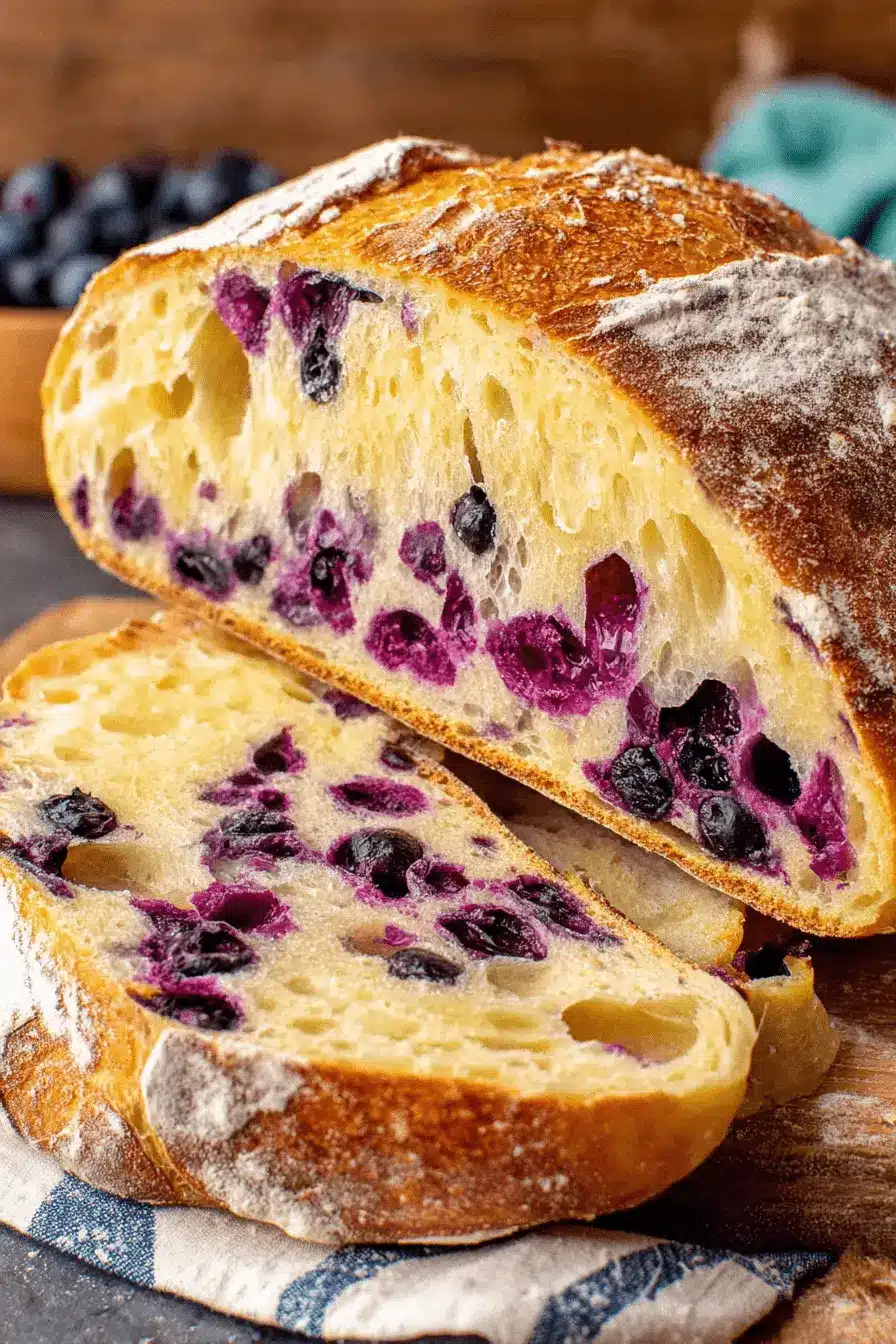
lemon blueberry sourdough bread
Ingredients
Equipment
Method
- Mix sourdough starter, flour, and water. Cover and let sit for 3-4 hours at 78-80°F until doubled and bubbly. A ripe starter can substitute for levain.
- In a large bowl, whisk levain, water, sugar, and lemon zest. Add salt and bread flour, mixing until a wet, sticky dough forms. Cover and rest for 30 minutes.
- Over 1.5 hours, perform a series of stretch and folds to strengthen the dough. Wet hands, pull dough up from the bottom, fold it over, turn the bowl, and repeat. Cover and rest 30 minutes between each set.
- Perform the first stretch and fold 30 minutes into bulk fermentation.
- After 30 minutes, perform the second stretch and fold, incorporating fresh blueberries into the dough.
- After another 30 minutes, perform the third stretch and fold, continuing to disperse blueberries gently.
- After a final 30 minutes, perform the fourth stretch and fold. The dough should feel cohesive; add more folds if needed for strength.
- Cover and let the dough rise for 2-2.5 hours at 78°F until puffed by 40% and jiggly with visible bubbles.
- Gently tip the dough onto a clean counter. Wet hands and a bench knife, then tuck the dough under itself in a circular motion to form a ball, avoiding degassing and breaking blueberries.
- Let the dough rest uncovered for about 30 minutes at room temperature to relax the gluten.
- Prepare a floured banneton or bowl with a towel. Place the dough floured-side down, then pull the dough sideways towards you and fold it up. Repeat in a circle, increasing tension, to form a round. Remove any popped blueberries.
- Cover the shaped dough and refrigerate overnight (14-20 hours) for cold fermentation. For same-day baking, let it rise for 2-3 hours instead.
- Place a Dutch oven with its lid into the oven and preheat to 450°F for 20 minutes. Remove the cold loaf from the refrigerator, place parchment paper on top, flip it, and remove the bowl/towel.
- Using a sharp knife or bread lame, score the cold dough at a shallow 30° angle, about 1 inch deep, on one side. Avoid intricate scoring due to the blueberries.
- Carefully transfer the bread (with parchment) into the preheated Dutch oven, cover, and bake at 425°F for 25 minutes. Remove the lid, reduce temperature to 400°F, and bake for another 20 minutes until the internal temperature reaches 200-210°F. Cool completely on a rack before slicing.