When I first moved to the U.S., grocery stores felt overwhelming, and I missed the familiar flavors of home. I didn’t have energy for complicated recipes, but I had a deep love for food. These maple donut bars were a victory in my kitchen—a blend of comfort food and modern convenience. They prove that imperfect experiments can become delicious, everyday wins for busy families like ours.
Why You’ll Love Making These Homemade Maple Donut Bars
While waiting for yeast dough to rise takes a little patience, the results are far superior to anything you will find in a box at the grocery store. Here is why this recipe for maple donut bars will become a new favorite in your home:
- Incredible Freshness: There is simply no comparison between a store-bought donut and one that has been fried fresh in your own kitchen. The texture is lighter, fluffier, and melts in your mouth.
- Approachable for Beginners: I know yeast baking can feel intimidating, but this recipe uses straightforward steps and equipment you likely already have. It is designed to boost your confidence.
- Perfectly Balanced Flavor: We use a combination of real maple syrup and maple extract. This ensures you get that deep, rich maple flavor without the glaze becoming too runny.
- Soft, Pillowy Dough: Thanks to the egg yolks and butter in the enriched dough, these bars stay soft and tender, providing that classic bakery-style bite.
What You’ll Need: Essential Tools & Ingredients for Maple Donut Bars
To ensure your success, having the right tools and ingredients ready is half the battle. Here is what you need to make these maple donut bars shine.
Essential Tools
- Stand Mixer with Dough Hook: This makes kneading the sticky dough much easier and faster.
- Candy Thermometer: This is non-negotiable for frying. Keeping your oil at the right temperature ensures the donuts cook through without burning or absorbing too much grease.
- Large Heavy-Bottomed Saucepan: A heavy pot retains heat better, keeping the oil temperature stable.
- Wire Rack: Essential for draining the donuts so they stay crisp, not soggy.
Ingredient Spotlight
- Bread Flour: We use bread flour (3½ cups) because it has a higher protein content than all-purpose flour. This helps develop the gluten needed for a chewy, structured structure that holds its shape.
- Instant Yeast: This allows for a quicker rise and mixes right into the dry ingredients without needing to be proofed in water first.
- Maple Extract: While we love real maple syrup, the extract provides a concentrated punch of flavor that ensures the glaze tastes distinctively like a classic maple bar.
Ingredients
- I cup ((8 fl oz/240 ml) lukewarm water)
- ½ cup (4 oz/115 g) granulated sugar
- ¼ cup (2 oz/57 g) butter, softened
- 3 large egg yolks
- 1 tablespoon instant yeast
- 1¼ teaspoons salt
- 1 teaspoon vanilla extract
- 3½ cups (17½ oz/497 g) bread flour
- ½ teaspoon baking powder
- oil, for frying
- 2 cups (8 oz/230 g) powdered sugar
- ½ cup maple syrup
- 1 tablespoon butter, melted
- ½ teaspoon maple extract
Instructions
- Combine the wet ingredients. In the bowl of a stand mixer fitted with a dough hook (or in a large mixing bowl with a whisk), combine the water, granulated sugar, butter, egg yolks, yeast, salt, and vanilla extract on medium-low speed until combined.
- Incorporate the flour gradually. In a medium bowl, whisk together the flour and baking powder, then gradually add to the yeast mixture until the dough is blended and pulling away from the sides of the bowl but still quite soft and sticky. Add a bit more flour, 1 tablespoon at a time, if necessary. (If blending by hand, use a wooden spoon until the dough becomes too thick, then switch to your hands. Knead for 10 minutes.)
- Knead and rest the dough. Continue to knead on medium-low speed for 5 minutes, then transfer the dough to a large, oiled bowl. Cover with plastic wrap and let rest in a warm place until it doubles in size, about 1 hour.
- Shape the donuts. Transfer the dough to a floured work surface and gently roll out to a 10×12-inch (25½x30½ -cm) rectangle. Trim any rounded edges if you wish, then cut the rectangle in half so you have two 5×12-inch (12½x30½-cm) strips. Cut each strip into 6 bars.
- Prepare for the second rise. Place the doughnuts on 2 floured, parchment-lined baking sheets and cover with another baking sheet to keep them from drying out. (You can also use plastic wrap or a tea towel, but this dough is quite soft and may get stuck to whatever is touching it.)
- Let the dough rise again. Let rise in a warm place for about 1 hour, until doubled in size.
- Heat the oil. Line a baking sheet with a wire rack and place near the stove. Fill a large, heavy-bottomed saucepan with 2 inches (5 cm) oil, then clip in a candy thermometer and turn the heat to medium until the temperature reaches 350°F (180°C).
- Fry the donuts. Fry the donuts, one at a time, for about 1 minute on each side, until golden. Let drain on the wire rack until completely cool.
- Make the glaze. In a shallow bowl, whisk together the powdered sugar, maple syrup, butter, and maple extract until smooth.
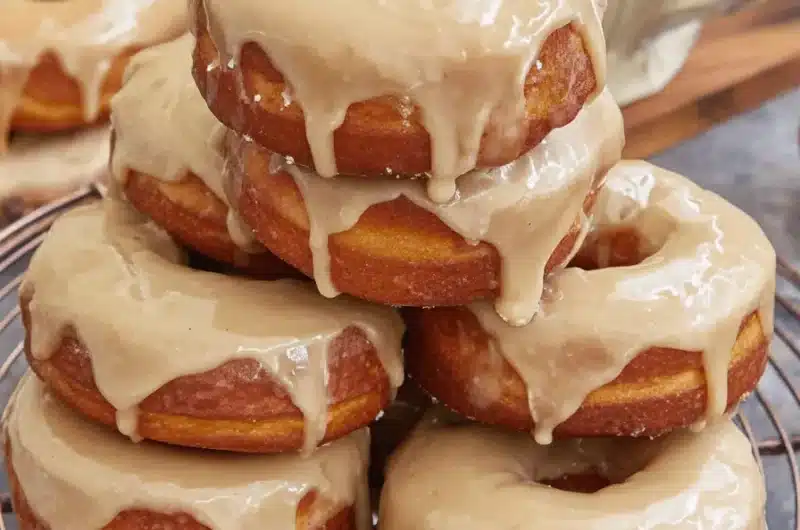
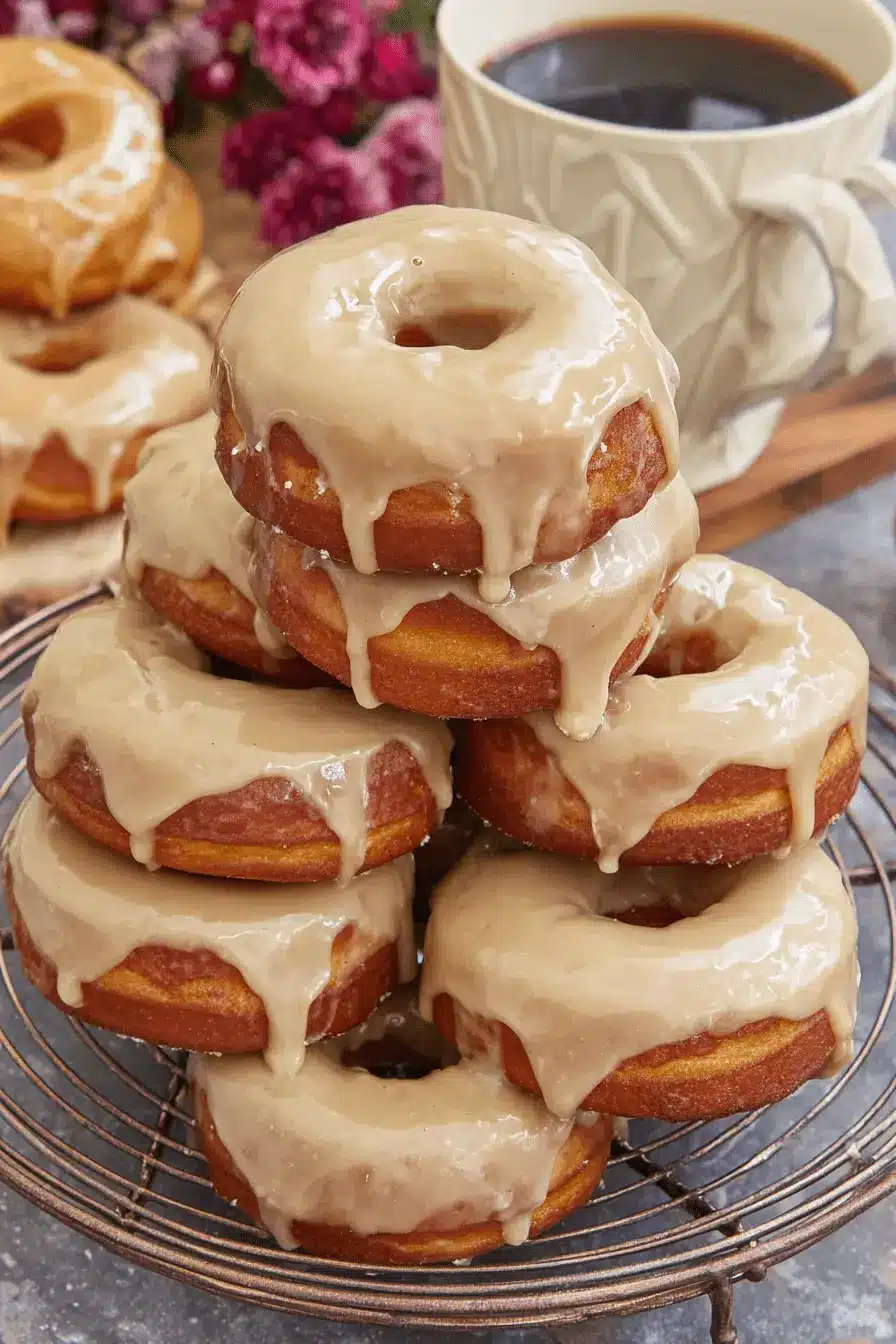
- Glaze the donuts. Dip the top half of each maple bar into the glaze, letting the excess drip back into the bowl before returning it to the wire rack to set.
- Serve immediately. Serve just after the glaze sets. These doughnuts are best just after they are made, but you can store leftovers in an airtight container at room temperature for up to 1 day.
Mastering the Dough: Tips for Perfect Maple Donut Bars
If you are new to working with yeast, do not worry. I have had my share of kitchen fails, but these tips will help you get it right.
The Windowpane Test
To know if you have kneaded enough, pinch a small piece of dough and gently stretch it creating a square. If it stretches thin enough to let light through without tearing, your gluten is developed. If it rips immediately, keep kneading.
Yeast Confidence
We are using instant yeast, which is very reliable. However, ensure your water is lukewarm (about 110°F). If the water is too hot, it will kill the yeast; if it is too cold, the rise will take forever.
Optimal Rising Conditions
If your kitchen is cold, your dough might struggle to rise. A great trick is to turn your oven on for one minute, then turn it off. This creates a slightly warm, draft-free environment perfect for letting your maple donut bars rise.
Rolling Consistency
When you roll out the rectangle, aim for an even thickness of about ½ inch. This ensures all your bars fry at the same rate. Using a ruler can help you cut uniform 5×12-inch strips.
Your Foolproof Guide to Frying Maple Donut Bars
Frying can seem scary, but with the right preparation, it is safe and easy.
Choosing the Oil
Use a neutral oil with a high smoke point. Canola oil, vegetable oil, or peanut oil are excellent choices. Do not use olive oil, as it has a low smoke point and a strong flavor.
Temperature Control is King
Maintain your oil at exactly 350°F (180°C). If the oil is too cool, the donuts will absorb grease and become heavy. If it is too hot, the outside will burn before the inside cooks. Adjust your stove heat slightly up or down to keep the thermometer steady.
Frying Technique
Gently lower the dough into the oil away from you to avoid splashing. Don’t crowd the pot; fry one or two at a time so the oil temperature doesn’t drop drastically. Flip them gently with a slotted spoon or chopsticks once the bottom is golden brown.
Disposal
Never pour hot oil down the drain. Let it cool completely, then pour it into an old jar or container and dispose of it in the trash.
The Secret to a Silky Smooth Maple Glaze
The glaze is the crowning glory of these maple donut bars. You want a consistency that is thick enough to coat the donut opaquely but fluid enough to dip easily.
If your glaze feels too stiff, add maple syrup one teaspoon at a time. If it is too runny, whisk in a tablespoon more of powdered sugar.
For the best finish, dip the donut while holding it by the edges. Submerge the top half, lift it straight up, and give it a little shake to let the excess run off. This prevents a pool of glaze from forming at the base of the wire rack.
Maple Donut Bar Variations to Inspire Your Sweet Tooth
Once you have mastered the classic, feel free to get creative with these fun twists:
- Maple Bacon Bars: Crumbled cooked bacon on top of the wet maple glaze adds a savory crunch that is incredibly popular.
- Chocolate Drizzle: After the maple glaze sets, drizzle a little melted dark chocolate over the top for a mocha vibe.
- Cinnamon Sugar: Skip the glaze entirely and toss the warm donuts in a bag of cinnamon sugar for a simpler treat.
- Vanilla Bean: Swap the maple extract for vanilla bean paste for a classic glazed donut bar.
Serving and Storage Tips for Your Homemade Maple Donut Bars
These bars are truly at their peak the moment the glaze sets. The contrast between the slightly crisp exterior and the soft interior is magical.
Serving Suggestions
Serve these with a hot cup of black coffee to cut through the sweetness, or a cold glass of milk. They make for a spectacular weekend brunch centerpiece.
Storage Reality
Homemade fried dough does not have the preservatives of store-bought versions. They are best eaten fresh. However, if you have leftovers, store them in an airtight container at room temperature for up to one day.
Freezing
I do not recommend freezing the glazed donuts. However, you can freeze the fried, unglazed donuts. Wrap them tightly and freeze for up to a month. Thaw at room temperature and glaze fresh before serving.
Troubleshooting Common Maple Donut Bar Problems
My donuts are greasy.
This usually happens because the oil temperature dropped below 350°F. Always wait for the oil to return to temperature between batches.
The donuts are raw in the middle.
Your oil was likely too hot, cooking the outside too fast. Lower the heat slightly and increase the frying time.
The dough didn’t rise.
Your yeast may have been old, or your water was too hot and killed it. Check the expiration date on your yeast packet before starting.
The glaze melted off.
You dipped the donuts while they were still too hot. Ensure the donuts are completely cool before dipping.
Frequently Asked Questions About Maple Donut Bars
Can I bake these instead of frying them?
Technically yes, but the texture will be completely different—more like a bread roll than a donut. For the authentic donut shop taste and texture, frying is necessary.
Can I make the dough overnight?
Yes! You can let the dough do its first rise in the refrigerator overnight (8-12 hours). This actually develops more flavor. bring it to room temperature for about 30 minutes before rolling and shaping carefully.
Can I use all-purpose flour instead of bread flour?
You can, but the donuts will be slightly less chewy and structured. Bread flour provides the best “chew,” but all-purpose flour will still yield a delicious, slightly softer result.
Conclusion
I hope this recipe brings a little bit of sweetness and specific joy to your kitchen. Making homemade maple donut bars might seem like a project, but I promise the first bite of that warm, fluffy dough makes every minute worth it. You can do this!
I would love to see how your donuts turn out. Please share your success in the comments below, ask questions if you get stuck, and tag us on social media with your beautiful creations. Let’s make life a little more delicious, one batch at a time.
Maple Donut Bars
Ingredients
Equipment
Method
- In a stand mixer or large bowl, combine water, granulated sugar, softened butter, egg yolks, instant yeast, salt, and vanilla extract on medium-low speed until thoroughly mixed.
- Whisk together flour and baking powder in a separate bowl, then gradually add this mixture to the wet ingredients until the dough forms and pulls away from the bowl, adding a bit more flour if too sticky.
- Knead the dough on medium-low speed for 5 minutes, then transfer it to a large, oiled bowl, cover with plastic wrap, and let rise in a warm place for about 1 hour until doubled in size.
- On a floured surface, gently roll the dough into a 10x12-inch rectangle, optionally trimming edges, then cut it into two 5x12-inch strips, and finally cut each strip into 6 bars.
- Place the cut donut bars on two floured, parchment-lined baking sheets and cover them with another baking sheet or plastic wrap to prevent drying, letting them rise in a warm place for about 1 hour until doubled.
- Prepare a baking sheet with a wire rack nearby. Fill a large, heavy-bottomed saucepan with 2 inches of oil, attach a candy thermometer, and heat the oil to 350°F (180°C) over medium heat.
- Fry the donut bars one at a time for approximately 1 minute per side until they turn golden, then transfer them to the wire rack to drain and cool completely.
- In a shallow bowl, whisk together powdered sugar, maple syrup, melted butter, and maple extract until the glaze is smooth.
- Dip the top half of each cooled maple bar into the glaze, allowing any excess to drip back into the bowl before returning the bar to the wire rack for the glaze to set.
- Serve the maple donut bars once the glaze has set; they are best consumed fresh but can be stored in an airtight container at room temperature for up to 1 day.