
Introduction
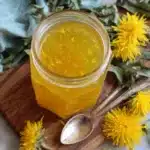
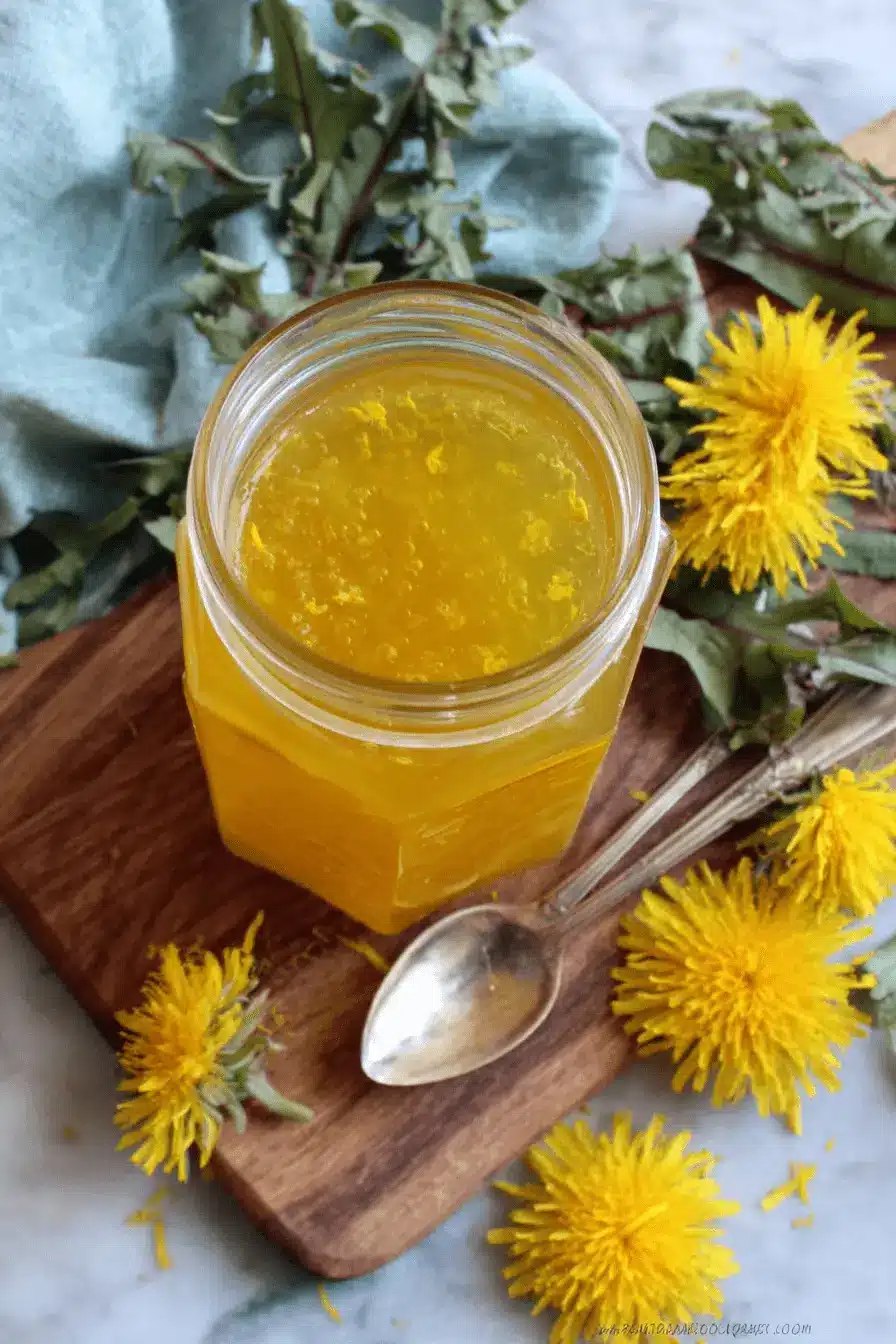
Hello, wonderful home cooks! Aisha here, and if there’s one thing I’ve learned on my culinary adventures, it’s that magic often hides in plain sight. I remember the first time I truly *saw* a dandelion, not as a garden weed, but as a vibrant yellow beacon of spring’s bounty. That little discovery led me to the delightful world of Fresh Dandelion Jelly! It boasts a truly unique, honey-like flavor that will surprise and enchant you. While it requires some patient steeping time, the active prep and cook time is minimal, resulting in a truly delightful springtime treat that will fill your pantry with sunshine.
Why You’ll Love Making Fresh Dandelion Jelly
You’ll absolutely adore making and enjoying this Fresh Dandelion Jelly because it offers so much more than just a sweet spread. Imagine that bright, honey-like flavor dancing on your tongue – it’s a taste of spring’s purest essence. There’s immense satisfaction in transforming a common “weed” found in your yard into a gourmet spread, knowing you’ve crafted something truly special from foraged ingredients. It’s not just food; it’s an experience that adds a unique, seasonal gem to your repertoire of homemade recipes.
Foraging for Fresh Dandelions: A Safe & Sustainable Guide
Embarking on a foraging adventure for dandelions is a wonderful way to connect with nature and gather fresh ingredients. However, it’s crucial to do so safely and ethically. Always prioritize choosing pesticide-free areas away from roadsides, ensuring the dandelions haven’t been treated with chemicals or exposed to heavy vehicle pollution.
Identifying Dandelions and Avoiding Look-Alikes
To ensure you’re harvesting the right plant, it’s important to be able to identify true dandelions and understand what to avoid. True dandelions have a single flower per stem, a hollow, smooth stem without leaves, and deeply lobed leaves that form a basal rosette. Be wary of look-alikes like cat’s ear or hawkweed, which might have hairy stems or multiple flowers per stem. Offer clear descriptions of true dandelions and warn against potential look-alikes that foragers should avoid. Describe key features for identification.
Tips for Sustainable Foraging
When foraging, always practice sustainability. This means never taking all the dandelions from one area. Leave plenty of flowers behind for pollinators, especially bees, which rely on early spring blooms. Only pick what you need, and ensure you’re not disturbing the roots or the surrounding environment, allowing for future growth and a healthy ecosystem.
Gather Your Tools: Essential Equipment for Dandelion Jelly
To make Fresh Dandelion Jelly, you’ll need some basic kitchen tools, but if you plan on canning, specific equipment is essential for safety and success. Beyond your large pot, measuring cups, and spoons, consider these specialized tools: a water bath canner (a large pot with a rack to submerge jars), a jar lifter (for safely moving hot jars), a canning funnel (to cleanly fill jars), and a headspace tool (to measure the correct space at the top of the jar). Each of these helps ensure a sterile, properly sealed jar for long-term storage.
Ingredients for the Best Fresh Dandelion Jelly
- 2-4 cups dandelion petals
- 4 cups water
- 2 tbsp lemon juice
- 1 box powdered pectin, (1.75 oz or 6 tbsp)
- 4 cups sugar
Step-by-Step Instructions to Make Fresh Dandelion Jelly
Preparing Your Dandelion Petals
The first crucial step is to meticulously remove the vibrant yellow dandelion petals from their green base. This is important because the green parts can impart a bitter flavor to your jelly. Aim for at least 2 cups of pure petals, carefully plucking them into a bowl or quart container, ensuring no green bits are included. This might be a bit time-consuming, but it’s key for that sweet, honey-like taste!
Crafting the Dandelion Tea Infusion
Next, you’ll create your flavorful dandelion tea infusion. Pour 4 cups of boiling water directly over your prepared dandelion petals. Give it a gentle stir, then cover the container and steep it in the fridge for a full 24 hours. This extended steeping time allows the petals to fully release their unique flavor and color into the water, creating a beautiful golden “tea.” After steeping, strain the liquid from the petals, pressing out as much liquid as you can. You should yield between 3 and 4 cups of this lovely dandelion tea.
Cooking Your Jelly to Perfection
Now, it’s time to transform your tea into jelly! In a large, heavy-bottomed pot, combine your dandelion tea, lemon juice, and the powdered pectin. Bring this mixture to a rolling boil over high heat, stirring constantly to dissolve the pectin. Once boiling vigorously, add the sugar all at once, stirring well. Return the mixture to a full, rolling boil that cannot be stirred down, and boil for 1 to 2 minutes, maintaining constant stirring. After boiling, remove the pot from the heat and carefully skim off any white foam or film that may have formed on the surface; this ensures a clear, beautiful jelly.
Canning and Storing Your Fresh Dandelion Jelly
You have two great options for storing your delicious jelly! If you plan to store it in the fridge for enjoyment over the next few months, simply ladle the hot jelly into clean half-pint jars, label them, and refrigerate. They should keep well for many months. If you prefer long-term, shelf-stable storage, you’ll want to can your jelly. Ladle the hot jelly into hot, sterilized half-pint jars, leaving exactly 1/4 inch of headspace at the top of each jar. Use a non-metallic knife or spatula to run around the inside edge of each jar, releasing any trapped air bubbles. Wipe the rim of each jar with a cloth dampened with white vinegar; this is crucial to remove any debris that could prevent a proper seal. Place the lids and screw bands on, tightening them only “finger-tight.” Process the jars in a boiling water bath canner for 10 minutes (adjusting processing time for your specific altitude). Once processed, remove the jars from the canner and let them rest, undisturbed, on a towel on your countertop for 24 hours to allow the seals to set. After 24 hours, check for proper seals, then label and store. Canned jelly will be shelf-stable and keep for months, even after being opened.
- Remove the dandelion petals from the green flower base, resulting in 2+ cups of petals, and put in bowl or quart container
- Pour 4 cups of boiling water over the petals and steep in the fridge for 24 hours
- Strain as much liquid out of the petals as you can (should get between 3 and 4 cups of dandelion tea)
- Combine your dandelion tea, lemon juice, and powdered pectin in a large pot. Bring to a boil.
- Add sugar and return to boil. Boil for 1 to 2 minutes.
- Remove from heat and skim off white film.
- If storing if fridge, then ladle into half-pint jars, label and store. Should keep for many months.
- If canning, ladle your jelly into hot, sterilized half-pint jars. Leave 1/4 inch head space.
- Run a knife or spatula around the edge of the jar to remove any bubbles.
- Wipe the rim with white vinegar (to remove any debris) and screw on lids, finger tight.
- Process in a water bath canner for 10 minutes or according to your altitude.
- Remove from canner and let jars rest, undisturbed, for 24 hours. Label and store. Shelf stable and keeps for months after being opened.
Troubleshooting Your Dandelion Jelly: Ensuring a Perfect Set
It can be a little disheartening when your jelly doesn’t set exactly as planned, but don’t worry – it’s a common issue with easy solutions! Understanding the science behind jelly making can help you troubleshoot and achieve that perfect, shimmering consistency every time.
Understanding Pectin for Jelly Making
Pectin is the magical ingredient that gives jelly its structure. It’s a natural carbohydrate found in fruits, and when combined with sugar and acid (like the lemon juice in this recipe) under heat, it forms a gel. This recipe uses powdered high-methoxyl pectin, which requires a specific amount of sugar and acid to set properly. If the balance isn’t right, or if the cooking time is off, the pectin might not activate as expected, leading to a runny jelly.
How to Test for a Perfect Jelly Set
There are a few reliable methods to test if your jelly has reached its setting point. One popular technique is the **cold plate wrinkle test**: place a small plate in the freezer before you start cooking. When you think the jelly is ready, spoon a small amount onto the cold plate, let it cool for about 30 seconds, then push it with your finger. If the surface wrinkles, it’s ready! Another method is the **sheeting test**: dip a cold metal spoon into the boiling jelly, lift it, and turn it sideways. If the jelly drips off in a single sheet rather than individual drops, it’s likely reached its setting point. Visually, you’ll also notice the jelly thickening and coating the back of your spoon more heavily.
What to Do If Your Jelly Doesn’t Set
If your jelly doesn’t set after cooling, don’t despair! You have a few options. For a slightly runny jelly, you can simply enjoy it as a dandelion syrup over pancakes or ice cream. If you want to try and re-process it, you can return the unset jelly to a large pot, bring it back to a boil, and add a little more pectin (following the manufacturer’s instructions for unset jelly, usually involving a small amount of additional pectin and sometimes a touch more sugar or acid). Re-boil for a minute or two, then test again. Be careful not to overcook, as this can break down the pectin. If reprocessing doesn’t work, embrace your delicious dandelion syrup!
Sweetener Swaps & Flavor Variations for Your Dandelion Jelly
While the classic dandelion jelly is wonderful, feel free to experiment with sweeteners and flavorings to make it uniquely yours! Consider the table below for ideas on how different additions might affect the taste, texture, and setting of your jelly.
| Category | Variation | Effect on Flavor/Set | Pectin Type Considerations |
|---|---|---|---|
| Sweetener Swap | Honey | Adds a distinct floral sweetness; may require slight adjustment to quantity for desired sweetness level. Can sometimes inhibit set if too much is used without extra acid. | Standard powdered pectin should still work, but ensure enough acid is present. |
| Sweetener Swap | Maple Syrup | Imparts a rich, caramel-like undertone. Quantity might need adjusting. | Standard powdered pectin. Ensure acid level is maintained. |
| Sweetener Swap | Sugar Substitutes (e.g., stevia, erythritol) | Significantly reduces calorie count. Can drastically affect set as pectin relies on sugar. Requires specific no-sugar or low-sugar pectin. | Requires low-sugar/no-sugar pectin. |
| Flavor Variation | Ginger (freshly grated) | Adds a warm, spicy kick. Infuse with dandelion petals or add during cooking. | No change to pectin type needed. |
| Flavor Variation | Orange Zest | Brightens flavor with citrus notes. Add during steeping or just before boiling. | No change to pectin type needed. |
| Flavor Variation | Fresh Herbs (e.g., mint, thyme) | Adds a subtle, aromatic complexity. Infuse sparingly with dandelion petals. | No change to pectin type needed. |
Creative Ways to Enjoy Fresh Dandelion Jelly
Beyond the classic toast and biscuit pairing, Fresh Dandelion Jelly is surprisingly versatile and can elevate a variety of dishes! Imagine it shimmering on a gourmet cheese board, offering a sweet counterpoint to salty cheeses and crackers. Use it as a unique glaze for roasted chicken or pork, imparting a subtle honeyed flavor with a hint of floral sweetness. Stir it into cocktails for a springtime twist, or simply drizzle it over yogurt or ice cream for an elegant dessert. It also makes a fantastic sweet spread or sauce for puddings or panna cotta, showcasing its unique flavor in unexpected ways.
Frequently Asked Questions About Dandelion Jelly
Curious about making, storing, or enjoying your Dandelion Jelly? Here are some common questions answered to help you on your culinary journey:
- How do I identify dandelions safely? Always look for a single flower per hollow, smooth stem, and deeply lobed leaves in a basal rosette. Avoid plants with hairy stems, multiple flowers per stem, or milky sap. Consult a reliable foraging guide if unsure.
- How long does Dandelion Jelly last? Refrigerated jelly can last for several months. Properly water-bath canned jelly, when sealed correctly, is shelf-stable for at least a year, often longer, and keeps for several months in the fridge after opening.
- Can I scale this recipe up or down? Yes, you can double the recipe. However, when scaling down, ensure you maintain the proper ratios of pectin, sugar, and acid for a successful set. Canning smaller batches is often easier for consistency.
- Are there any health benefits to Dandelion Jelly? While dandelions themselves are nutrient-rich and often used in herbal medicine, the jelly primarily offers the enjoyment of a sweet spread. The intensive cooking process and high sugar content mean it’s best enjoyed as a treat rather than for significant nutritional benefits.
- What if I don’t have enough dandelions? You can always collect dandelions over a few days, storing the fresh petals in a cool, dry place until you have enough for the recipe. Just ensure they are fresh when you start the steeping process.
Conclusion
And there you have it, my friends! From a sunny patch in your yard to a shimmering jar of golden deliciousness, you’ve transformed humble dandelions into something truly extraordinary. Making Fresh Dandelion Jelly is more than just a recipe; it’s a celebration of spring, a testament to the magic of foraging, and a delightful journey into unique flavors. So, tell me, how did your Dandelion Jelly turn out? Did you try any fun flavor variations? Share your experience in the comments below, ask any lingering questions you might have, or better yet, snap a photo and tag us on social media with #AishaRecipes! I can’t wait to see your creations and hear what other wild edible recipes you’d love to explore next!
Fresh Dandelion Jelly
Ingredients
Equipment
Method
- Carefully remove the dandelion petals from their green bases to yield 2 or more cups, then place them into a bowl or quart container.
- Pour 4 cups of boiling water over the petals and steep the mixture in the refrigerator for 24 hours.
- Strain the steeped petals thoroughly to extract as much liquid as possible, aiming for 3 to 4 cups of dandelion tea.
- Combine the dandelion tea, lemon juice, and powdered pectin in a large pot and bring the mixture to a full boil.
- Add the sugar, return the mixture to a full boil, and continue boiling for 1 to 2 minutes.
- Remove the pot from the heat and carefully skim off any white film that forms on the surface.
- For refrigerator storage, ladle the hot jelly into clean half-pint jars, label them, and store; it will keep for many months.
- To can, ladle the jelly into hot, sterilized half-pint jars, leaving 1/4 inch of headspace.
- Run a knife or spatula along the inside edge of each jar to remove any trapped air bubbles.
- Wipe the jar rims with white vinegar to ensure they are clean, then screw on the lids finger-tight.
- Process the jars in a water bath canner for 10 minutes, adjusting time as needed for your altitude.
- Carefully remove the jars from the canner and allow them to rest, undisturbed, for 24 hours before labeling and storing for shelf-stable keeping.