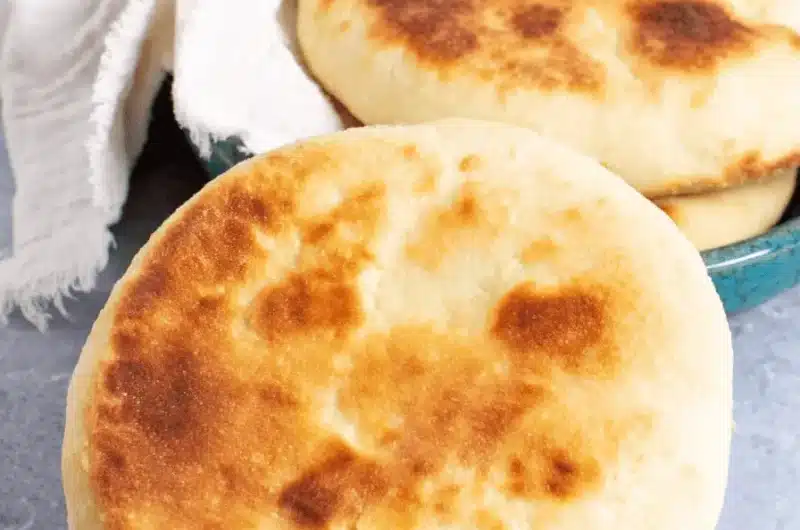
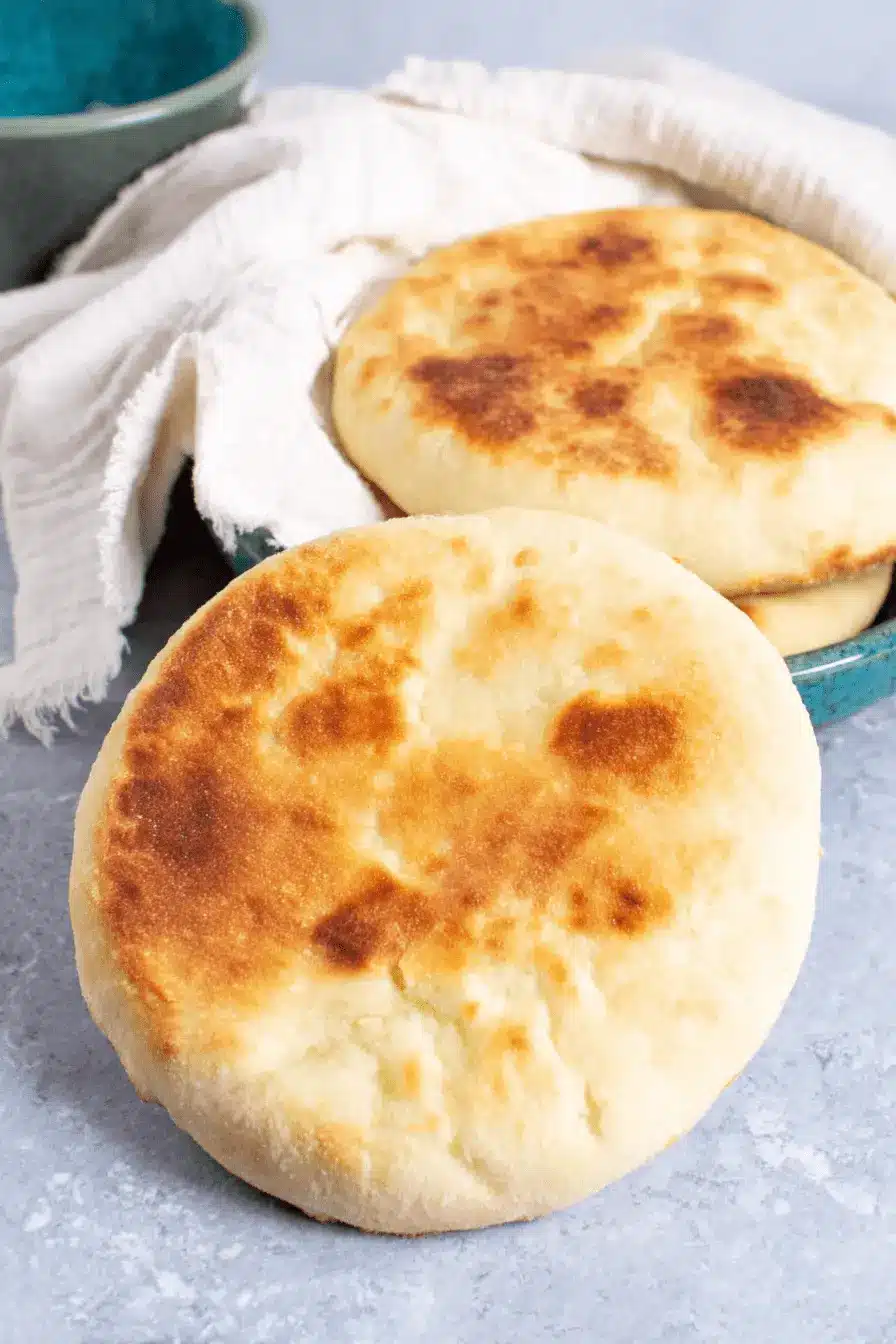
I remember the first time I watched a pita bread puff up in the oven—it felt like magic! That moment of seeing a simple dough transform into a pocket ready for stuffing is pure joy. Over time, I crafted this foolproof sourdough pita bread recipe to take away all the guesswork, making it easy for busy folks like us to create soft, puffy pita bread at home.
Table of Contents
Why This is the BEST Sourdough Pita Bread Recipe
- This recipe is foolproof, designed for bakers of all levels to get perfect pitas every time.
- It visually compares oven and skillet cooking methods so you can pick what fits your kitchen best.
- Includes a dedicated troubleshooting section, ensuring you know exactly how to fix any issues preventing your pitas from puffing.
- The recipe balances simple, wholesome ingredients with straightforward steps—no stress, just yummy results.
Skillet vs. Oven: Which Method is Best for You?
| Method | Pros | Cons | Best For… |
|---|---|---|---|
| Oven | Can cook multiple pitas at once; consistent heat distribution | Requires a pizza stone or heavy baking sheet; longer preheat time | Batch baking and even puff across many pitas |
| Skillet | Better char and slightly smokier flavor; quicker single pita | Can only cook one or two at a time; requires attention to heat level | Small batches and a rustic charred finish |
For beginners, I recommend the oven method using a pizza stone or cast iron skillet inside the oven for even puffing and easier multitasking while baking multiple pitas at once.
The Simple Ingredients You’ll Need
These ingredients are easy to find and keep this recipe approachable:
- 1/2 cup sourdough starter (active and bubbly)
- 1 cup water
- 1/2 cup whole wheat flour
- 2 cups all purpose flour
- 1 tablespoon sugar
- 2 tablespoons olive oil (plus more for oiling bowl)
- 1 teaspoon salt
Choosing Your Flour: Bread vs. All-Purpose vs. Whole Wheat
The flour you use influences the texture and flavor of your pita. All-purpose flour creates a tender, soft pita perfect for everyday eating. Bread flour, with its higher protein, gives a chewier bite and better structure. Whole wheat flour adds nutty flavor and makes the pita denser. For the fluffiest, most balanced pitas, this recipe uses a mix of all-purpose and whole wheat flours.
Using Active Starter vs. Sourdough Discard
| Ingredient | Active Starter Amount | Sourdough Discard Amount |
|---|---|---|
| Sourdough (starter) | 1/2 cup (active and bubbly) | 1/2 cup |
Active starter is alive and ready to ferment, so it develops flavor and rise faster. Using discard can work but expect a longer fermentation time and a milder sour flavor.
How to Make Sourdough Pita Bread: Step-by-Step
This process is straightforward and rewarding. Using a digital kitchen scale ensures consistent results every time and is especially helpful when measuring flour. Here’s how to get your pitas puffing perfectly:
Step 1: Mix and Knead the Dough
- Combine all ingredients in the bowl of a stand mixer fitted with a dough hook.
- Knead on medium/low speed for 10 minutes or until the dough feels stretchy and smooth. Alternatively, if kneading by hand, work the dough on a floured surface for about 12-15 minutes until it reaches the same texture.
Step 2: Bulk Fermentation (The First Rise)
- Oil a large bowl and place the dough inside. Cover with a lid or plastic wrap.
- Let the dough rise in a warm place until it doubles in size, about 4-6 hours at room temperature or up to 12 hours in the refrigerator. This step develops flavor and strengthens the dough’s gluten structure.
Step 3: Divide and Shape the Dough
- Divide the dough into 8 equal portions on a lightly floured surface.
- Pre-shape each portion into a tight ball by pulling dough edges underneath to create surface tension.
- Let the shaped dough balls rest for 15 minutes to relax the gluten, making rolling easier.
Step 4: Final Rolling and Proofing
- Roll each dough ball into a 6-inch circle, no more than 1/4 inch thick.
- Allow the rounds to rise covered with a damp tea towel for 30 minutes to 1 hour until slightly puffy, preventing the surface from drying out.
Step 5: Cook for the Perfect Puff!
- Preheat a pizza stone or cast iron skillet in the oven at 500°F (260°C) until very hot.
- Place the rolled dough onto the hot surface and bake for about 5 minutes. The heat creates steam inside the dough, causing it to puff perfectly.
Troubleshooting: Why Didn’t My Sourdough Pita Bread Puff?
Was your oven/skillet not hot enough?
If the cooking surface isn’t hot enough, the dough won’t puff. Always preheat thoroughly—use an oven thermometer if needed and give at least 30 minutes for a pizza stone to get fully hot.
Was your dough under or over-proofed?
Dough that hasn’t risen enough won’t create steam pockets. Over-proofed dough may collapse. Look for dough that has doubled in size and feels springy to the touch.
Was your dough rolled too thick or too thin?
If dough is too thick, it might not puff fully. Too thin and it can dry out or tear. Aim for about 1/4 inch thickness and keep the circle uniform.
How do I get a more or less sour flavor?
Using a very active starter and longer fermentation increases sourness. Reduce fermentation time or use sourdough discard if you prefer milder flavor.
Pro Tips for Perfectly Puffy Sourdough Pita Bread Every Time
- Use a super-hot cooking surface. The intense heat instantly turns moisture to steam, inflating the pita pocket.
- Weigh your ingredients for accuracy—this leads to consistent dough texture and better rise.
- Avoid over-flouring your work surface; too much flour can dry the dough and prevent puffing.
- Keep dough covered during proofing stages to maintain moisture and perfect rise.
- Let your dough rest after shaping so the gluten relaxes, making rolling smoother and easier.
What to Serve with Sourdough Pita Bread
- For a Classic Mezze Platter: Fill your pitas with hummus, baba ganoush, olives, and fresh veggies for a colorful Middle Eastern spread.
- For Hearty Gyros or Sandwiches: Stuff your puffed breads with grilled meats, tzatziki, tomatoes, and onions for a satisfying and flavorful meal.
- For Dipping in Soups and Stews: Use warm pitas to scoop up lentil soup, rich tomato stew, or even creamy white chicken chili, perfect for cozy weeknight dinners.
How to Store and Freeze
Store baked pitas in an airtight container at room temperature for up to 3 days to keep them soft. For longer storage, freeze baked pitas wrapped tightly in plastic wrap, then in a freezer bag for up to 3 months. You can also freeze the raw dough balls after shaping; thaw overnight in the fridge before final rolling and baking.
Recommended Tools
- Stand Mixer with Dough Hook makes kneading quick and easy.
- Digital Kitchen Scale ensures precise ingredient measuring.
- Cast Iron Skillet excellent for stovetop pita cooking and heat retention.
- Pizza Stone provides even high heat in the oven for consistent puffing.
Frequently Asked Questions (FAQs)
Can I use 100% whole wheat flour?
Yes, but the pita will be denser and less puffy due to the bran affecting gluten development.
Can I make this a no-knead recipe?
This recipe relies on kneading for gluten development, but you could try a no-knead version with longer fermentation expect different texture and puff.
Can I freeze the dough before baking?
Yes, shaped dough balls freeze well. Thaw in the refrigerator overnight before proceeding with final proof and baking.
Sourdough Pita Bread
Ingredients
Equipment
Method
- Combine all ingredients in a stand mixer with the dough hook and knead for 10 minutes until smooth.
- Oil a bowl, place dough in it, cover, and let rise until doubled (4-6 hours at room temp or up to 12 in fridge).
- Divide dough into 8 balls, let rest for 15 minutes, then roll each into a 6” circle.
- Let dough rise until puffy (30 min-1 hr), covered with a damp towel.
- Preheat pizza stone or skillet at 500°F. Bake pitas for 5 minutes until puffed.