Your Journey to Perfect Sourdough Starts Tonight
I remember feeling nervous about baking sourdough bread when I first started. Juggling work and family made me crave a simple, reliable recipe that fit my busy life. That’s why I created this overnight sourdough bread recipe—easy to follow, stress-free, and perfect for busy adults like you and me. With this guide and a handy printable checklist, your sourdough journey begins tonight.
Table of Contents
Why This Overnight Sourdough Bread Recipe is Foolproof
- Visual, step-by-step guidance with embedded GIFs makes tricky techniques like stretch-and-fold and scoring easy to master.
- Science-backed explanations remove the guesswork so you understand why each step matters.
- Clear troubleshooting tips help you identify and fix any issues with proofing or texture.
- Designed specifically for beginners and busy cooks, combining comforting flavors with simple preparation.
A Quick Sourdough Glossary for Beginners
- Autolyse: Resting flour and water together before adding starter and salt; helps gluten development.
- Bulk Ferment: The first long rise where dough develops flavor and structure.
- Oven Spring: The final rise your bread experiences during the first minutes of baking.
- Crumb: The inside texture of the bread, from dense to airy.
The Baker’s Toolkit: Essential Equipment
The Essentials (Beginner)
- Dutch oven: For a perfectly steamed crust and even baking.
- Kitchen scale: Accuracy in weighing flour and water is key for success.
- Parchment paper: Makes transferring dough easier and prevents sticking.
- Mixing bowls: Medium-sized, for combining ingredients.
The Level-Up Kit (Intermediate)
- Banneton basket: For shaping and proofing your dough with beautiful patterns.
- Lame or razor blade: To score your dough precisely.
- Proofing baskets: For consistent rises and crusts.
Visual Baking Timeline (Infographic)
Check out the infographic below for a clear visual map of the entire overnight sourdough bread process—from feeding your starter 12 hours before mixing to the final golden bake. This timeline will keep your bake on track and is perfect for pinning to your kitchen wall.
Understanding Baker’s Percentages (The Science Made Simple)
Baker’s percentages express each ingredient as a ratio of the flour weight, helping you understand hydration and dough behavior. In this recipe:
- 100% = Flour (520 grams)
- 74% = Water (385 grams)
- 2.3% = Salt (12 grams)
- 17% = Starter (90 grams)
This translates to a hydration level of about 74%, which helps produce a well-balanced crumb and crust. See the upcoming infographic for a visual breakdown.
Ingredients for Your Overnight Sourdough Bread
- 4 cups organic white bread flour, spooned and leveled (520 grams total flour). Please weigh the flour for consistent results. For your first loaves, resist adding more than the recipe calls for.
- 2 teaspoons fine sea salt (12 grams)
- 1 7/8 cups water (385 grams)
- 90 grams homemade sourdough starter or store-bought starter (⅓ cup), fed 8-12 hours earlier and just after it peaks. If you prefer a more sour taste, use an unfed starter kept 4-6 days after feeding in the fridge.
- Rice flour for dusting a banneton (optional).
- Seeds for flavoring, optional but tasty: fennel seeds, chia seeds, flax seeds, caraway seeds, sesame seeds, poppy seeds, dill seeds, celery seeds, nigella seeds. My favorite mix is 1 teaspoon fennel seeds, ½ teaspoon caraway, and 1 tablespoon chia seeds.
- You can substitute ½ cup of rye flour, spelt flour, or whole wheat flour for ½ cup of bread flour (62 grams max). Avoid increasing this amount for your first few loaves.
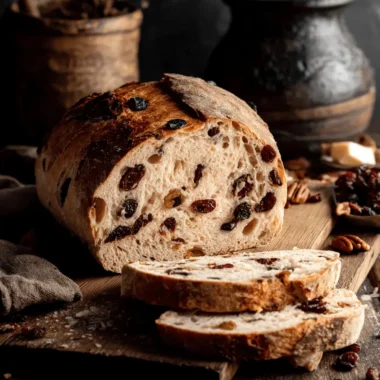
- Optional add-ins include fresh or dried herbs (rosemary, thyme, sage), nuts, olives, garlic, dried fruit, or cheese. For details, check my Rosemary Olive Sourdough Bread post.
Using the right flour and measuring precisely will make a big difference in your dough’s texture and rise.
How to Make Overnight Sourdough Bread (Step-by-Step with Visuals)
- Feed your starter twelve hours before mixing. Leave it out to double within 6 hours. If using refrigerated starter fed within the last week, it’s fine to use cold without feeding. Use the starter just after it peaks.
- Weigh your flour in a medium bowl using a kitchen scale, zeroing out the bowl’s weight. Add salt, seeds, and spices. In a small bowl, mix starter and water until cloudy and well combined. Pour into flour and mix with a fork until a thick, sticky dough forms. Mix 1–2 minutes with a wooden spoon. Cover with a wet towel and rest 15 minutes.
- Perform the first stretch and fold: With one wet hand (keep a bowl of water nearby), pull the dough from one side and fold it to the center. Rotate the bowl a quarter turn and repeat for about 30 seconds until dough firms and resists. Cover and rest 15 minutes, then repeat the stretch and fold once more.
- Proof overnight at room temperature. Cover the bowl with plastic wrap or a damp towel, and let it rise for 8–12 hours at 68–70°F. Adjust time if warmer or colder.
- Check the dough: It should expand to about 1.5–1.75 times its original size with a slightly domed top. Perform the poke test with a floured finger: if it indents easily and mostly springs back, it’s ready.
- Prepare your proofing vessel: Line a high-sided bowl with parchment paper or dust a banneton with rice flour. Lightly oil parchment if unsure it will release well.
- Shape the dough: Loosen it from the bowl’s edges with wet fingers or a wet spatula. With both wet hands, lift the dough in the middle, stretching it 1–2 feet high, then fold it over itself and place it back in the bowl. Repeat three times with 30–60 seconds rest in between. For the last stretch, transfer the dough into the lined bowl or banneton, seam side up. Sprinkle with flour and seeds.
- Refrigerate for 1 hour uncovered to firm the dough for easier scoring. You can also refrigerate for 3–4 hours if baking later.
- Preheat your oven for 1 full hour at 500°F with the Dutch oven and lid inside. Use convection if available.
- Score your dough: Using a sharp knife, lame, razor, or scissors dipped in cold water, make a swift, deep cut ¾–1 inch deep at a 45-degree angle. One slash is fine, or try a criss-cross or crescent shape. Quickly lift parchment with dough into the Dutch oven, cover, and return to the oven.
- Bake covered for 20 minutes at 500°F with convection or 25 minutes without. Then remove lid, lower heat to 450°F, and bake uncovered for 10–15 minutes until deeply golden and internal temperature reaches 204–208°F.
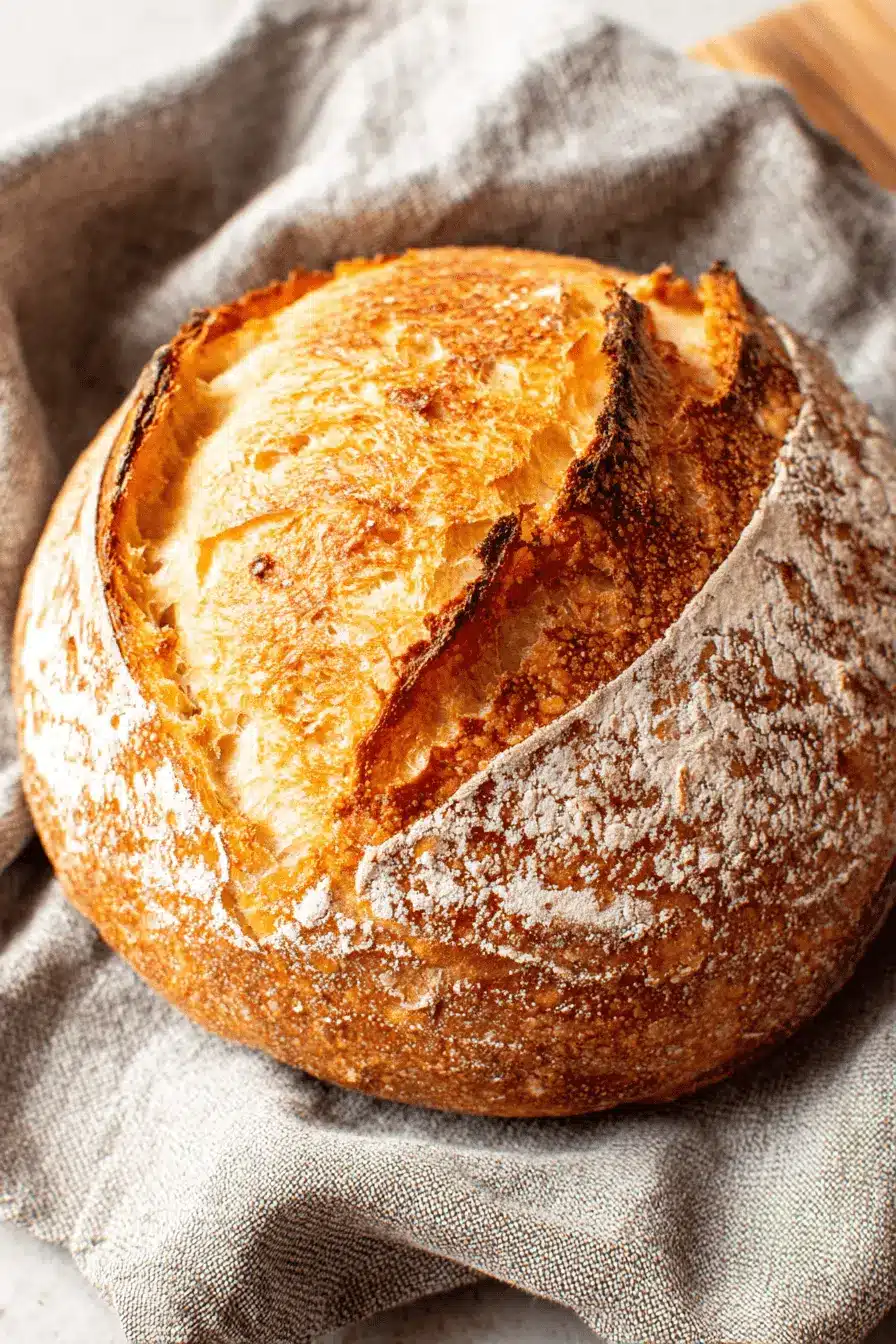
- Cool for 1 hour on a rack or tilted on its side before slicing to preserve steam and structure. Take a photo—this is your moment to celebrate!
Visual Troubleshooting Guide: What to Look For
Dough Proofing Check
- Under-proofed: Dough feels firm and resists indentation; it hasn’t risen enough.
- Perfectly proofed: Dough has a slight dome and springs back slowly but mostly in the poke test.
- Over-proofed: Dough feels loose or too soft, indents easily, and doesn’t spring back.
Decoding Your Crumb
- Gummy, dense crumb: Under-proofed or insufficient gluten development.
- Perfect, open crumb: Well-proofed with good gluten structure and hydration levels.
Creative Scoring for Your Overnight Sourdough Bread
Scoring lets your bread expand beautifully during baking while adding a personal touch. Beyond a single slash, try these patterns:
- Crosshatch: A grid pattern for a classic look.
- Leaf pattern: Elegant and rustic, mimicking nature.
- Crescent: Sweeping curves for a soft, artistic flair.
Each design controls how the loaf expands and adds character. Use sharp blades and make deep cuts for best results.
Easy Variations & Substitutions
| Flour Substitution | Effect on Dough |
|---|---|
| ½ cup Rye flour | Adds earthiness; denser crumb |
| ½ cup Spelt flour | Slightly sweeter; softer texture |
| ½ cup Whole wheat flour | Nutty flavor; heavier texture |
Optional add-ins:
- Fresh or dried herbs like rosemary, thyme, or sage.
- Seeds such as fennel, chia, or caraway for flavor boost.
- Nuts, olives, garlic, dried fruits, or cheese for richness.
Add herbs and nuts during mixing or after the first stretch and fold for even distribution. For more culinary inspiration, explore different recipe ideas and variations.
Frequently Asked Questions (FAQ)
How do I adjust this recipe for a colder or warmer kitchen?
If your kitchen is warmer than 70°F, check the dough after 6–8 hours instead of 8–12. In colder conditions, proofing may take up to 18 hours. Keep an eye on the dough’s growth rather than relying strictly on time.
How do I scale this recipe to make two loaves?
Simply double all ingredients and proof in two separate bowls or larger containers. Baking times remain similar but monitor internal temperature for doneness.
Counter Ferment vs. Fridge Ferment: What’s the difference?
| Aspect | Counter Ferment | Fridge Ferment |
|---|---|---|
| Timing | 8–12 hours at room temp | 12+ hours in refrigerator |
| Flavor | Milder, faster fermentation | More complex, tangy flavors |
| Texture | Softer crust, open crumb | Firmer crust, denser crumb |
Why is my sourdough flat?
Refer to the Visual Troubleshooting guide. Flat bread often indicates under-proofing, over-proofing, or low gluten development. Ensure proper stretch and fold, timing, and starter strength.
Can I use an unfed starter from the fridge?
Yes, for a tangier loaf, use starter 4–6 days after feeding without refreshing it. This “hungry” starter brings stronger sour flavors but may affect rise slightly.
Storing Your Homemade Sourdough Bread
For the first 1–2 days, wrap your bread in a kitchen towel to keep the crust crispy. After that, move it to a zip-lock bag or waxed bread bag to retain moisture. Bread can also be sliced and frozen for longer storage. Use leftover bread to make delicious sourdough croutons—perfect for many recipes, salads and soups!
Beyond the Toast: What to Make with Your Sourdough
Don’t stop at toast! Here are some creative recipes to enjoy your overnight sourdough bread:
- Bruschetta: Top with fresh tomatoes and basil for a quick appetizer.
- Gourmet grilled cheese: Crisp and melty, a classic upgrade.
- Panzanella salad: Soak cubes in vinaigrette with fresh veggies.
- Croutons: Homemade and crunchy for soups and salads.
- Mushroom toast: Lather with butter, then sauté mushrooms for a hearty snack.
Show Us Your Bake!
Baking this overnight sourdough bread is easier than you think, and the rewards are so satisfying! If you have questions or want to share your success, leave a comment below.
Overnight Sourdough Bread
Ingredients
Equipment
Method
- Feed your sourdough starter 12 hours before mixing the dough, ensuring it doubles in size within 6 hours.
- Alternatively, use a refrigerated starter without feeding if it was fed within the last 7 days.
- Weigh the flour, salt, and optional spices or seeds in a bowl. Mix starter and water separately, then combine with the flour mixture to form a sticky dough.
- Cover and let the dough rest for 15 minutes to loosen up.
- Stretch and fold the dough every 15 minutes to strengthen the gluten. Repeat this process 2-3 times.
- Cover the dough and let it proof at room temperature for 8-12 hours, or until it passes the poke test.
- Shape the dough and place it in a parchment-lined bowl or floured banneton. Sprinkle with seeds and flour.
- Refrigerate for 1 hour to firm up the dough.
- Preheat the oven to 500°F with a Dutch oven inside. Score the dough and bake covered for 20-25 minutes.
- Uncover and bake for another 10-15 minutes until deeply golden and the internal temperature reaches 204-208°F.
- Let the bread cool for 1 hour before slicing. Store wrapped in a kitchen towel or freeze for later use.