
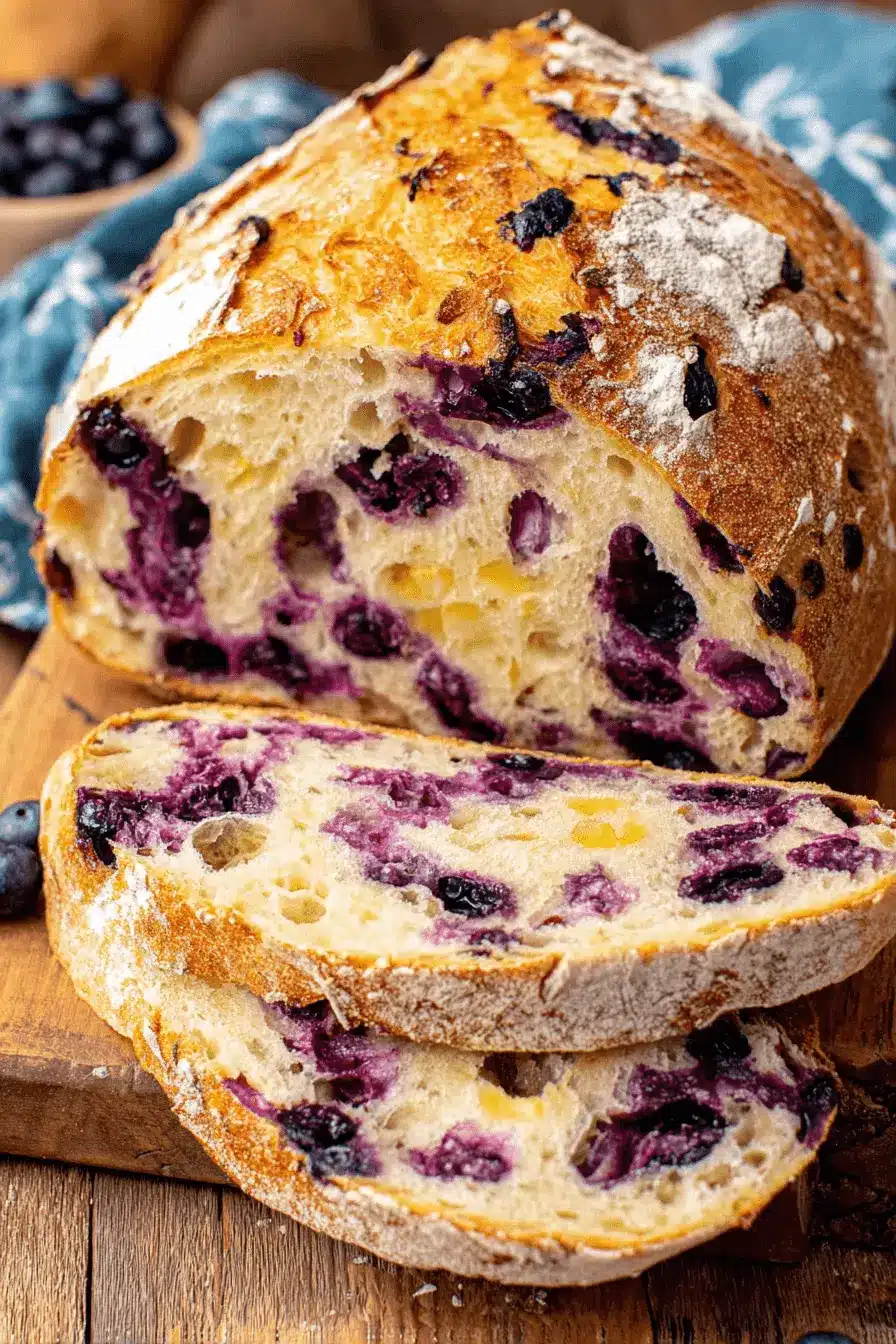
I never thought I’d fall in love with baking sourdough bread, but this lemon blueberry sourdough changed everything for me. It’s such a comforting project that fills the house with a bright, fruity aroma—plus, it’s perfect for busy days since most of the time is hands-off. With just a little patience, you’ll have a loaf that feels special and tastes like a gentle celebration.
Table of Contents
Why This Is the BEST Lemon Blueberry Sourdough Bread Recipe
- This recipe offers a foolproof, step-by-step guide that helps you achieve consistent, bubbly, flavorful bread every time.
- It includes smart tips for handling blueberries so they stay intact without bleeding too much into the dough.
- Troubleshooting advice is baked right in, so you can easily fix common issues like dense crumb or flat loaves.
- Beyond toast, ideas for using this bread creatively make every bite exciting, turn it into French toast or a delicious sandwich.
Ingredient Spotlight: The Keys to Vibrant Flavor
Choosing and Prepping Your Blueberries
Fresh blueberries are recommended to keep your dough balanced and vibrant. Using frozen berries can sometimes release more juice during baking, causing unwanted “bleeding” into the dough, which might turn your crumb purple. To prevent this, gently fold fresh berries in during the stretch-and-fold steps, taking care not to squash them. Washing and drying fresh blueberries beforehand is essential; avoid adding excess moisture to keep the dough from becoming too wet.
Getting the Most Out of Your Lemons
For this recipe, Meyer lemons are ideal due to their sweeter, fragrant zest compared to the more tart and tangy Eureka lemons. Fresh lemon zest is crucial because it adds bright, aromatic oils without the extra liquid that lemon juice would introduce, which could affect dough hydration. Zest brings that perfect punch of citrus flavor that complements the blueberries beautifully.
Essential Equipment for Sourdough Success
- Kitchen Scale: Accurate weighing of ingredients is essential for dough consistency and reliable fermentation.
- Dutch Oven: Creates a steamy, enclosed baking environment that helps develop a crispy crust and perfect rise.
- Proofing Basket (Banneton): Supports dough shape during the long rise, helping your loaf hold tension and rise evenly.
- Dough Whisk: Efficiently mixes wet and sticky dough with minimal effort, ideal for sourdough bread.
- Bench Scraper: Assists in shaping the dough gently while preserving air bubbles and avoiding crushed fruit.
A Baker’s Timeline for Your Lemon Blueberry Sourdough Bread
| Schedule Type | Timeline |
|---|---|
| Overnight Cold Fermentation | Start Friday evening: mix dough and pre-shape Cold ferment overnight (14-20 hours) Bake Saturday morning fresh and flavorful |
| Same-Day Bake Schedule | Morning: mix dough and levain Perform stretch and folds throughout the day Shape, then bake late afternoon |
Both schedules accommodate busy lives—choose what suits your timing! For more details on the overnight process, you might also like this amazing overnight sourdough bread recipe for beginners.
How to Make Foolproof Lemon Blueberry Sourdough Bread
Though the ingredient list and steps can look long, this recipe breaks everything down into simple phases: mixing, stretch and fold, resting, shaping, and baking. Following the gram measurements carefully helps your dough develop perfectly. Trust the process, and watch your bread transform into a beautiful lemon blueberry masterpiece.
Ingredients
- 45 grams sourdough starter ripe, bubbly and active (about 3 Tablespoons)
- 45 grams all-purpose or bread flour (about 6 Tablespoons)
- 45 grams water (about 3 Tablespoons)
- 120 grams levain ripe (bubbly and active, about ½ cup, see recipe notes)
- 330 grams water (1 cup plus 6 Tablespoons)
- 55 grams granulated sugar (about 1/4 cup)
- 12 grams lemon zest (about 2 Tablespoons from 2 medium-sized lemons)
- 10 grams salt (about 1.5 teaspoons)
- 500 grams bread flour (about 3.5 cups)
- 150 grams fresh blueberries (about 1 cup)
Instructions
- Mix starter: Mix together ripe/active sourdough starter with all-purpose or bread flour and water. Cover loosely and let sit 3-4 hours at 78-80°F until doubled, bubbly & peaked. Note: If you have a ripe, bubbly, active sourdough starter that is fed equal parts flour and water – you can substitute 120 grams of it for the levain in this recipe.
- Mix Dough: To a large bowl, mix together ripe levain with water, granulated sugar, and lemon zest. Whisk together. Then add salt and bread flour. Mix together using a dough whisk or spoon until a wet and sticky dough forms and the ingredients are fully combined. Cover and let rest for 30 minutes.
- Stretch and Folds: After the dough has rested, you will perform a series of “stretch and folds” over the next 1 ½ hours. The goal is to strengthen the dough through a gentle kneading process. You will also add the blueberries into the dough during this process which will evenly disperse them throughout the dough. To “stretch and fold,” wet your hand (so it doesn’t stick to the dough). Reach around the dough down to the bottom of the bowl, pull the dough up and over and place it on top of the dough. Turn the bowl a quarter turn and repeat the stretch and fold. Turn another quarter turn and repeat. Perform one more quarter turn, stretching and folding the dough. Cover and set aside. Take note of how the dough feels through this process. It will go from feeling a little shaggy to smooth and elastic. Cover the bowl and wait about 30 minutes between stretch and folds.
- Stretch and fold #1: 30 minutes into bulk fermentation.
- Stretch and fold #2: 30 minutes later, the dough will spread out. Add the fresh blueberries. Stretch and fold again, beginning to incorporate the blueberries into the dough.
- Stretch and fold #3: 30 minutes later, stretch and fold again. The blueberries will continue dispersing throughout the dough. Be gentle so you don’t squash the berries, releasing their juices. We want the blueberries to stay as whole as possible.
- Stretch and fold #4: 30 minutes later, stretch and fold again. You should notice the dough feeling more cohesive and strong during this stretch and fold and not needing very much folding to come together. If your dough still feels loose, add in another couple stretch and folds to help strengthen and tighten the gluten strands.
- Rest: Cover the dough and let rise for 2-2.5 more hours at 78ºF. You’ll know the dough is ready to shape when the dough is puffed up about 40%, jiggles when you shake the bowl, and has scattered bubbles visible on the sides and top. If your dough is cooler, this will take longer and you will want to look for a larger percentage rise before shaping the dough.
- Pre-shape: Tip the bowl upside down, allowing the dough to fall onto a clean counter surface. Be gentle to avoid degassing the dough as much as possible. Wet your hands and the bench knife if needed and push the bench knife under the dough on one side and your free hand on the other side to tuck the dough under itself. The goal is to introduce some tension into the dough. Repeat this process, going around in a circle until you have a ball of dough. Do your best not to break any of the blueberries open.
- Bench Rest: Let the dough rest uncovered for about 30 minutes at room temperature. The dough will flatten a little as it sits. This allows the gluten in the dough to relax and prepares the dough to be shaped.
- Shaping: Prepare a bowl or banneton. Place a kitchen towel or hair net in the bowl and liberally flour as needed. Sprinkle a little flour on top of the dough if desired. Using a bench knife, lift the dough up off the counter and place it on top of the countertop – floured side down. This ensures that the flour is staying mainly on the outside of the dough. Going around in a circle, pull the dough sideways towards you and then fold up to the top of the round. Move 90 degrees and repeat the same process pulling the dough sideways and then folding up to the top. As you continue this process around the dough, increase the tension as you pull. Gather the bread into a circle and place into a lined bowl. If any of the blueberries pop out of the bread, remove them or stick them on the bottom side of the bread dough. Note: It is possible to shape the dough without any extra flour. The dough can stick to the kitchen towel but doesn’t stick to the hair nets if cold proofed.
- Cold Fermentation: Cover the dough with the tea towel/shower cap/plastic wrap and refrigerate overnight or up to 14-20 hours. If you want to bake the same day, you can let the dough rise for about 2-3 hours until puffed up and risen. Then bake according to recipe directions.
- Preheat the oven: Put a Dutch oven (top and all) into the oven and preheat to 450°F for 20 minutes. You are working with very high temperatures, so make sure you have some good hot pads. Once preheated for 20 minutes, pull the loaf out of the refrigerator. Remove the covering. Place a piece of parchment paper on top of the dough. Flip the dough over so it is now sitting on the parchment paper. Take off the bowl/banneton and the kitchen towel.
- Scoring: Use a very sharp knife or bread lame to score the dough. Take the bread lame and score on one side of the dough, at a shallow angle about 30º and 1 inch deep. Score straight from the refrigerator on the cold dough for best results. This is not a loaf for intricate scoring – the blueberries will burst during baking which will be the focal point of your loaf.
- Baking: Carefully remove the Dutch oven from the 450°F oven. Take the lid off and place your bread into the Dutch oven (including parchment paper – this helps with the transfer). Put the lid on and put it back in the oven. Lower the temperature to 425°F and bake for 25 minutes. After 25 minutes, take the lid off the Dutch oven and lower the temperature again to 400ºF for the remainder of the bake. The sugar in the dough can lead to a crispier crust, so I like to decrease the temperature for the last 20 minutes of baking. Once the loaf reaches 200-210ºF, remove the bread from the Dutch oven to a cooling rack and let the bread cool completely before slicing. Enjoy!
Pro Tips for Foolproof Results
- Managing Dough Temperature: Aim to keep your dough at 78-80°F during fermentation for the best rise and flavor development. Use your oven with just the light on or a proofing box for a consistent warm environment. This temperature range activates the yeast and bacteria steadily for a reliable rise.
- Adding Inclusions Gracefully: Try using the lamination technique as an alternative to stretch-and-folds. This method gently folds the dough over layers of blueberries, distributing fruit evenly without tearing or crushing them.
- Reading the Dough, Not the Clock: Timing can vary; trust visual signs like a ~40% puffed dough, visible bubbles, and a gentle jiggle when you shake the bowl. These cues tell you the dough is ready to move to the next step, building your confidence with each bake.
Troubleshooting Your Lemon Blueberry Sourdough
Why is my loaf flat?
A flat loaf can result from under-proofing or over-proofing, which affects dough structure. Also, a weak or inactive starter will reduce leavening power. Make sure your starter is bubbly and active before starting.
Why is the crumb dense or gummy?
Not allowing enough fermentation time can cause a dense crumb, as the gluten isn’t fully developed. Slicing the bread while it’s still warm traps moisture, resulting in gumminess. Always cool completely before cutting.
My blueberries all sank to the bottom!
This usually happens if the dough isn’t strong enough or if the blueberries were added too early and the dough was too slack. Following the stretch and folds closely and handling the dough gently ensures blueberries stay suspended.
My crust is too dark/burnt in spots.
Sugar and fruit in the dough can caramelize and create hot spots on the crust. Lowering the oven temperature during baking, as outlined in the recipe, helps prevent burning and achieves an even, golden crust.
Recipe Variations & Substitutions
| Ingredient to Substitute | Recommended Substitution | Notes/Adjustments |
|---|---|---|
| Blueberries | Raspberries or dried cranberries | Raspberries can be used fresh; dried cranberries soak briefly in water to rehydrate before use. Adjust amount for sweetness. Don’t stop there—you might also enjoy the ultimate apple cinnamon sourdough bread for a different fruity twist. |
| Bread Flour | Add 10-15% whole wheat or spelt flour | Whole wheat adds nuttiness; spelt flour offers a lighter texture. Reduce hydration slightly if adding whole wheat. |
Creative Serving Suggestions
- Make decadent lemon blueberry French toast topped with maple syrup and fresh berries.
- Spread with rich lemon curd or creamy whipped cream cheese for an indulgent snack.
- Use as the base for a savory sandwich layered with goat cheese, prosciutto, and arugula for a bright contrast.
- Toast slices and drizzle with honey, then sprinkle with toasted nuts for a crunchy treat. For other sourdough delights, consider making irresistibly soft pull apart sourdough dinner rolls for your next meal.
How to Store Sourdough Bread
Store your lemon blueberry sourdough at room temperature in a paper or cloth bread bag to maintain crust crispness and avoid moisture buildup. For longer storage, slice the bread and freeze portions in airtight bags. To refresh frozen slices, toast them directly or warm in a low oven until crisp and fragrant.
Frequently Asked Questions (FAQ)
My sourdough starter isn’t very active. Can I still make this?
If your starter isn’t bubbly and lively, the dough won’t rise well. You can try boosting it by feeding it regularly over several days until it’s active, or substitute the levain with more mature starter, but results may vary.
Can I adjust this recipe for a more or less sour flavor?
Yes! For a tangier loaf, ferment longer at cooler temperatures. For a milder flavor, shorten fermentation times and proof at slightly warmer temperatures. Adjusting feeding schedules of your starter also influences sourness.
How can I adjust the recipe for a very humid or very dry climate?
In humid climates, reduce water slightly to balance dough hydration. In dry climates, you may need to increase water a little. Watch dough texture and feel—sticky but manageable is ideal.
What’s the best way to score dough with large inclusions like blueberries?
Keep scoring simple and shallow, about 1 inch deep, at a 30º angle. Avoid intricate patterns since blueberries burst during baking and become the visual highlight instead of detailed cuts.
Conclusion
This lemon blueberry sourdough bread is a real joy to bake and even more delightful to savor. It balances bright citrus with juicy fruit in a tender crust, offering a comforting yet special treat that fits right into busy lives. I can’t wait to see your beautiful loaves! If you try this recipe, please leave a comment and a rating below.
Lemon Blueberry Sourdough Bread
Ingredients
Equipment
Method
- Combine sourdough starter, flour, and water; cover and allow to ferment for 3-4 hours at 78-80°F until doubled and active.
- In a large bowl, whisk together levain, water, sugar, and lemon zest; then add salt and bread flour, mixing until a wet, sticky dough forms. Cover and rest for 30 minutes.
- Perform a series of gentle stretch and folds over 1.5 hours to strengthen the dough, repeating the process after rotating the bowl. Keep hands wet to prevent sticking; allow 30 minutes of rest between each set of folds.
- Perform the first stretch and fold 30 minutes into bulk fermentation.
- After another 30 minutes, add fresh blueberries to the dough and perform the second stretch and fold, gently incorporating the berries.
- Conduct the third stretch and fold after 30 minutes, continuing to disperse the blueberries gently to keep them whole.
- Perform the fourth stretch and fold after another 30 minutes; the dough should feel cohesive and strong, adding more folds if it still feels loose.
- Cover the dough and let it rise for 2-2.5 hours at 78ºF, or until it has puffed up about 40%, jiggles, and shows visible bubbles.
- Gently turn the dough onto a clean counter, then wet your hands and a bench knife to tuck the dough under itself, forming a ball and introducing tension without degassing or breaking blueberries.
- Allow the dough to rest uncovered for about 30 minutes at room temperature; this relaxes the gluten and prepares it for shaping.
- Prepare a floured banneton or bowl; then lift the dough onto the counter (floured side down) and shape it by pulling and folding the edges towards the center to create tension, placing it into the lined bowl.
- Cover the shaped dough and refrigerate overnight for 14-20 hours for cold fermentation, or let it rise at room temperature for 2-3 hours for same-day baking.
- Preheat your Dutch oven in a 450°F oven for 20 minutes; then carefully remove the cold loaf from the refrigerator, invert it onto parchment paper, and remove the banneton.
- Score the cold dough with a sharp knife or bread lame at a shallow 30-degree angle and about 1 inch deep, avoiding intricate designs due to the blueberries.
- Transfer the scored dough on parchment paper into the preheated Dutch oven, cover, and bake at 425°F for 25 minutes. Remove the lid, reduce temperature to 400°F, and continue baking for 20 minutes until the internal temperature reaches 200-210ºF; cool completely on a rack before slicing.