
I stumbled upon this protein bagel recipe during a particularly busy week when I needed quick breakfast options. After years of believing bagels were too complicated to make at home, I was shocked at how simple these were! The first time I pulled these golden, puffy rounds from my oven, I knew I’d found a game-changer. Now they’re my go-to when I want something satisfying but don’t have hours to spend in the kitchen.
Why You’ll Absolutely Love These Protein Bagels with Greek Yogurt
These aren’t your average bagels – they’re a revelation for busy home cooks looking for easy and satisfying recipes! With no yeast required, no boiling step needed, and just 30 minutes of your time, these protein-packed bagels deliver incredible results with minimal effort.
What makes these bagels truly special is their perfect texture – slightly crisp on the outside with a tender, chewy interior that rivals any bakery version. The Greek yogurt adds a subtle tanginess while boosting the protein content significantly compared to traditional bagels.
They’re incredibly versatile too! Whether you’re looking for a quick breakfast, a protein-rich snack, or a hearty sandwich base, these bagels adapt to whatever meal you need. Plus, they’re easily customizable with various toppings to match your cravings.
Most importantly, they make healthy eating accessible. With simple ingredients and straightforward preparation, you’ll wonder why you ever bought bagels from the store!
The Science Behind Your Perfect Protein Bagels with Greek Yogurt
Greek yogurt is truly the magic ingredient in this recipe. Beyond adding a protein boost (about 20g of protein per cup!), it creates the perfect bagel texture without traditional bagel-making techniques.
When Greek yogurt combines with baking powder, something remarkable happens. The acidity in the yogurt reacts with the alkaline baking powder to create carbon dioxide bubbles – this natural leavening action helps the bagels rise without yeast. This chemical reaction is similar to what happens in sourdough bread, but happens instantly rather than requiring hours of fermentation.
The protein in Greek yogurt also contributes to the bagels’ structure. It helps create those chewy strands that give bagels their distinctive texture, mimicking what would normally happen during the traditional bagel-making process involving yeast development and boiling.
This streamlined approach saves you time without sacrificing quality – the bagels still develop that characteristic chew and slight crust that makes bagels so satisfying.
Essential Ingredients & Smart Tools for Your Bagels
The Right Greek Yogurt Matters
For these bagels, you need thick, strained Greek yogurt – not regular yogurt. The high protein content and thicker consistency of Greek yogurt creates a workable dough that isn’t too sticky. Non-fat Greek yogurt works perfectly here, giving you protein without unnecessary fat.
I recommend brands like Stonyfield or Fage, as they maintain excellent thickness and don’t release excess liquid. If your yogurt seems watery, strain it through a coffee filter or cheesecloth for 30 minutes before measuring to achieve the right dough consistency.
Flour Power: Choosing Your Best Bagel Base
While unbleached all-purpose flour creates a reliable bagel with classic texture, you have options:
All-purpose flour gives you that traditional bagel chew and reliable rise. The 5-ounce weight measurement is crucial – flour can vary greatly when measured by volume, so weighing ensures consistent results.
Whole wheat flour adds nutty flavor and extra fiber, though your bagels may be slightly denser. If using 100% whole wheat, you might need to add an extra tablespoon of yogurt to maintain proper moisture.
For gluten-free versions, look for a 1:1 baking blend that contains xanthan gum. Bob’s Red Mill and King Arthur both make excellent gluten-free flour mixes that work well in this recipe. The texture will be slightly different, but still delicious.
Key Equipment for Bagel Success
You’ll need basic tools like a baking sheet, parchment paper (or a silicone baking mat), and mixing bowls. A kitchen scale is highly recommended for measuring flour accurately – it’s the difference between perfect bagels and dense ones.
While not essential, a stand mixer with dough hook can make the kneading process easier, especially if you’re doubling the recipe. A silicone pastry brush helps apply egg wash evenly for that beautiful golden finish.
Ingredients
- 1 cup unbleached all purpose flour, whole wheat or gluten-free mix* ((5 oz in weight))
- 2 teaspoons baking powder (make sure it’s not expired or it won’t rise)
- 3/4 teaspoon kosher salt (use less if using table salt)
- 1 cup non-fat Greek yogurt (not regular yogurt, it will be too sticky (Stonyfield))
- 1 egg white or whole egg (beaten)
- optional toppings:
Instructions
Dough Preparation
- Combine dry ingredients. In a medium bowl combine the flour, baking powder and salt and whisk well. Add the yogurt and mix with a fork or spatula until well combined, it will look like small crumbles.
- Knead to perfection. Lightly dust flour on a work surface and remove dough from the bowl, knead the dough a few times until dough is tacky, but not sticky, about 20 turns (it should not leave dough on your hand when you pull away).
- Shape your bagels. Divide into 4 equal balls. Roll each ball into 3/4-inch thick ropes and join the ends to form bagels. (or you can make a ball and poke a hole in the center then stretch it slightly)
- Apply toppings. Top with egg wash and sprinkle both sides with seasoning of your choice.
Baking Method: Oven
- Prepare the oven. Preheat oven to 375F. Place parchment paper or a silpat on a baking sheet. If using parchment paper, spray with oil to avoid sticking.
- Bake until golden. Bake on the top rack of the oven for 25 minutes. Let cool at least 15 minutes before cutting.
Baking Method: Air Fryer
- Preheat your air fryer. Preheat the air fryer 280F degrees.
- Cook in batches. Transfer in batches without overcrowding and bake 15 to 16 minutes, or until golden. No need to turn. Let cool at least 15 minutes before cutting.
Shaping Foolproof Protein Bagels Every Time
Shaping these bagels properly ensures they bake evenly and maintain their classic appearance. Don’t worry about perfection – even slightly uneven bagels will taste amazing!
Method 1: The Rope-and-Join
This traditional technique creates the most uniform bagels:
- Roll each portion of dough into a smooth ball first.
- Using your palms, roll the ball into a rope about 8 inches long and 3/4 inch thick.
- Bring the ends together, overlapping by about 1 inch.
- Pinch and roll the joined section gently to seal completely.
- Gently reshape into a circle if needed.
Method 2: The Poke-and-Stretch
This beginner-friendly approach is quick and effective:
- Roll each portion into a smooth ball.
- Press your thumb firmly through the center to create a hole.
- Gently stretch and rotate the dough to widen the hole to about 1.5-2 inches in diameter.
- Keep the thickness even all around the ring.
Ensuring the Perfect Hole
The hole in your bagels should be significantly larger than you might expect – about 1.5 to 2 inches in diameter. This may look too large at first, but the holes will shrink considerably during baking as the dough rises and expands. If your holes are too small initially, they’ll close up completely during baking, and you’ll end up with rolls rather than bagels.
Tips for Success: Mastering Your Protein Bagels
Dough Consistency: Visual Cues for Perfection
Perfect bagel dough should feel slightly tacky but not sticky. When you touch it, your finger should feel slight resistance, but no dough should cling to your skin when you pull away.
Look for these visual cues:
- The dough should pull away cleanly from the sides of the bowl.
- It should form a cohesive ball that holds its shape.
- After kneading, the surface should appear relatively smooth with a slight sheen.
If using regular flour, you can perform a simple “windowpane test” – take a small piece of kneaded dough and gently stretch it between your fingers. It should stretch thin enough to see light through it without tearing immediately, indicating proper gluten development.
Common Bagel Blunders & How to Fix Them
- Problem: Overly Sticky Dough
Solution: Add flour one tablespoon at a time during kneading, being careful not to add too much. Using a kitchen scale for measuring prevents this issue. - Problem: Dense, Heavy Bagels
Solution: Check that your baking powder is fresh – it should fizz vigorously when added to vinegar. Also ensure you’re not over-kneading, which can cause bagels to become tough. - Problem: Bagels Flattening During Baking
Solution: Make sure you’re baking at the correct temperature (preheat fully) and that your shaping technique creates sufficient surface tension in the dough. - Problem: Uneven Browning
Solution: Ensure your oven rack is in the top third position and rotate the baking sheet halfway through baking.
The Importance of Resting
Allowing your freshly baked bagels to rest for at least 15 minutes before slicing is crucial. During this rest period, the interior structure sets, preventing gumminess and ensuring the perfect chewy texture. This cooling period also allows flavors to develop fully. Think of it as the bagels’ final transformation from dough to delicious baked good!
Air Fryer Optimization
Different air fryer models vary in how they circulate heat. Basket-style air fryers tend to cook faster than oven-style models, so start checking for doneness at the 13-minute mark.
For optimal results, preheat your air fryer for at least 3 minutes before adding bagels. Most air fryers can fit 2 bagels at once – overcrowding prevents proper air circulation and results in uneven baking.
If your air fryer has a tendency to dry out foods, lightly spritz the bagels with water before air frying to maintain moisture as they bake.
Customizing Your Protein Bagels with Greek Yogurt
Irresistible Topping Ideas
Transform your bagels with these topping combinations:
- Everything bagel seasoning (sesame seeds, poppy seeds, dried garlic, dried onion, and salt)
- Sesame seeds or poppy seeds
- Shredded cheddar or parmesan cheese
- Cinnamon sugar (1 tablespoon sugar mixed with 1/2 teaspoon cinnamon)
- Za’atar and olive oil
- Garlic powder, dried herbs, and grated parmesan
- Sea salt flakes and cracked black pepper
- Thinly sliced jalapeño with cheddar cheese
For best adhesion, brush with egg wash before adding dry toppings.
Creative Mix-ins for the Dough
Take your bagels to the next level by incorporating flavors directly into the dough:
- Cheddar and jalapeño: Add 1/4 cup shredded cheddar and 1 tablespoon finely diced jalapeño
- Cinnamon raisin: Add 1 1/2 teaspoons cinnamon and 3 tablespoons raisins
- Garlic herb: Add 1 teaspoon garlic powder and 1 tablespoon mixed dried herbs
- Blueberry: Gently fold in 1/4 cup dried blueberries (fresh can make dough too wet)
- Chocolate chip: Add 2 tablespoons mini chocolate chips for a sweeter version
- Sun-dried tomato and basil: Add 2 tablespoons chopped sun-dried tomatoes and 1 tablespoon dried basil
When adding mix-ins, incorporate them gently after the dough has started to come together but before final kneading.
Beyond Breakfast: Serving Suggestions
These versatile bagels work beautifully in numerous meal applications:
- Mini pizza bases: Top with marinara, cheese, and toppings, then broil until bubbly
- Open-faced avocado toasts with Everything seasoning and microgreens
- Make delicious tuna melts with light mayo, celery, and melted cheese
- Breakfast sandwiches with egg whites, spinach, and low-fat cheese
- French toast bagels: Dip in egg mixture with cinnamon and vanilla, then pan fry
- Bruschetta bagels topped with diced tomatoes, basil, and balsamic glaze
- Mediterranean lunch: Topped with hummus, cucumber, tomato, and olives
- Buffalo chicken bagel melts with shredded chicken, hot sauce, and blue cheese
Storage & Reheating for Optimal Freshness
Storing Your Fresh Bagels
Fresh bagels maintain best quality at room temperature for 1-2 days. Store them in a paper bag or loosely in a cloth bag – this preserves their crust better than plastic, which can make them soggy.
For longer storage up to 5 days, place bagels in an airtight container in the refrigerator. While refrigeration can slightly alter texture, toasting will revive them beautifully.
Freezing for Later
These bagels freeze exceptionally well for up to 3 months. For best results:
- Allow bagels to cool completely after baking.
- Slice them before freezing (this prevents having to thaw before slicing).
- Wrap each bagel individually in plastic wrap, then place in a freezer bag.
- Remove as much air as possible before sealing the bag.
- Label with the date to track freshness.
Individual wrapping prevents freezer burn and allows you to take out just what you need.
Reheating for Optimal Taste
- From frozen (preferred method): Place frozen bagels directly in toaster or toaster oven on medium setting. You may need a second toasting cycle for complete warming.
- In conventional oven: Preheat to 350°F, lightly spritz frozen bagels with water, and bake for 10-12 minutes until heated through.
- In microwave (quick option): Wrap a frozen bagel in a damp paper towel and microwave for 20-30 seconds, then toast for best texture.
For maximum freshness: If time allows, thaw overnight in refrigerator, then toast as usual.
Protein Bagels with Greek Yogurt: Diet & Lifestyle Adaptations
Gluten-Free & Dairy-Free Options
For gluten-free bagels:
Choose a high-quality 1:1 gluten-free flour blend containing xanthan gum. Cup4Cup and King Arthur Measure for Measure work exceptionally well. The dough may feel slightly different – slightly stickier initially – but will firm up as you work with it. Add flour sparingly while kneading to prevent dryness.
For dairy-free versions:
Plant-based Greek-style yogurts like Kite Hill Greek-Style Almond Milk Yogurt or Forager Cashewgurt work best due to their thicker consistency. Avoid coconut yogurt as its flavor can be overpowering. You may need to strain plant-based yogurts through cheesecloth for 1-2 hours in the refrigerator before measuring to achieve the right consistency.
Boosting the Protein Even More
To increase protein content, you can add 2-3 tablespoons of unflavored whey or plant-based protein powder to the flour mixture. This addition will likely require 1-2 extra tablespoons of Greek yogurt to maintain proper hydration, as protein powder absorbs moisture.
Monitor dough consistency carefully when adding protein powder – you’re looking for the same slightly tacky but not sticky texture. Different brands of protein powder vary in absorbency, so adjust yogurt accordingly.
For the Low-Carb Enthusiast
While not a direct 1:1 substitution, you can experiment with almond flour or coconut flour blends. A combination of 3/4 cup almond flour, 3 tablespoons coconut flour, and 2 tablespoons ground flaxseed can work as a starting point.
Low-carb flours behave differently than wheat flour, typically requiring more binding agents. Adding an additional egg white to the dough helps provide structure. Be aware that low-carb versions will have a different texture – more tender and less chewy than traditional bagels.
Advanced Bagel Techniques for the Enthusiast
For those wanting to elevate their bagel game:
- Try a 30-minute cold fermentation: After shaping, place bagels in the refrigerator for 30 minutes before baking for improved flavor complexity.
- For extra chewiness, dip shaped bagels briefly (15 seconds per side) in simmering water with 1 tablespoon honey before baking.
- Brush with a mixture of egg white and 1/2 teaspoon baking soda solution before adding toppings for a shinier, more authentic bagel shop finish.
Frequently Asked Questions
Are these bagels truly high in protein?
Yes! Each bagel contains approximately 10-12 grams of protein, primarily from the Greek yogurt. That’s about double the protein of a regular bagel. For comparison, a standard plain bagel typically contains around 5-7 grams of protein.
Can I use an air fryer instead of an oven?
Absolutely! The air fryer creates excellent results, often with a slightly crispier exterior. Follow the specific air fryer instructions in the recipe, cooking at 280°F for 15-16 minutes. The lower temperature prevents over-browning before the inside cooks through.
What if my dough is too sticky or dry?
If your dough is too sticky, add flour 1 tablespoon at a time while kneading until it reaches the right consistency. If too dry, add Greek yogurt 1 teaspoon at a time. The perfect dough should feel tacky but not stick to your fingers.
Can I use regular yogurt instead of Greek yogurt?
Regular yogurt contains significantly more moisture than Greek yogurt and will create an unworkably sticky dough. If regular yogurt is your only option, strain it through cheesecloth for at least 4 hours (preferably overnight) in the refrigerator to remove excess whey.
Can I make these bagels ahead of time?
Yes! These bagels freeze beautifully for up to 3 months. Slice them before freezing for convenience, then toast directly from frozen. You can also prepare the dough ahead and refrigerate it for up to 24 hours before shaping and baking.
Conclusion
These protein-packed Greek yogurt bagels have completely changed my approach to homemade bread. They’ve proven that creating delicious, nutritious bagels doesn’t require specialized equipment or hours of your time – just a few simple ingredients and about 30 minutes.
What I love most about this recipe is its flexibility. Whether you’re gluten-free, focused on increasing your protein intake, or simply want a quick breakfast option, these bagels adapt to your lifestyle while delivering that satisfying chew and flavor we all crave from a good bagel.
I’d love to hear how your bagels turn out! Did you try a creative topping combination? Have you discovered a mix-in that takes these to the next level? Drop me a comment below sharing your bagel success story, ask any questions that came up during your baking adventure, or let me know which variation you’re excited to try next!
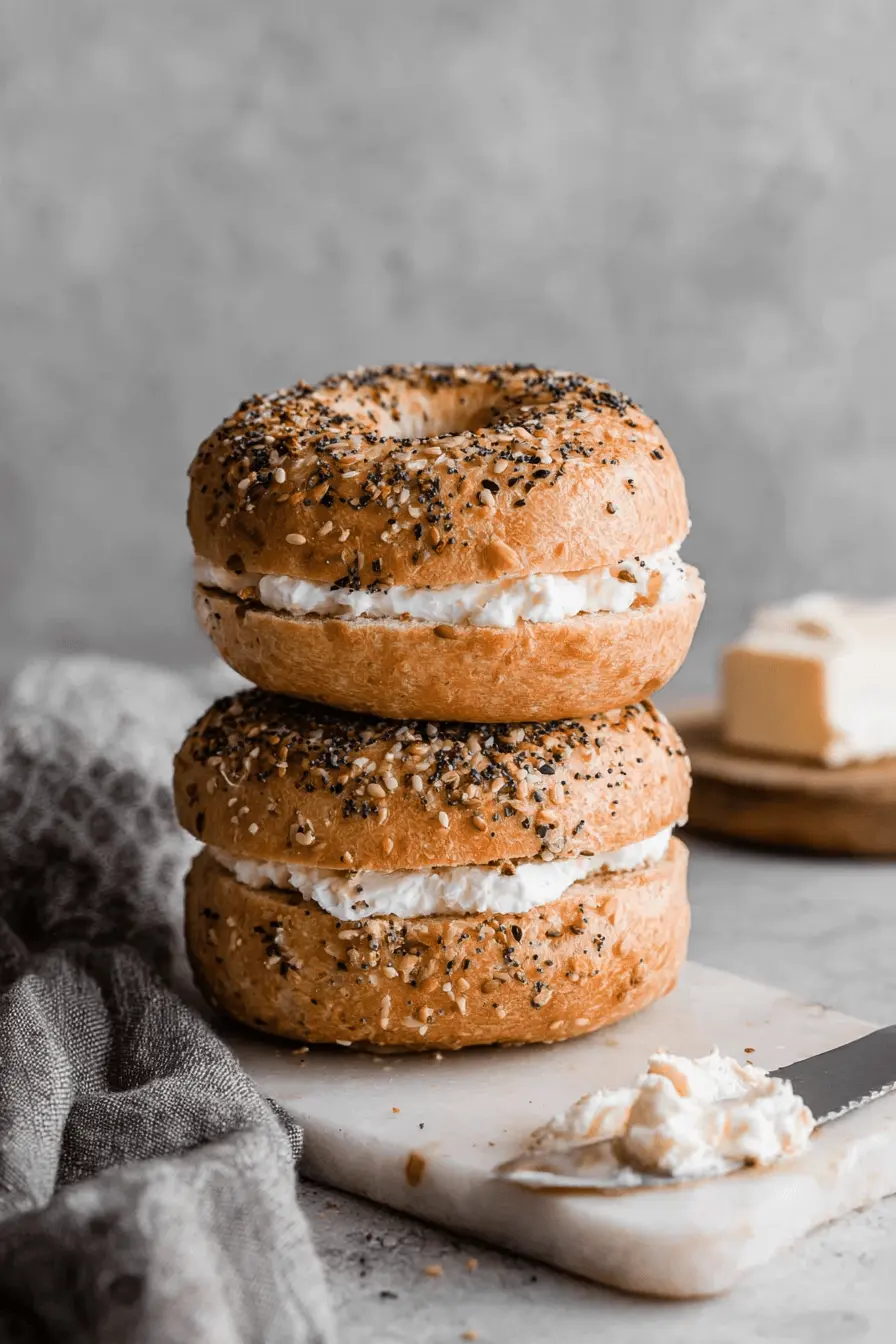
protein bagels with greek yogurt
Ingredients
Equipment
Method
- Preheat oven to 375F and line a baking sheet with parchment paper or a silpat, spraying with oil if using parchment.
- In a medium bowl, whisk together the flour, baking powder, and salt. Add the yogurt and mix until well combined into crumbles.
- Lightly dust a work surface with flour, transfer the dough, and knead about 15 times until it's tacky but not sticky.
- Divide the dough into 4 equal balls, then roll each into a 3/4-inch thick rope and join the ends to form bagels, or poke a hole in the center of each ball and stretch.
- Brush bagels with egg wash and sprinkle both sides with your chosen seasoning. Bake on the top oven rack for 25 minutes, then cool for at least 15 minutes before serving.