
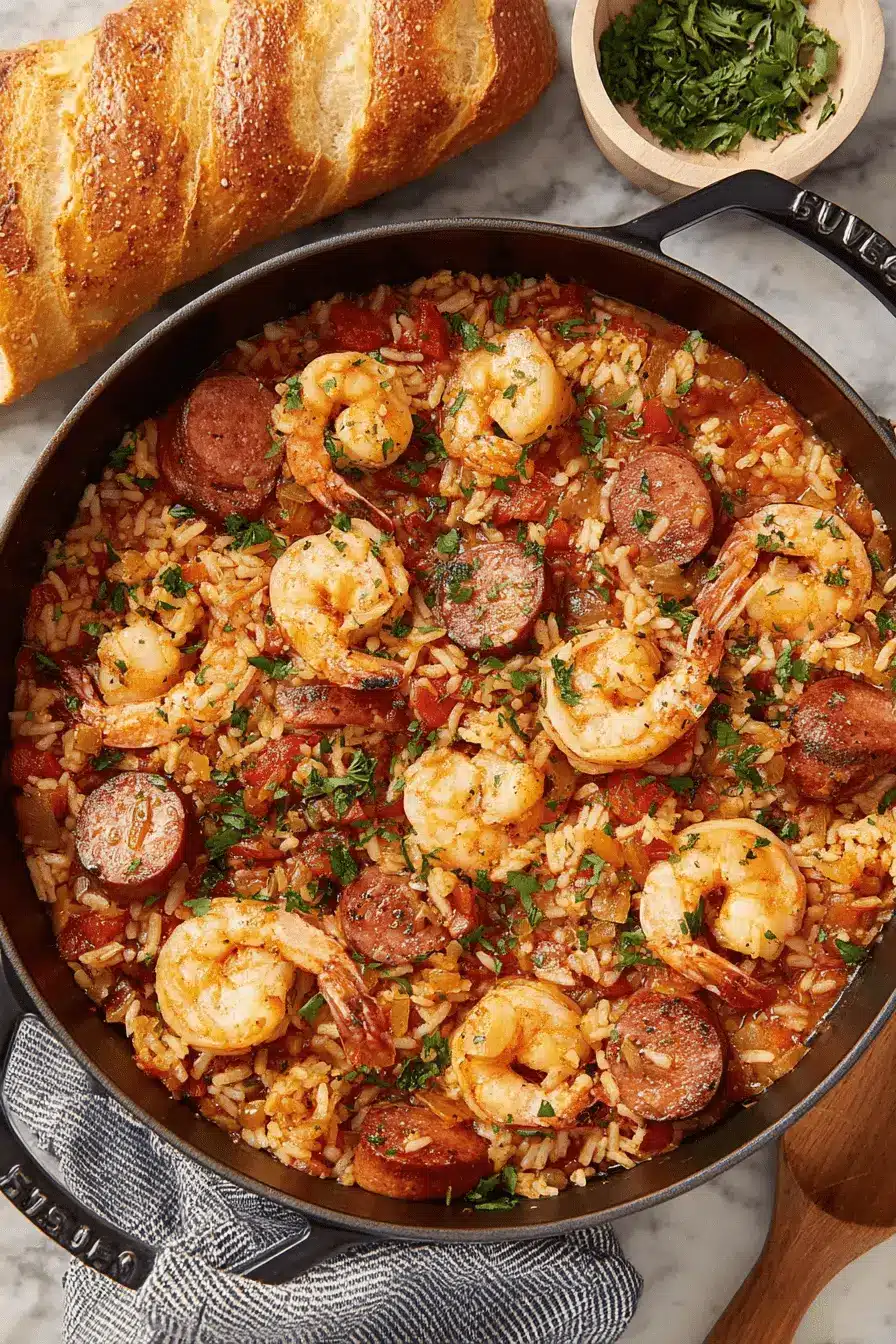
When I moved to the U.S. in my thirties, everything felt new, and I missed the flavors of home. Cooking became my practical way to bring warmth to the table after a long day. This jambalaya recipe blends that comfort with the quick, modern style I needed. It is a satisfying meal that takes about 45-60 minutes, perfect for busy evenings.
Why You’ll Love This Easy Jambalaya Recipe
As your trusted friend in the kitchen, I am here to tell you why this jambalaya recipe will become a new favorite! It is designed to make your life easier while filling your home with incredible aromas.
- It is a complete one-pot meal. You get your protein, vegetables, and starch all in a single pan. This means fewer dishes to wash and more time to relax after preparing a delicious dinner meal.
- The rice turns out perfect every time. One of the biggest fears with rice dishes is mushy grains. This method uses the exact liquid-to-rice ratio needed for fluffy, tender results.
- You get authentic flavor fast. You do not need to simmer this all day to get that rich, deep taste. The combination of the “holy trinity” of vegetables and spices builds flavor quickly.
- It is easily adaptable. Whether you like it spicy or mild, or want to swap proteins, this recipe is forgiving and flexible for your family’s needs.
What is Jambalaya? (And How is it Different from Gumbo or Paella?)
At its heart, jambalaya is a flavorful rice dish that hails from Louisiana. It is deeply rooted in Cajun and Creole culture. It typically consists of meat and vegetables mixed with rice. Everything cooks together in the savory broth. The rice absorbs all the juices from the meats and vegetables, creating a dish that is bursting with flavor in every bite.
There are two main styles. Cajun jambalaya usually does not include tomatoes and has a brown color from searing the meat. Creole jambalaya, often called “red jambalaya,” includes tomatoes. Since this jambalaya recipe uses diced tomatoes, it leans toward the Creole style, offering a bright and tangy depth to the savory spices.
People often confuse jambalaya with gumbo or paella. Here is how they differ. Gumbo is a soup or stew that is served over rice, not cooked with it. It focuses on a rich roux and broth. Paella is a Spanish dish that uses saffron and short-grain rice, which is cooked uncovered to create a crispy bottom layer. Jambalaya is cooked covered, steaming the long-grain rice to perfection.
The Heart of Cajun Cooking: Understanding the Holy Trinity
If you want to cook like a pro without the stress, you need to know about the “Holy Trinity.” In Cajun and Creole cuisine, this refers to three specific vegetables: onion, fresh celery, and green bell pepper.
These three ingredients form the aromatic base of this jambalaya recipe. When you sauté them in the butter and leftover fond (the browned bits) from the meat, they release a savory sweetness that is essential to the dish. Do not skip these. They provide the backbone of flavor that supports the spices and meats. It is a simple step that makes a massive difference in the final taste.
Ingredients for Your Perfect Jambalaya Recipe
To make this dish shine, I recommend choosing good quality smoked beef sausage, as it imparts a smoky depth to the entire pot. Fresh vegetables are also key for the best texture. Here is exactly what you need to get that comforting meal on the table.
- 1 Tablespoon oil ((vegetable or canola oil))
- 1 pound smoked beef sausage (, cut into 1/4 inch thick slices)
- 1 1/2 pounds boneless skinless chicken breasts (, cut into bite-size pieces)
- 2 Tablespoons all-purpose flour
- 2 Tablespoons butter
- 1 yellow or white onion (, chopped)
- 4 green onions (, chopped)
- 4 cloves garlic (, finely minced)
- 3 ribs celery (, chopped)
- 1 green bell pepper (chopped)
- 1 1/2 teaspoon dried basil
- 1 1/2 teaspoon Cajun seasoning
- 1 teaspoon kosher salt
- 1/2 teaspoon fresh ground black pepper
- 1/4 teaspoon cayenne pepper (optional, add more for spice, if desired.)
- 14.5 ounce can diced tomatoes
- 2 1/2 cups low-sodium chicken broth
- 1 1/4 cup long-grain white rice
Homemade Cajun Seasoning (Optional)
If you do not have a pre-mixed Cajun seasoning in your pantry, do not worry. You can easily make your own. A fresh blend often tastes even better than store-bought versions because it has not been sitting on a shelf.
To make a quick substitute, simply mix garlic powder, onion powder, paprika (smoked is great if you have it), dried oregano, and a pinch of thyme. This allows you to control the salt and heat levels perfectly for your jambalaya recipe. It adds a personal touch to the dish that makes it feel even more homemade, much like preparing our Ultimate Cajun White Chicken Chili.
Instructions: How to Make This Flavorful Jambalaya Recipe Step-by-Step
Here is how you bring it all together. Follow these steps for a stress-free cooking experience.
- Brown the meat. In a large skillet with a fitted lid, add the oil over medium high heat. Once hot, add the chicken and cook, flipping once or twice to brown on all sides (don’t cook chicken through). Remove to a bowl. Add smoked beef sausage and cook until browned on both sides. Add to the bowl with the chicken.
- Sauté the aromatics. Reduce heat to medium and add butter and flour to the pan and stir well, scraping up any leftover browned bits from the pan. Add onion, garlic, celery, and bell peppers and sauté for a 3 minutes.
- Simmer the dish. Add basil, cajun seasoning, diced tomatoes, salt and pepper and stir well to combine. Add chicken broth and rice bring mixture to a gentle boil. Add reserved meat to the pan. Reduce heat, cover pan with fitted lid and cook for 20 minutes.
- Rest and serve. Remove from heat, and rest with the lid on for 10 minutes. Then gently fluff with a fork and rest again for 5 minutes before serving.
Pro Tips for the Best Jambalaya (No Mushy Rice!)
I know that cooking rice in a one-pot meal can feel intimidating. No one wants a pot of mush. Here are my top tips to ensure your jambalaya recipe turns out perfectly fluffy every time.
First, strictly stick to long-grain white rice. Short-grain or risotto rice releases too much starch and will make the dish sticky and gummy. Long-grain rice keeps its shape better during the steaming process.
Second, resist the urge to peek. Once you cover the pan, leave the lid on for the full 20 minutes of cooking and the 10 minutes of resting. That trapped steam is what cooks the rice evenly. If you lift the lid, the steam escapes, and you might end up with crunchy rice.
Finally, do not skip the resting step. Letting the pot sit off the heat allows the moisture to redistribute. This ensures every grain is tender and flavorful. If the rice feels a little wet when you first open the lid, that final 5-minute fluff and rest will usually solve it.
Flavor Your Way: Adjusting Spice and Seasoning for Your Jambalaya
One of the joys of cooking at home is that you are in control. This jambalaya recipe includes cayenne pepper for heat, but you can adjust it to fit your palate.
If you are cooking for kids or prefer mild food, you can omit the cayenne pepper entirely. The Cajun seasoning usually has a little kick, but it is rarely overwhelming on its own. The smoked sausage also adds flavor without necessarily adding heat.
For those who love spicy food, feel free to double the cayenne pepper or add a dash of hot sauce when you add the broth. You can also serve hot sauce on the table so everyone can customize their own bowl. Cooking should be about what makes you happy, so adjust the spice until it tastes right to you.
Jambalaya Recipe Variations and Substitutions
Cooking is about making it work for you. Here are some common swaps and variations you can try with this recipe.
| Variation/Substitution | Description & Notes |
|---|---|
| Different Meats/Seafood | Instead of chicken and smoked beef sausage, consider using traditional Andouille sausage (if available), pork, ham, or various seafood like shrimp, crawfish, or even fish. Adjust cooking times as needed for different proteins. |
| Vegetarian/Vegan | Omit all meat. Use vegetable broth instead of chicken broth. Substitute plant-based sausage (e.g., spicy Italian style) or add hearty vegetables like mushrooms, zucchini, or bell peppers. Ensure all seasonings are vegan-friendly. |
| Gluten-Free | Ensure your all-purpose flour is a certified gluten-free blend. Double-check that your chicken broth and Cajun seasoning are clearly labeled as gluten-free, as some brands may contain hidden gluten. |
| Rice Type | While long-grain white rice is traditional, you can experiment with other long-grain varieties. Avoid short-grain rices as they tend to become sticky. |
| Spice Level | Easily adjust the cayenne pepper to your taste. For more heat, add an extra pinch; for less, reduce or omit it entirely. |
What to Serve with Your Jambalaya
This dish is very rich and savory, so I like to serve it with sides that are light or offer a contrasting texture. A simple green salad with a vinaigrette dressing cuts through the richness beautifully. It adds a nice crunch and freshness to the meal.
For a true Southern comfort experience, serve this with a slice of crusty bread or warm cornbread. You can use the bread to soak up any delicious sauce left in your bowl. If you are looking for a drink pairing, a cold iced tea or a light lemonade refreshes the palate between spicy bites.
Storing and Freezing Your Jambalaya
If you are lucky enough to have leftovers, this jambalaya recipe tastes even better the next day. The flavors continue to meld together in the fridge. Store leftovers in an airtight container in the refrigerator for up to 3 to 4 days.
You can also freeze this dish for future easy dinners. Let the jambalaya cool completely before transferring it to freezer-safe bags or containers. It will last for up to 3 months. When you are ready to eat, thaw it in the fridge overnight.
To reheat, place the jambalaya in a skillet over medium-low heat or use the microwave. You might need to add a splash of chicken broth or water to wake up the rice, as it tends to dry out slightly in the cold. Stir gently until it is heated through.
Frequently Asked Questions about Jambalaya
Can I double or halve this recipe?
Yes, you can easily adjust the quantities. However, be very careful with the surface area of your pan. If you double it, ensure your pot is large enough to cook the rice evenly without overcrowding. If halving, use a smaller pan so the liquid covers the rice properly.
What if my rice is still crunchy or mushy?
If the rice is crunchy, add a tiny splash of bubbling broth, cover, and let it steam for another 5 minutes on very low heat. If it is mushy, you likely had too much liquid or stirred it too much. Next time, measure your liquids precisely and fluff gently only at the end.
What’s the best pot to use for jambalaya?
A heavy-bottomed skillet with a fitted lid or a Dutch oven is ideal. You need something that retains heat well to brown the meat and has a tight seal to steam the rice effectively. This ensures even cooking without burning the bottom.
How long does homemade jambalaya last in the fridge?
properly stored in an airtight container, your homemade jambalaya will stay fresh and delicious for 3 to 4 days. Always check for freshness before serving leftovers.
Conclusion
I hope this jambalaya recipe brings a little bit of joy and a lot of flavor to your kitchen. Remember, cooking does not have to be perfect to be wonderful. It just needs ‘to feed your soul and the people you care about. This dish is a small victory for any busy weeknight.
I would love to see how your dinner turned out! Please leave a comment below if you have any questions or just want to say hello. Even better, snap a photo of your creation and share it on social media. Let’s keep finding the joy in simple, comforting food together!
Jambalaya Recipe
Ingredients
Equipment
Method
- Heat oil in a large skillet over medium-high heat, then brown the chicken on all sides without cooking through and transfer to a bowl. Next, brown the smoked beef sausage in the same skillet and add it to the bowl with the chicken.
- Reduce heat to medium, add butter and flour to the pan, stirring to scrape up browned bits. Then, add onion, garlic, celery, and bell peppers and sauté for 3 minutes.
- Stir in basil, Cajun seasoning, diced tomatoes, salt, and pepper. Add chicken broth and rice, bring to a gentle boil, then return the reserved meat to the pan. Reduce heat, cover, and cook for 20 minutes.
- Remove the skillet from heat and let it rest, covered, for 10 minutes. Gently fluff the jambalaya with a fork and rest for another 5 minutes before serving.