
When I moved to the U.S. in my thirties, I missed the comfort of home but lacked the energy for complicated baking. I needed a win in my new kitchen—something warm, simple, and quick. That is when I fell in love with baking. This Irish Soda Bread became my go-to because it offers homemade comfort without the stress, proving that perfect food doesn’t have to be perfect.
The Easiest Irish Soda Bread You’ll Ever Make!
If the thought of yeast, kneading, and long rising times scares you, you are safe here. I want you to feel confident in your kitchen, even on your busiest night. This recipe is your secret weapon. It is warm, rustic, and ready in about 55-65 minutes. We are skipping the fierce kneading and waiting periods to make a loaf of Irish Soda Bread that feels like a warm hug. It is the perfect side for a quick dinner or a cozy breakfast, proving that you can create magic in the kitchen without the stress.
Why You’ll Love This Irish Soda Bread Recipe
While there are many recipes out there, this specific version is designed to be the most forgiving and rewarding for busy cooks.
- It creates confident bakers. You do not need experience or fancy tools; just a bowl and a spoon are enough to get a bakery-quality texture.
- It fits your busy schedule. With no yeast to proof, this bread goes from bowl to oven in minutes, making it perfect for last-minute cravings.
- It creates the perfect texture. By using cold butter and the right amount of buttermilk, you get a loaf that is crusty on the outside and incredibly tender on the inside.
- It is adaptable. Whether you crave a sweet raisin loaf or a savory side for soup, this base recipe handles adjustments beautifully.
What is Irish Soda Bread? Traditional vs. Enriched vs. Brown
At its heart, Irish Soda Bread is a “quick bread,” meaning it uses chemical leaveners instead of yeast to rise. This makes it faster and denser than sandwich bread. However, not all soda breads are the same.
Traditional Soda Bread is the minimalist version. It typically uses whole wheat flour (often called brown soda bread), salt, baking soda, and buttermilk. It is hearty, dense, and very rustic.
Enriched Soda Bread is likely what you see in many American bakeries, and it is the style of this recipe. It utilizes white all-purpose flour and often includes an egg, sugar, or butter. These additions make the bread softer, richer, and more cake-like in texture.
White Soda Bread uses white flour but skips the enrichments like eggs or butter, landing somewhere in the middle with a lighter crumb than the brown version but a leaner taste than the enriched version.
The Science Behind Perfect Irish Soda Bread: Buttermilk & Baking Soda Explained
You might wonder how this bread rises without yeast. The magic lies in the simple chemical reaction between the acidic buttermilk and the alkaline baking soda.
When these two ingredients meet, they act like a science fair volcano, creating carbon dioxide bubbles instantly. This reaction gives the Irish Soda Bread its lift and distinct tender crumb. Because this reaction starts immediately upon mixing, it is crucial to get your dough into the hot oven quickly. The heat sets the structure around those bubbles, locking in the rise.
Essential Ingredients for Your Best Irish Soda Bread
Understanding your ingredients is the first step to a kitchen victory. Here is why each item in this recipe matters.
- Cold Butter: Using cold, cubed butter inhibits gluten formation. This ensures your bread stays tender rather than tough and creates flaky pockets within the crumb.
- Buttermilk: This is non-negotiable for the chemical rise. Its acidity activates the baking soda and adds a lovely tang that balances the sugar.
- All-Purpose Flour: This provides enough structure to hold the shape without being as heavy or dense as whole wheat flour.
- Sugar: A small amount adds a subtle sweetness and helps the crust brown beautifully in the oven.
Ingredients
- 1 and 3/4 cups (420ml) buttermilk*
- 1 large egg (optional, see note)
- 4 and 1/4 cups (531g) all-purpose flour (spooned & leveled), plus more for your hands and counter
- 3 Tablespoons (38g) granulated sugar
- 1 teaspoon baking soda
- 1 teaspoon salt
- 5 Tablespoons (71g) unsalted butter, cold and cubed*
- optional: 1 cup (150g) raisins
Step-by-Step: How to Make Foolproof Irish Soda Bread
Follow these steps for a stress-free baking experience. Remember, we are aiming for “rustic,” not perfect.
Instructions
- Prepare your oven and pan. Preheat oven to 400°F (204°C). There are options for the baking pan. Use a regular baking sheet and line with parchment paper or a silicone baking mat (bread spreads a bit more on a baking sheet), or use a seasoned 10-12 inch cast iron skillet (no need to preheat the cast iron unless you want to), or grease a 9-10 inch cake pan or pie dish. You can also use a 5 quart (or higher) dutch oven. Grease or line with parchment paper. If using a dutch oven, bake the bread with the lid off.
- Mix the wet and dry ingredients. Whisk the buttermilk and egg together. Set aside. Whisk the flour, granulated sugar, baking soda, and salt together in a large bowl. Cut in the butter using a pastry cutter, a fork, or your fingers. Mixture is very heavy on the flour, but do your best to cut in the butter until the butter is pea-sized crumbs. Stir in the raisins. Pour in the buttermilk/egg mixture. Gently fold the dough together until dough it is too stiff to stir. Pour crumbly dough onto a lightly floured work surface. With floured hands, work the dough into a ball as best you can, then knead for about 30 seconds or until all the flour is moistened. If the dough is too sticky, add a little more flour.
- Score the dough. Transfer the dough to the prepared skillet/pan. Using a very sharp knife or bread lame, score the dough with a slash or X about 1/2 inch deep. (“Score” = shallow cut.)
- Bake until golden. Bake until the bread is golden brown and center appears cooked through, about 45-55 minutes. Loosely tent the bread with aluminum foil if you notice heavy browning on top. For a more accurate test, the bread is done when an instant-read thermometer reads the center of the loaf as 195°F (90°C).
- Cool and serve. Remove from the oven and allow bread to cool for 10 minutes, and then transfer to a wire rack. Serve warm, at room temperature, or toasted with desired toppings/spreads.
- Store leftovers. Cover and store leftover bread at room temperature for up to 2 days or in the refrigerator for up to 1 week. We usually wrap it tightly in aluminum foil for storing.
Pro-Tip: I love using a cast iron skillet because it conducts heat evenly and helps crisp up the bottom crust.
Pro-Tip: Handle the dough gently and do not over-knead. Overworking the dough develops gluten, which makes the bread tough instead of tender.
Pro-Tip: Scoring is not just for decoration. It allows heat to reach the center of the dough so the loaf cooks evenly without splitting the sides.
Pro-Tip: Tenting with foil prevents the top from burning while the dense inside finishes cooking.
Pro-Tip: Waiting those 10 minutes is hard, but it prevents the bread from becoming gummy when you slice it.
Pro-Tip: This bread toasts beautifully the next day.
Baking Vessels: Choosing Your Best Pan for Irish Soda Bread
The pan you choose can change the personality of your bread. Here is how to pick the right one for you.
- Cast Iron Skillet: This is my personal favorite. The heavy iron retains heat, creating a superior, crunchy bottom crust while keeping the inside soft. It gives the bread a beautiful, rustic look.
- Dutch Oven: Similar to the skillet, this creates excellent heat distribution. The high sides of a Dutch oven discourage the bread from spreading, resulting in a taller loaf. Just remember to bake with the lid off.
- Baking Sheet: If you do not have a heavy pan, a baking sheet works perfectly. The bread will spread out more, resulting in a slightly flatter loaf with more surface area for crust.
- Cake Pan: This confines the dough significantly. It forces the bread to rise upward, creating a shape and texture closer to a large muffin or cake.
Troubleshooting Common Irish Soda Bread Issues
Even with the best recipes, kitchen fails happen. Do not worry; here is how to fix them.
- Dense or Heavy Bread: This is usually caused by overmixing. Once the water hits the flour, stop kneading as soon as the dough comes together.
- Bitter Taste: This can happen if there is too much baking soda or if it is not properly balanced by the acid in the buttermilk. Measure your spoons carefully.
- No Rise: Check the expiration date on your baking soda. If it is old, it won’t react. also, get the bread into the oven immediately after mixing.
- Green Spotting: Sometimes you might see small green specks in your bread. This occurs when the baking soda isn’t mixed thoroughly with the flour and reacts with sunflower seeds (if you added them) or simply clumps together. Sift your dry ingredients well to prevent this.
Flavorful Variations & Mix-ins for Your Irish Soda Bread
Raisins are traditional for the spotted dog variety, but you can make this recipe your own.
| Flavor Profile | Ingredients | Preparation Note |
|---|---|---|
| Citrus Zest | Orange or Lemon Zest | Add 1 tablespoon to the dry flour mixture for a bright aroma. |
| Savory Herb | Cheddar & Chives | Fold in 1 cup of shredded sharp cheddar and chopped chives. omit the sugar. |
| Traditional Seed | Caraway Seeds | Add 1-2 teaspoons for that classic, earthy Irish flavor. |
| Tart Berry | Dried Cranberries | Swap the raisins for currants or cranberries for a tart contrast. |
Dairy-Free & Gluten-Free Irish Soda Bread Options
Everyone deserves comfort food. Here is how to adapt this recipe for different needs.
| Diet | Substitution | Method Adjustment |
|---|---|---|
| Dairy-Free | Plant-based milk + Vinegar | Add 1 tablespoon of apple cider vinegar to almond or soy milk. Let sit 5 minutes to sour. Use vegan butter. |
| Gluten-Free | GF Measure-for-Measure Flour | Ensure your blend contains xanthan gum. The texture may be slightly denser. |
Serving Your Homemade Irish Soda Bread: Perfect Pairings
This bread is versatile enough for breakfast, lunch, or dinner.
- Hearty Stews: The dense crumb is structurally perfect for dipping into heavy beef or lamb stews without falling apart.
- Smoked Salmon: For a fancy twist, top a slice with cream cheese, smoked salmon, and a sprig of dill.
- Simple Comfort: Honestly, nothing beats a warm slice slathered with good salted butter and a drizzle of honey or berry jam.
- Potato Soup: Serve alongside a creamy potato leek soup for a classic combination.
Storage Tips for Your Homemade Irish Soda Bread
Because this bread has no oil or preservatives, it can dry out faster than store-bought loaves.
- Room Temperature: Wrap the bread tightly in aluminum foil or place it in an airtight container. It stays fresh for about 2 days on the counter.
- Refrigerator: You can extend the life to a week by storing it in the fridge, but be aware this can dry it out slightly. Toasting helps revive the texture.
- Freezing: This bread freezes wonderfully. Slice the loaf first, wrap individual slices in plastic wrap, and place them in a freezer bag. You can toast them straight from frozen for a quick breakfast.
Frequently Asked Questions About Irish Soda Bread
What’s the difference between Irish white soda bread and brown soda bread?
White soda bread uses all-purpose flour and tends to be lighter, often enriched with ingredients like eggs or sugar. Brown soda bread uses whole wheat flour, resulting in a nuttier, denser, and coarser texture that is more traditional to older recipes.
Can I make Irish Soda Bread ahead of time?
It is best eaten the day it is made. However, you can mix the dry ingredients in a jar ahead of time. When you are ready to bake, just cut in the butter and add the liquid ingredients.
How do I know when my Irish Soda Bread is done?
The bread should be golden brown. If you tap the bottom of the loaf, it should sound hollow. For the most accurate result, use a digital thermometer; the center should reach 195°F (90°C).
Why did my Irish Soda Bread turn green?
This is a harmless chemical reaction between the baking soda and certain ingredients, often sunflower seeds or walnuts if you added them. It can also happen if the baking soda is not mixed well. It is safe to eat, just visually surprising.
What if I don’t have buttermilk?
You can make a quick substitute. Add 1 tablespoon of lemon juice or white vinegar to a measuring cup, then fill it to the 1-cup line with regular milk. Let it sit for 5-10 minutes until it curdles slightly.
Can I add other mix-ins besides raisins?
Absolutely. You can try dried cranberries, currants, chopped nuts, or even chocolate chips for a sweet treat. Just keep the total volume of mix-ins to about 1 cup so the dough holds together.
Embrace the Warmth of Homemade Irish Soda Bread!
You did it. You made something from scratch that feeds both the body and the soul. I hope this recipe gives you that little spark of joy and confidence we all need in our daily lives. Cooking does not have to be perfect to be wonderful.
Please let me know how it turned out! Drop a comment below with your baking experience, ask any questions you have, or tag me on social media with #AishaRecipes so I can celebrate your win with you. Let’s keep finding joy in the kitchen together.
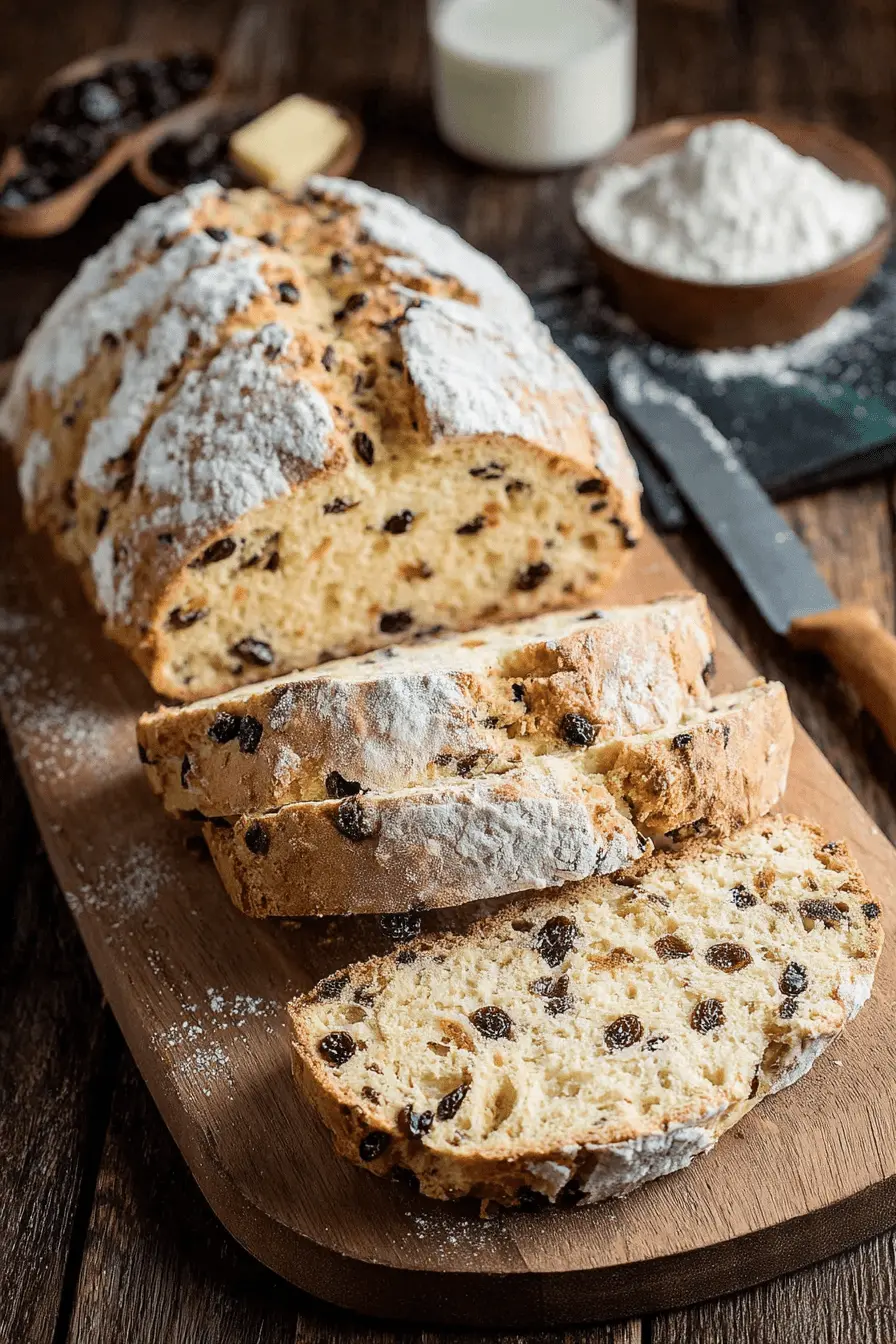
Irish Soda Bread
Ingredients
Equipment
Method
- Preheat oven to 400°F (204°C) and prepare your chosen baking pan by lining with parchment, seasoning, or greasing.
- Whisk buttermilk and egg together, then set aside. In a large bowl, whisk flour, sugar, baking soda, and salt, then cut in the cold, cubed butter until pea-sized crumbs form; stir in optional raisins.
- Pour the buttermilk/egg mixture into the dry ingredients and gently fold until the dough becomes stiff; then, transfer the crumbly dough to a lightly floured surface and knead for about 30 seconds with floured hands until all flour is moistened, adding more flour if needed.
- Transfer the dough to the prepared pan and score the top with a sharp knife, making a slash or X about 1/2 inch deep.
- Bake for 45-55 minutes until the bread is golden brown and cooked through, or until an instant-read thermometer reads 195°F (90°C) in the center; loosely tent with aluminum foil if it browns too quickly.
- Remove from oven and allow the bread to cool for 10 minutes before transferring it to a wire rack; serve warm, at room temperature, or toasted.
- Cover and store leftover bread tightly wrapped in aluminum foil at room temperature for up to 2 days or in the refrigerator for up to 1 week.