
I used to think French baking was too fancy or complicated for my busy evenings, until I discovered this incredibly easy French butter cake. With simple ingredients and a luscious butter glaze, it quickly became my go-to dessert. Best of all, it takes just about an hour to make from mixing the batter to enjoying the final slice of this moist, tender cake.
Table of Contents
Why This Easy French Butter Cake Will Be Your New Favorite
- It’s incredibly moist and tender, thanks to the combination of yogurt and oil in the batter.
- The crumb is perfectly soft without being heavy or dense, striking a balance between richness and lightness.
- Made with simple, everyday ingredients, you don’t need any fancy or hard-to-find items.
- The foolproof method means even beginner bakers can enjoy baking an elegant French butter cake without stress.
Understanding the “French” in Our French Butter Cake
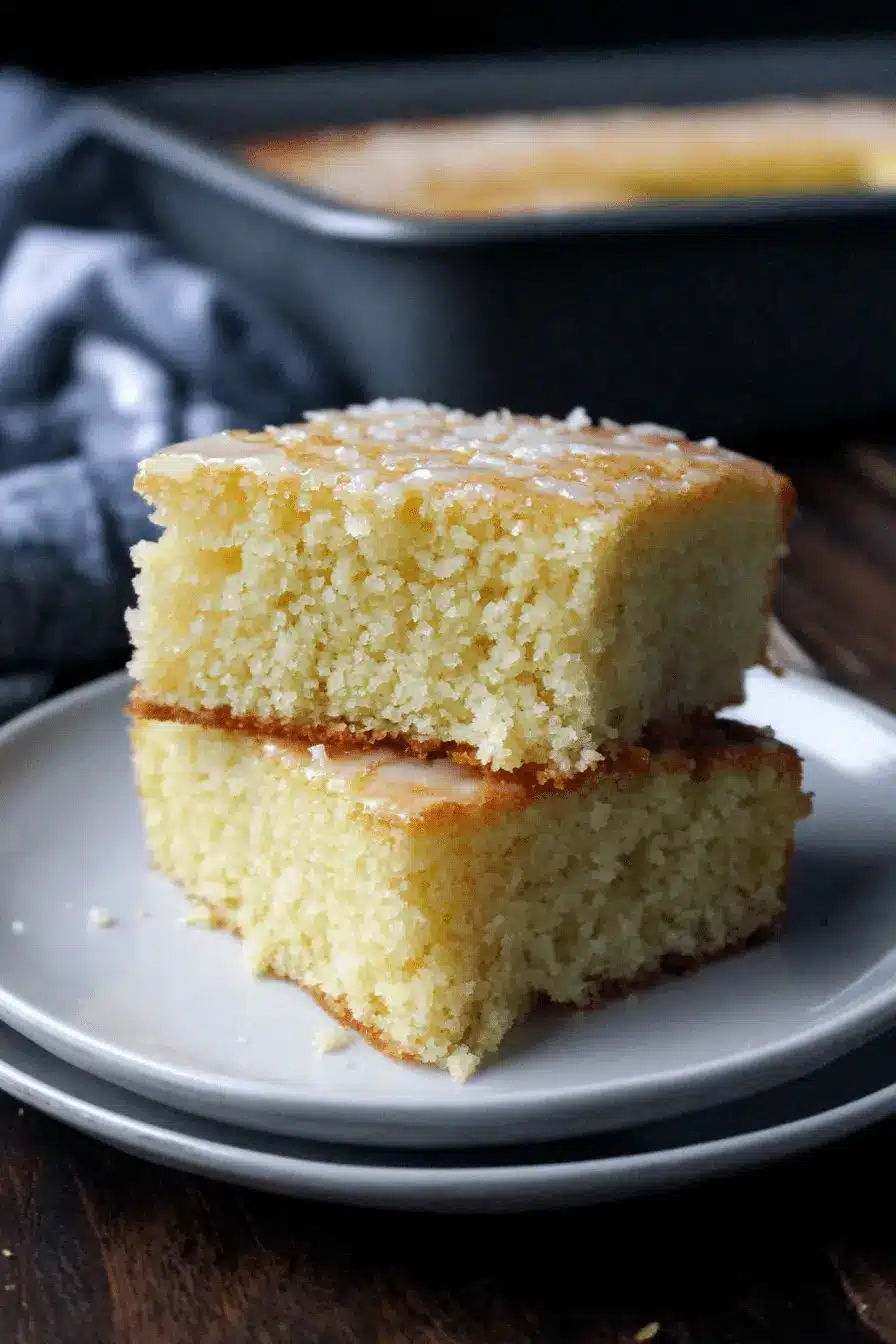
What truly defines a French butter cake is its elegant simplicity paired with extraordinary moistness. Unlike heavier American pound cakes or those layered with thick frosting, this cake highlights buttery richness through a glaze instead of heavy butter in the batter. The glaze slowly seeps into the cake, enhancing flavor and tenderness while keeping it light. It’s a comforting everyday treat in French homes, something refined yet approachable for busy people, just like you and me.
Ingredients for Your Perfect French Butter Cake
For the Cake:
- ½ cup plain yogurt or Greek yogurt
- 1 cup granulated sugar
- 3 large eggs
- 2 teaspoons vanilla extract
- ¼ teaspoon almond extract
- 1½ cups all-purpose flour
- 2 teaspoons baking powder
- ½ teaspoon salt
- ½ cup neutral flavored oil (canola, vegetable, sunflower, safflower, avocado, or grapeseed)
For the Glaze:
- ⅓ cup granulated sugar
- 3 tablespoons butter (I use salted)
- 1½ tablespoons water
- 1 teaspoon vanilla extract
- ⅛ teaspoon almond extract
A Note on Butter vs. Oil in This French Butter Cake Recipe
You might wonder why oil is used in the cake batter instead of butter. Oil keeps the cake incredibly moist and tender while being easy to work with. The butter, however, shines in the glaze—it infuses the cake with rich, buttery flavor and a silky finish. This approach balances moisture and flavor perfectly, making it a true French butter cake experience.
Essential Equipment for a Smooth Baking Experience
- 8-inch round cake pan: The perfect size for this recipe.
- Parchment paper: To line the pan’s bottom for easy release.
- Baking spray: To ensure the cake doesn’t stick.
- Large mixing bowls and whisk: For combining wet and dry ingredients smoothly.
- Small saucepan: For preparing the butter glaze.
- Pastry brush: To apply the glaze evenly without mess.
- Cooling rack: To flip and cool the cake properly, letting excess glaze drip away.
- Digital scale (optional): For precise ingredient measurements, especially if you want consistency in every bake.
Step-by-Step: Crafting Your Easy French Butter Cake
- Preheat your oven to 350˚F (175˚C). Spray an 8-inch round cake pan with baking spray, then rub a paper towel inside the pan to cover evenly. Line the bottom with parchment paper and spray it lightly. Set aside.
- Mix the wet ingredients. In a large bowl, combine the yogurt, sugar, eggs, vanilla extract, and almond extract. Whisk until everything is well blended.
- Add the dry ingredients. Sprinkle in the baking powder and salt and whisk to combine. Then add the flour and whisk again just until fully incorporated—avoid overmixing here.
- Stir in the oil. Add the oil and stir well. Don’t worry if the batter looks separated at first; keep stirring until smooth and uniform.
- Pour the batter into your prepared pan. Spread evenly.
- Bake for 30–40 minutes. The cake should feel springy to the touch, and a toothpick or cake tester inserted into the center should come out clean. Avoid overbaking.
- Prepare the glaze while the cake cools slightly. In a small saucepan, combine the sugar, butter, water, vanilla, and almond extracts. Cook over medium heat, stirring frequently until the butter melts and sugar dissolves. Do not let it boil.
- Brush the glaze over the cake. Use a pastry brush to slowly apply about a quarter of the glaze evenly on top.
- Flip the cake onto a cooling rack set over parchment paper or foil. The bottom will now be the top.
- Brush the remaining glaze over the entire cake. Keep brushing until the glaze is fully used. Some glaze will drip off, but most will soak in. Let the cake cool for at least 30 minutes before serving. Optionally, dust with powdered sugar.
Aisha’s Expert Tips for an Unforgettable French Butter Cake
- Use room temperature eggs and yogurt for better mixing and texture.
- Whisk dry ingredients in gently; overmixing flour develops gluten and makes the cake tough.
- Test doneness carefully—poke with a toothpick near the baking time’s end. Better slightly underbaked than dry.
- Allow the glaze to soak in fully; it locks in moisture and adds that signature buttery richness.
- Be patient when stirring in oil; separation at first is normal, keep mixing until smooth.
Ingredient Insights: The Science Behind the Soft Crumb
- Yogurt & oil: Provide moisture and tenderness, keeping the crumb soft and moist.
- Eggs: Add structure and stability.
- Flour: The base that supports the cake’s form without heaviness.
- Sugar: Sweetens, and helps keep the crumb tender.
- Baking powder: Leavens the cake for lightness and rise.
Troubleshooting Common French Butter Cake Mishaps
- Dense cake: Usually from overmixing or inaccurate baking powder—whisk gently and measure precisely.
- Dry cake: Caused by overbaking; check early and take it out as soon as a toothpick comes out clean.
- Sunken center: Often from too low oven temperature or opening the oven door too soon. Keep oven consistent and avoid peeking early.
- Uneven bake: Could be uneven pan prep or hot spots in your oven. Rotate the pan halfway if needed and ensure even coating inside pan.
Make it Your Own: Flavor Variations for Your French Butter Cake
- Add zest from one lemon for brightness and freshness.
- Substitute a teaspoon of orange blossom water in place of some vanilla for a floral twist.
- Increase almond extract to ½ teaspoon for a nutty flavor.
- Stir in ¼ teaspoon ground cardamom for a warm, exotic note.
Serving Suggestions for Your Elegant French Butter Cake
Pair this cake with:
- A strong cup of French press coffee to complement its buttery notes.
- Light herbal or black tea for a classic, elegant experience.
- Fresh berries like raspberries or strawberries, adding a sweet-tart contrast.
Storage & Freezing: Keeping Your French Butter Cake Fresh
- Store at room temperature, covered tightly, for up to 2 days.
- Refrigerate in an airtight container for up to 5 days, letting the cake come to room temperature before serving.
- Freeze whole or sliced. Wrap tightly in plastic wrap, then in foil or freezer bags. To thaw, leave in the fridge overnight or at room temperature for a few hours.
Frequently Asked Questions About French Butter Cake
Substitutions for Your French Butter Cake (Dairy-Free & Gluten-Free Options)
| Ingredient | Dairy-Free Substitution | Notes | Gluten-Free Substitution | Notes |
|---|---|---|---|---|
| Yogurt | Coconut yogurt or soy yogurt | May affect tang and moisture slightly | Gluten-free all-purpose flour | Use blend with xanthan gum for structure |
| Butter (Glaze) | Dairy-free margarine or vegan butter | Slight flavor difference; melt carefully | N/A | Butter substitute for glaze only, no flour here |
| All-purpose flour | N/A | Almond flour + starch mix | May need more liquid or slightly different texture |
Dealing with Splitting/Curdling in Your Batter
If your batter appears separated when adding oil, continue stirring slowly and steadily until smooth. This happens because the oil temporarily separates from other liquids. To prevent it, add oil gradually while mixing and avoid overmixing early ingredients.
Achieving a Flat vs. Domed Cake Top
The cake’s top shape depends on oven temperature and batter thickness. A modest dome is normal and charming for rustic presentation. For a flat top, bake at a slightly lower temperature or tap the pan gently before baking to release air bubbles—ideal if stacking layers.
Conclusion
I hope this French butter cake becomes one of your easy favorites, as comforting and satisfying as it is simple to make. Don’t be shy: leave a comment with your baking questions, share your success stories, or tell me how you love to enjoy this elegant cake. And if you crave more quick, delicious dishes, be sure to sign up for my newsletter. Let’s keep finding joy in the kitchen together!
French Butter Cake
Ingredients
Equipment
Method
- Preheat oven to 350˚F (175˚C) and prepare an 8-inch round cake pan by spraying it, lining the bottom with parchment, and spraying again.
- In a large bowl, whisk together the yogurt, sugar, eggs, and both vanilla and almond extracts until well blended.
- Incorporate the baking powder and salt, then add the flour, whisking just until the flour is fully blended into the mixture.
- Stir in the oil until the batter is smooth, ensuring any initial separation combines completely.
- Pour the prepared batter into the cake pan.
- Bake the cake for 30-40 minutes until it is springy to the touch and a toothpick inserted into the center comes out clean, being careful not to overbake.
- While the cake cools slightly, prepare the glaze by combining sugar, butter, water, and extracts in a small saucepan over medium heat, stirring until the butter melts and sugar dissolves without boiling.
- Using a pastry brush, apply about a quarter of the glaze evenly over the top of the cooling cake.
- Invert the cake onto a cooling rack placed over parchment or foil, so the former bottom becomes the new top.
- Brush the remaining glaze over the entire cake, allowing most of it to soak in, then let cool for at least 30 minutes before serving, optionally with powdered sugar.