
I remember the first time I looked at a dandelion and saw something other than a stubborn weed. I was standing in my backyard, feeling that familiar overwhelm of a busy week, when the bright yellow pop of color caught my eye. It looked so cheerful against the green grass.
I realized that cooking—and even foraging—doesn’t have to be complicated to be magical. That is how I fell in love with this dandelion honey recipe. It is essentially a vegan honey substitute made from the humble flowers right outside your door.
You don’t need to be an expert chef to make this. If you can boil water and stir sugar, you can do this. It is a simple, comforting project that transforms a sunny afternoon into jars of golden, floral syrup. Let’s bring a little bit of nature’s sweetness into your kitchen together.
Why Make Your Own Dandelion Honey Recipe?
You might wonder why you should spend time picking flowers when you can just buy syrup at the store. I asked myself the same thing initially! But once I tasted the final result, I understood completely. Here is why this recipe has become a staple in my kitchen:
- It’s a Vegan Delight: This is the perfect honey alternative for vegans or anyone who avoids bee products. The texture and look are incredibly similar to real honey.
- Sustainability on a Budget: Dandelions are abundant and free. Turning them into food is a sustainable way to eat locally without spending a dime on the main ingredient.
- A Moment of Zen: Picking the flowers forces you to slow down. For me, it is a rare quiet moment away from emails and chores.
- Unique Flavor: The taste is distinct—floral, light, and sunny. It is unlike anything you will find in the syrup aisle.
Foraging Dandelions Safely and Sustainably
Before we start cooking, we need to make sure we are picking the right flowers in the right places. Not every yellow flower is a dandelion!
Identifying the Real Deal vs. Lookalikes
True dandelions have a single, hollow stem with one flower head. If you see a plant with a solid, branching stem and multiple flowers, that is likely a lookalike such as cat’s ear or hawkweed. While usually harmless, they won’t give you that classic dandelion flavor.
Ethical Foraging Checklist
- Avoid Chemicals: Never pick from lawns that have been treated with pesticides or herbicides. Ideally, pick from your own untreated yard or a trusted wild area.
- Steer Clear of Roads: Avoid flowers growing near busy roads where they pick up exhaust fumes.
- Leave Some for the Bees: Dandelions are an early food source for pollinators. I always follow the rule of thirds: take one, leave two.
Preparing Your Dandelion Blossoms: The Cleaning Process
This step is the secret to a honey that tastes sweet and floral rather than bitter. While the recipe is simple, taking care here makes a huge difference. You will likely need to gather quite a basket full of flowers to get enough for this recipe.
Removing the Greens
The green base of the flower (the sepal) is bitter. While you can use the whole head, I recommend using kitchen shears or your fingers to pinch the base and pull the yellow petals loose. If you leave too much green in, your syrup might have a slightly grassy aftertaste.
The Bug Check
Nature is full of life! As mentioned in the steps below, give your flowers a good shake. I usually spread them out on a white towel for a few minutes to let any little critters crawl away before I start cooking.
Ingredients
Here is exactly what you need to gather.
- 2 cups fresh dandelion flowerheads, densely packed
- 2 slices lemon
- 1.5 cups water
- about 1.5 cups organic sugar
Instructions
Follow these steps to create your own liquid gold.
- Shake or blow the flowers to remove any bugs
- Place the water, lemon slices and dandelion flowers in a saucepan
- Simmer with a lid on for 15 minutes
- Leave this to cool and infuse overnight
- The next day, strain out the flowers and lemon by pouring the liquid through a strainer or muslin cloth. Press down to make sure you get all of that dandelion juice out!
- Weigh the liquid, and then weigh out the same amount sugar.
- Put the liquid back in the pan and add the sugar. Stir and heat gently at first until the sugar is dissolved. Then bring it up to a gentle boil for approximately 15 minutes. See the notes for tips on knowing when it’s ready.
- Pour into clean sterilised jars and put the lids on while it’s still hot
Achieving Perfect Dandelion Honey Consistency
Getting the thickness right can be the trickiest part of this dandelion honey recipe, but don’t worry—I’ve got you covered. The goal is to reach a stage called the “thread stage,” which is around 230-235°F on a candy thermometer.
No Thermometer? No Problem!
I rarely use a thermometer for this anymore. Instead, I use these visual cues:
- The Spoon Test: Dip a cold metal spoon into the boiling syrup. When you lift it, the drops should merge and fall off in a “sheet” rather than individual watery drips.
- The Cold Plate Test: Put a small plate in the freezer before you start. Drop a bit of hot syrup onto the cold plate. If it thickens up and holds its shape after a few seconds, it is ready.
Troubleshooting Consistency
If it is too thin after cooling, simply pour it back into the pan and simmer for another 5 minutes. If it is too thick or hard like candy, add a splash of water and reheat it gently until it loosens up.
Storing Your Homemade Dandelion Honey
Once you have poured your hot syrup into sterilized jars, let them cool completely on the counter.
For storage, I keep mine in the refrigerator. It stays fresh and delicious for several weeks, sometimes even months. The high sugar content acts as a natural preservative.
If you are familiar with water bath canning, you can process the jars to make them shelf-stable for a year or more. However, for most of us making a small batch, the fridge is perfectly fine.
Creative Ways to Enjoy Your Dandelion Honey Recipe
This is where the fun really begins! This syrup is incredibly versatile.
- Breakfast Upgrade: Drizzle it generously over pancakes, waffles, or oatmeal. It adds a light floral note that maple syrup lacks.
- Tea Time: Stir a spoonful into hot tea or iced herbal tea. It pairs beautifully with chamomile or mint.
- Salad Dressings: Whisk it with olive oil, apple cider vinegar, and mustard to make a “Dandelion Honey Vinaigrette.” It makes a simple green salad feel special.
- Baking: Use it as a glaze for lemon cake or drizzle it over freshly baked muffins.
Dandelion Honey Variations & Flavor Customization
I love this recipe because it is a blank canvas. Once you get comfortable with the basic method, try these twists:
Lemon Substitutes
If you don’t have lemon, try lime slices for a zesty twist or orange zest for a warmer flavor. A splash of apple cider vinegar can also provide the necessary acidity to prevent crystallization.
Flavor Boosters
During the simmering phase (step 3), you can add aromatics. A cinnamon stick creates a warming syrup perfect for fall, while a vanilla bean adds a creamy sweetness. I once added a sprig of fresh rosemary, and it was incredible on biscuits.
Modern Syrup vs. Traditional Jelly: Which Dandelion Honey Recipe is For You?
There are two main ways to preserve dandelions. The recipe I shared above is a simple syrup. The other method is a traditional jelly using pectin. Here is a quick comparison to help you decide which one fits your needs.
| Feature | Modern Dandelion Honey Syrup | Traditional Dandelion Honey Jelly (Pectin Method) |
|---|---|---|
| Texture | Syrupy, pourable | Thicker, spreadable like jam |
| Primary Use | Sweetener for drinks, drizzle | Spreads, glazes, dessert filling |
| Difficulty | Easy, beginner-friendly | Moderately easy, requires pectin |
| Taste Profile | Pure floral sweetness | Deeper, more complex, sometimes fruitier |
| Shelf Life | Refrigerated for weeks/months | Canned for longer periods |
Gifting Homemade Dandelion Honey
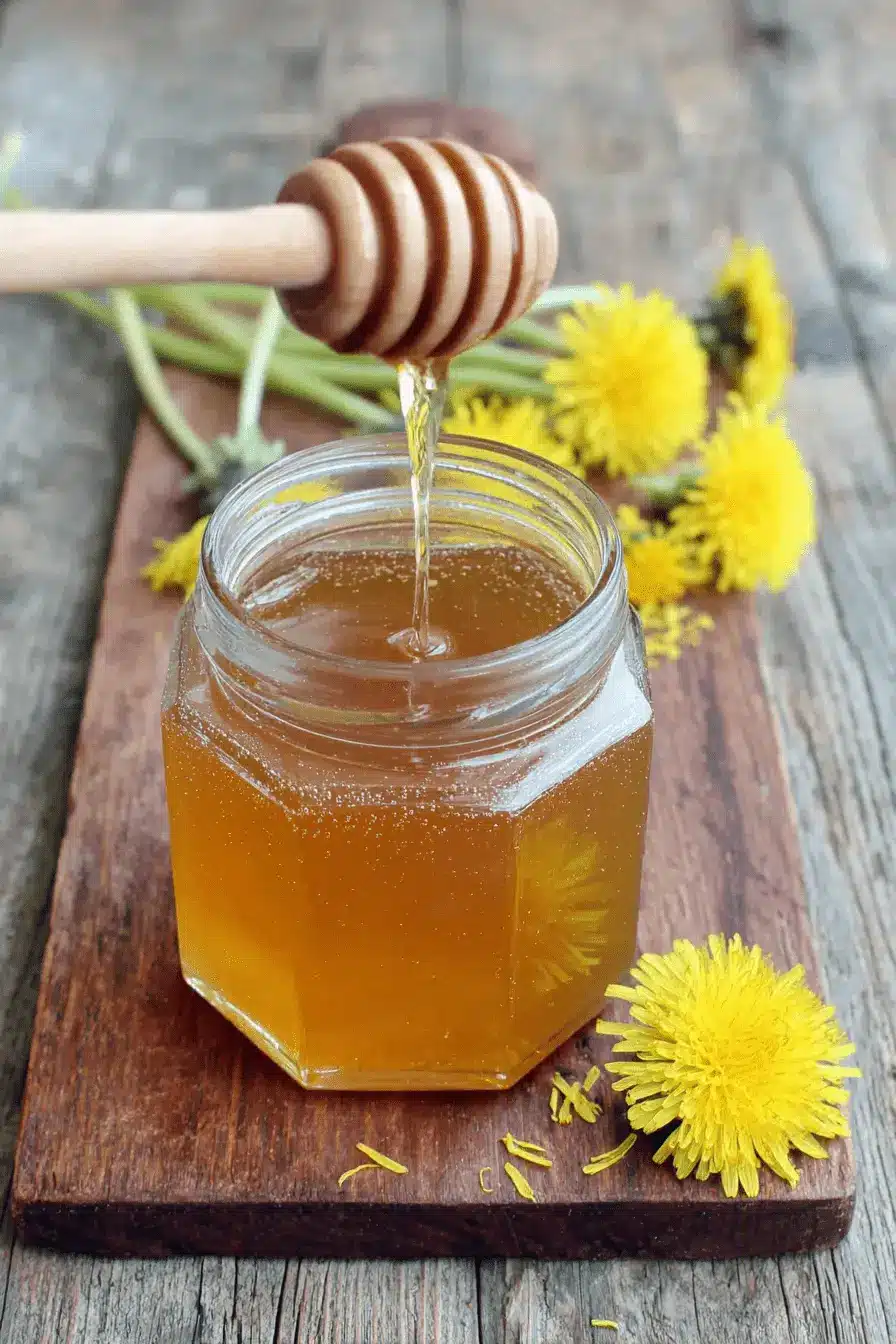
There is something so special about giving a gift you made with your own hands. Dandelion honey looks like liquid sunshine in a jar, making it a perfect present.
I like to use small, hexagonal glass jars to show off the golden color. Tie a piece of rustic twine or yellow ribbon around the neck. I also write a small tag that says “Homemade Dandelion Honey” and list ideas for how to use it, like “Try me in your tea!” It is a thoughtful, low-cost gift that feels incredibly personal.
Troubleshooting Common Dandelion Honey Issues
Kitchen fails happen to the best of us—I have had my fair share! Here is how to fix common hiccups with this recipe.
- Crystallization: If your honey turns grainy, don’t panic. Gently reheat the jar in a pot of warm water (like a water bath) until the sugar crystals melt back into liquid.
- Too Bitter: This usually happens if too many green parts were left on the flowers. Next time, take extra care to separate the petals. For this batch, try using it in strong tea to mask the bitterness.
- Cloudy Syrup: This is usually just fine pollen or tiny plant particles. It is safe to eat! To avoid it next time, strain the liquid through a finer cloth or a coffee filter, though this takes more patience.
Frequently Asked Questions About Dandelion Honey
- What type of sugar is best for this dandelion honey recipe?
I recommend using organic cane sugar or white granulated sugar to keep the color bright yellow. Brown sugar will make the syrup too dark and overpower the delicate floral flavor. - Can I make a sugar-free dandelion syrup?
You can, but the texture will be different. You can use sweeteners like erythritol or xylitol, but they won’t thicken exactly like sugar syrup. It will be much thinner and should be consumed quickly. - Is dandelion honey safe for children or babies?
Because this is a vegan syrup made from sugar and not raw honey from bees, it does not carry the botulism risk associated with real honey for infants. However, always consult your pediatrician before introducing new foods to babies. - What specialized equipment might make this easier?
A candy thermometer removes the guesswork for consistency. A canning funnel is also a lifesaver for pouring sticky hot syrup into jars without making a mess! - How many dandelions do I need?
To get 2 packed cups of flower heads, you will likely need to pick around 3 to 4 cups of loose flowers. It is always better to pick a few too many than not enough.
Sweet Success with Your Dandelion Honey Recipe!
You did it! You took a simple garden flower and turned it into something delicious. I hope this dandelion honey recipe brings a little bit of sunshine to your kitchen table.
Cooking should be about these small moments of joy. Whether you drizzle it on your morning toast or gift a jar to a friend, you have created something special from scratch.
I would absolutely love to see how your honey turned out! Did you stumble upon any tricks? Did you add a flavor twist? Leave a comment below or snap a photo and tag me on Instagram with #AishaRecipesHoney. Let’s celebrate your kitchen win together!
Dandelion Honey Recipe
Ingredients
Equipment
Method
- Gently shake or blow the dandelion flowerheads to remove any insects.
- Combine water, lemon slices, and dandelion flowers in a saucepan.
- Cover and simmer the mixture for 15 minutes.
- Allow the mixture to cool and infuse overnight.
- The following day, strain the liquid through a strainer or muslin cloth, pressing to extract all the dandelion juice.
- Weigh the extracted liquid and measure an equal weight of sugar.
- Return the liquid to the pan, add the sugar, and stir gently over heat until dissolved. Bring to a gentle boil for about 15 minutes; refer to notes for readiness tips.
- Pour the hot dandelion honey into clean, sterilized jars and seal immediately with lids.