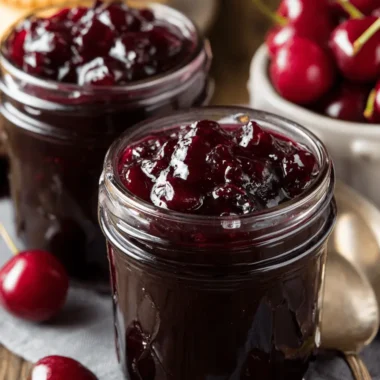

Why You’ll Love This Small Batch Cherry Jam
- Quick and Easy: You do not need any complicated canning equipment or hours of free time. This recipe goes from pot to jar simply and swiftly.
- Pure Cherry Flavor: Made with just a few basic ingredients to let the natural sweetness of the cherries completely shine.
- Perfectly Set Every Time: Foolproof testing methods ensure a beautiful, spreadable texture that never disappoints.
- Highly Versatile: This small batch is just the right amount to keep in your fridge for toast, desserts, and savory pairings.
Ingredients for Your Homemade batch Cherry Jam
- 2½ cups halved and pitted sweet cherries (fresh or frozen*)
- 1 cup granulated sugar
- 2 Tablespoons lemon juice (from about one lemon)
How to Make Homemade batch Cherry Jam (Step-by-Step Instructions)
- In a medium pot, add the prepared cherries, sugar, and lemon juice.
- Heat over medium, stirring occasionally, until the sugar dissolves and the syrup turns dark red, about 5 minutes from fresh and 10 minutes from frozen.
- Over medium heat, bring the jam to a rolling boil that cannot be stirred down. Cook for 8-10 minutes, until the jam has thickened and reached 220°F/105°C, then remove from heat. (Test the consistency by placing a few drops of the liquid jam on a cool plate. Allow the jam to cool for 15-20 seconds, then tilt the plate vertically. If the jam starts to run, it’s not ready; cook for another minute before re-testing. If the jam stays largely in place, remove from heat.)
- Use an immersion blender to reduce the size of the cherry pieces in the jam. Ensure the blender head stays fully submerged, tilting the pan if needed, and blend for just a few seconds at a time until no large pieces of cherry remain.
- Pour into jars, seal, and refrigerate. The cherry jam will thicken as it cools; for best results, allow the jam to set overnight.
Expert Tips for Making the Best Cherry Jam
Mastering the set is much easier than you might think. I always recommend using a digital thermometer to watch for that magic 220°F (105°C) mark. The chilled plate test is my favorite backup method to ensure perfection. When the jam runs completely down the plate, it needs more time; when it stays put in a wrinkly little mound, you are ready to pull it off the heat.
I know some folks prefer chunky preserves while others love a perfectly smooth spread. If you do not have an immersion blender, you can use a potato masher or a simple fork to gently break down the fruit. For a completely smooth texture, you can run the cooled jam through a food processor later on. I personally love leaving just a little bit of texture to prove it was made from scratch.
Safety is incredibly important when working with boiling sugar. Jam gets dangerously hot, so please use a long-handled spoon for stirring and oven mitts when handling your jars. Always pour your hot liquid slowly to avoid painful splatters. I also find it helpful to place my glass jars on a towel rather than a cold countertop to prevent any sudden cracking.
Choosing Your Cherries: Sweet, Tart, Fresh, or Frozen?
Selecting the right cherry completely changes your final flavor profile. Sweet varieties like Bing or Rainier are fantastic for this recipe and provide a rich, deep color. If you prefer a tangier spread, tart varieties like Montmorency or Morello are wonderful choices. Tart cherries naturally contain a bit more pectin, which can slightly speed up your cooking time.
You can use either fresh or frozen cherries with absolute confidence. I love fresh cherries during the peak summer months when they are bursting with flavor. Frozen cherries are a lifesaver during the winter when I need a quick comfort food fix.
If you choose frozen fruit, there is no need to thaw them beforehand. Simply add them directly to your pot and allow an extra five minutes for the sugar to dissolve completely. The frozen cherries will release their excess juice naturally as they heat up on the stove. I promise your jam will taste just as vibrant either way.
Pectin: To Use or Not to Use?
Pectin is a naturally occurring starch found in fruit that helps jams and jellies achieve that thick, spreadable texture. Cherries actually fall on the lower end of the natural pectin scale. However, my recipe skips added pectin entirely by utilizing the natural acidity of lemon juice and a specific boiling process. This method concentrates the fruit, resulting in the purest, most intense cherry flavor possible.
Commercial pectin is available in liquid or powdered forms and comes in both high-sugar and low-sugar varieties. Adding store-bought pectin significantly reduces the required cooking time. It also forces the jam to set much faster, which some beginner cooks find reassuring.
While commercial pectin is convenient, I truly prefer boiling the jam down naturally. A “no pectin” approach relies just on fruit, sugar, and lemon, creating a slightly softer set that feels incredibly rustic and homemade. I find that skipping the commercial boxes keeps the process approachable and completely stress-free.
Scaling and Adjusting Your Cherry Jam Recipe
Scaling this small batch recipe up or down is wonderfully simple. If you want to double the yield for gifting, just double all the ingredients and use a wider pot to ensure the water evaporates properly. A wider surface area prevents the jam from boiling over and keeps the cooking time roughly the same.
You can easily adjust the sweetness based on your chosen fruit. If your fresh sweet cherries are abundantly ripe, you might find the final product a bit too sugary for your palate. If you use tart cherries, you will likely need the full cup of sugar to balance the bold acidity. I do not recommend drastically cutting the sugar in this specific method, as sugar is essential for a proper set.
If you are looking to create a low-sugar version for dietary needs, the natural boiling method becomes quite tricky. Lowering the sugar significantly without adding a specialized low-sugar commercial pectin will leave you with cherry syrup rather than jam. Please check my FAQ section below for more details on making successful sugar-substituted preserves.
Troubleshooting Common Cherry Jam Problems
Sometimes, despite your best efforts, things do not go exactly according to plan in the kitchen. I have certainly had my share of kitchen fails. Here is a helpful guide to fixing the most common jam-making issues.
| Problem | Likely Cause | Easy Solution |
|---|---|---|
| Runny Jam | The mixture did not reach 220°F (105°C) or boil long enough to concentrate the natural pectin. | Pour the jam back into a pot, bring it to a rolling boil, and cook for another 3 to 5 minutes. Re-test on a cold plate. |
| Overly Thick or Hard Jam | The jam was boiled for too long or reaching temperatures well above 220°F (105°C). | Warm the jam gently in a saucepan over low heat. Stir in a splash of water or lemon juice until it softens. |
| Undissolved Sugar Crystals | Sugar was not fully dissolved before the rolling boil began. | Ensure you stir thoroughly over medium heat initially. If already jarred, it is still perfectly safe to eat, just mildly crunchy! |
Storing Your Homemade Cherry Jam
Proper storage ensures your beautiful preserves stay fresh and delicious. Since this is a small batch recipe designed for immediate enjoyment, the refrigerator is your best friend. Once sealed and cooled, your jam will easily last in the fridge for up to one month. After opening the jar, try to consume it within two to three weeks for the absolute best flavor.
If you want to save a batch for the winter months, freezing is a fantastic, stress-free option. Simply leave about a half-inch of space at the top of your freezer-safe jar to allow for expansion. Frozen jam maintains its quality for up to six months. Just thaw it overnight in the refrigerator when you are ready to enjoy it.
For long-term, shelf-stable pantry storage, you will need to utilize water bath canning. This involves processing the sealed jars in a large pot of boiling water. If you decide to go this route, I highly encourage following exact USDA safety guidelines regarding sterilization and processing times. However, this quick refrigerator method is my absolute go-to for easy weeknight prep!
Creative Ways to Enjoy Your batch Cherry Jam
I always love looking beyond the buttered toast when it comes to homemade preserves. This cherry jam is endlessly versatile and can elevate ordinary meals into comforting treats, such as a decadent chocolate cherry cheesecake. Here are my favorite ways to use it.
- Thumbprint Cookies: Add a dollop into the center of shortbread dough before baking for a classic, comforting treat like cherry almond snowball cookies.
- Yogurt Parfaits: Layer it with creamy Greek yogurt and crunchy granola for an elevated morning breakfast.
- Savory Cheese Boards: Serve a small bowl alongside sharp cheddar, creamy brie, and salty crackers.
- Meat Glazes: Whisk it with a little balsamic vinegar to create a brilliant glaze for roasted pork or chicken.
- Ice Cream Topping: Warm it slightly in the microwave and spoon it directly over vanilla bean ice cream. You can also use this jam in delightful chocolate cherry desserts like easy bars.
- Cocktails and Mocktails: Muddle a spoonful into sparkling water or your favorite evening beverage for a burst of fruity flavor.
Frequently Asked Questions about Cherry Jam
- What kind of pot is best for making jam?
I highly recommend using a wide, heavy-bottomed pot made of stainless steel or enameled cast iron. A wide pot allows moisture to evaporate quickly, which helps your jam set faster. Heavy bottoms completely prevent the sugar from scorching while it boils. - Can I use a cherry pitter, and which kind is best?
Yes, a cherry pitter will save you an incredible amount of time. I personally love the single-plunger style pitters with a splash guard, as cherry juice can easily stain your clothes. If you do not have one, a simple reusable straw pushed through the center of the cherry works brilliantly. - Can I make this jam with less sugar or a sugar substitute?
Because this recipe relies on sugar to interact with natural pectin for the setting process, simply cutting the sugar will result in a runny syrup. If you need a low-sugar or sugar-free option, you must purchase a specific ‘low-sugar’ commercial pectin. Follow the pectin box instructions closely, as the cooking method completely changes. - Why is my jam cloudy?
Cloudiness usually happens if you over-mash the fruit too vigorously or if you squeeze the fruit while straining out impurities. It does not affect the magical taste at all. Just enjoy your incredibly flavorful, slightly rustic creation! - How can I tell if my jam jars are properly sealed?
For refrigerator jam, a simple tight twist of the lid is all you need for safety. If you decide to water bath can them, the center of the lid should be pulled down tight. If you press the middle and it pops up and down, it did not seal correctly and must be stored in the fridge. - Can I use other fruits with this method?
Absolutely! You can easily swap the cherries for blueberries, strawberries, or raspberries. Keep in mind that every fruit has a different natural water and pectin content, so your boiling times may vary slightly.
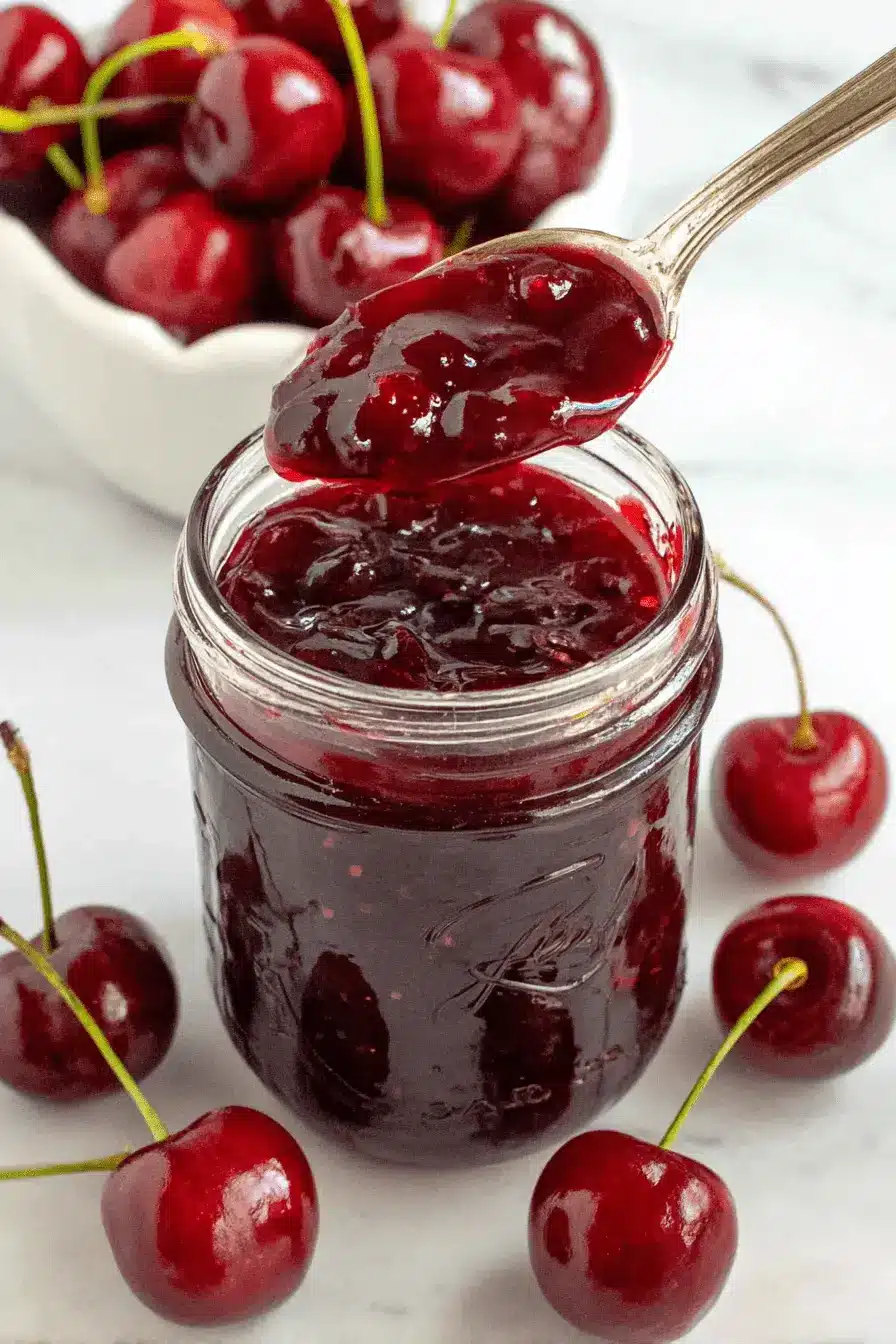
Batch Cherry Jam
Ingredients
Equipment
Method
- In a medium pot, combine the prepared cherries, granulated sugar, and lemon juice.
- Heat the mixture over medium heat, stirring occasionally, until the sugar fully dissolves and the syrup turns a deep dark red color; this takes about 5 minutes for fresh cherries and 10 minutes for frozen.
- Increase the heat to medium and bring the jam to a rolling boil that cannot be stirred down; cook for 8-10 minutes until it thickens and reaches 220°F/105°C, then remove from heat, testing for readiness by observing drops on a cool plate.
- Use an immersion blender to reduce the size of the cherry pieces, blending for just a few seconds at a time until no large pieces remain, ensuring the blender head stays submerged.
- Pour the hot jam into clean jars, seal them, and refrigerate; for the best consistency, allow the cherry jam to set overnight as it cools and thickens.