
I still remember the first time I made shrimp tempura at home. After moving to the U.S., I missed those light, crispy bites from my favorite Japanese restaurants but felt intimidated by deep frying. When I finally gathered my courage to try, that first perfect batch—golden, airy, and delicately crunchy—became a turning point in my kitchen confidence. Today, I’m sharing my foolproof method so you can create restaurant-quality shrimp tempura right in your own kitchen!
Why You’ll Love Making Homemade Crispy Shrimp Tempura
- Restaurant-quality results without the restaurant price – The signature light, crispy coating and perfectly cooked shrimp will rival your favorite Japanese restaurant
- Surprisingly simple technique – Despite its impressive appearance, this recipe breaks down the process into manageable steps anyone can master
- Customizable to your taste – Once you learn the basic method, you can adjust seasonings or create a full tempura platter with vegetables
- Guaranteed “wow” factor – Serve these golden beauties to family or guests and watch their eyes light up with the first satisfying crunch
Mastering the Shrimp: Your Guide to Perfect Shrimp Tempura Preparation
Before we dive into the batter and frying, properly preparing your shrimp is crucial for achieving that signature straight shape and perfect texture in your tempura. This foundational shrimp preparation can also be applied to other dishes like sensational sriracha shrimp. Let me walk you through each step.
Peeling and Deveining Your Shrimp
Start with fresh or thawed frozen shrimp. For the classic tempura look, you’ll want to peel the shrimp while leaving the tails intact:
- Hold the shrimp with the legs facing you
- Pinch the shell where it meets the tail and gently pull the shell away from the body
- Leave the last segment and tail attached for easy handling
- Using a small paring knife, make a shallow cut along the back of the shrimp
- Lift out the dark intestinal vein with the tip of your knife or a toothpick
- Rinse the shrimp under cold water and pat thoroughly dry with paper towels
The Secret to Straight Shrimp: Scoring & Breaking Muscles
This technique is what sets professional-quality tempura apart from homemade attempts. The scoring and muscle-breaking prevents the shrimp from curling during frying:
- Place the peeled and deveined shrimp on a cutting board, underside facing up
- Using a sharp knife, make 4-6 shallow, evenly-spaced slits across the underside
- Flip the shrimp over so it’s right-side up
- Hold the shrimp between your thumb and middle finger
- With your index finger, press firmly along the back of the shrimp
- Listen for small popping sounds – this is the muscle fibers breaking!
- Continue pressing until the shrimp straightens out completely
The popping sounds are your indicator of success – they mean you’re breaking the muscle fibers that cause curling. When done correctly, your shrimp will lay flat and maintain this straight shape during frying.
Ingredients for the Best Homemade Shrimp Tempura
- 20-25 shrimp (peeled with tail-on and deveined)
- Flour for dredging
- 1 cup flour (all-purpose or cake flour)
- 1/4 cup cornstarch
- 1 egg
- 1.25 cup ice cold water
How to Make Shrimp Tempura: Step-by-Step Instructions
- Prepare the shrimp. Peel and devein the shrimp and rinse under cold water. Pat the shrimp dry with paper towels.
- Score the underside. Make 4-6 shallow slits on the underside of the shrimp.
- Break the muscles. Place the shrimp right side up and push against the back of the shrimp with your index finger to break the muscles. Use your thumb and middle finger to hold it in place as you press. You should hear popping sounds as the muscles break and the shrimp straightens out. Repeat with the remaining shrimp.
- Mix wet ingredients. In a small bowl, whisk together the egg and ice cold water until it’s well incorporated.
- Prepare dry ingredients. In a separate mixing bowl, whisk together flour and cornstarch. Pour in the egg/water mixture.
- Make the batter. Use a whisk or chopsticks to gently mix until the dry ingredients are incorporated with the wet. Do not overmix. It’s okay for the batter to be lumpy.
- Chill the batter. Keep the batter in an ice bath until you’re ready to fry.
- Heat the oil. Heat 1.5″-2″ of oil, in a pot or Dutch oven, over medium heat until it reaches 375°F. I like to use cast iron when frying since it helps maintain the temperature of the oil as you add ingredients.
- Dredge the shrimp. Lightly dredge the shrimp with flour and shake off the excess.
- Coat with batter. One at a time, dip the shrimp into the batter and allow the excess to drip off. Carefully lower the shrimp into the oil. Cook the shrimp in batches to avoid overcrowding, no more than 3-4 at a time, depending on the size of your pot.
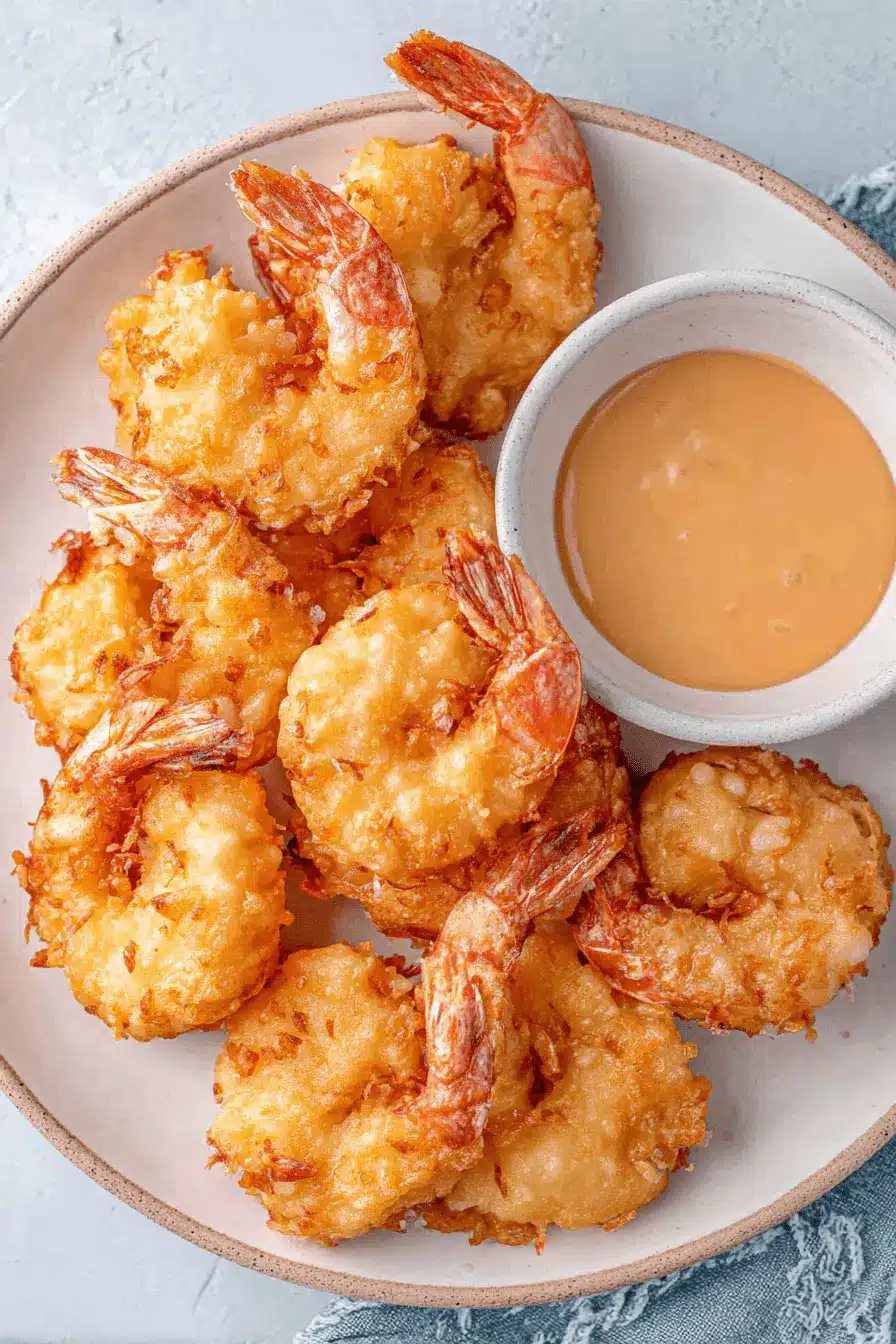
- Create the flaky texture. Slowly drizzle 2-3 spoonfuls of batter in a zigzag pattern across the length of each shrimp. Some batter will stick and some will bubble and float away. Carefully move the shrimp around the oil to catch the batter.
- Fry until golden. Fry the shrimp tempura until it’s golden brown (about 2 minutes).
- Drain excess oil. Remove the shrimp from the oil and place on a wire rack or paper towels to allow excess oil to drip off.
- Complete the batch. Repeat with the rest of the shrimp. In between batches, use a strainer to remove the excess bits of batter that did not stick. You want to have clean oil when starting a new batch.
Crafting the Perfect Tempura Batter for Crispy Shrimp Tempura
The batter is what makes or breaks your tempura. Unlike other batters that aim for smoothness, tempura batter has unique characteristics that create its signature light, crispy texture.
The Magic of Ice-Cold Water and Minimal Mixing
The secret to ethereally light tempura lies in the temperature and mixing technique:
Cold water inhibits gluten development in the flour, which is essential for achieving that light, crisp coating instead of a heavy, bready one. Always use water straight from the refrigerator or, even better, water with ice cubes (removed before mixing).
When mixing the batter, use chopsticks or a fork rather than a whisk, and stir just enough to incorporate the ingredients. Overmixing activates gluten in the flour, resulting in a chewy rather than crispy coating. Aim for no more than 15-20 gentle strokes.
Achieving the Ideal Lumpy Consistency
Unlike pancake batter where we aim to remove lumps, tempura batter should remain lumpy! The ideal consistency looks somewhat uneven:
Your batter should have visible pockets of flour and a consistency that’s slightly thinner than pancake batter. When you lift your chopsticks, the batter should drip off in a ribbon but still coat the back of a spoon. This inconsistency creates varying textures in the final tempura – from ultra-light wisps to slightly more substantial crunchy bits.
Keeping Your Batter Chilled: The Ice Bath Trick
Temperature is crucial throughout the entire tempura-making process:
Place your mixing bowl of batter inside a larger bowl filled with ice water. This keeps the batter cold even as you work, ensuring the flour doesn’t absorb too much moisture and develop gluten. If making multiple batches, refresh the ice in your ice bath as needed to maintain the cold temperature.
Deep Frying Shrimp Tempura Like a Pro: Techniques and Safety
For perfect tempura, oil selection and temperature control are critical:
Choosing the Right Oil and Maintaining Temperature
Use a neutral-flavored oil with a high smoke point – vegetable, canola, or peanut oil work best. Avoid olive oil or other strongly flavored oils that will compete with the delicate flavor of the shrimp.
The ideal temperature for tempura is 375°F (190°C). Too hot, and your tempura will brown before cooking through; too cool, and it will absorb excess oil and become greasy. A candy or deep-fry thermometer is essential for monitoring the temperature. After adding shrimp, the oil temperature will drop, so adjust your heat as needed to maintain a consistent temperature.
The Zigzag Drizzle for Signature Flakes
The distinctive fluffy, flaky texture of professional tempura comes from a special technique:
After placing your battered shrimp in the oil, dip your chopsticks or a spoon back into the batter and drizzle 2-3 spoonfuls in a zigzag pattern over the frying shrimp. These extra batter bits will create those light, crispy tendrils that are the hallmark of great tempura.
As you drizzle, gently move the shrimp through the oil to catch the floating batter pieces. Some will stick to the shrimp while others will become separate crispy bits – both are delicious!
Frying in Batches and Maintaining Oil Cleanliness
Proper batch management ensures consistent results:
Never overcrowd your frying pot – cook just 3-4 shrimp at a time depending on their size and your pot dimensions. Overcrowding lowers the oil temperature drastically and results in soggy tempura.
Between batches, use a fine-mesh strainer to remove loose bits of fried batter from the oil. These burnt particles will impart a bitter flavor to subsequent batches if not removed. Allow the oil to return to 375°F before adding the next batch.
Deep Frying Safety Tips
Safety should always be your first priority when deep frying safety:
- Never fill your pot more than halfway with oil to prevent dangerous overflow
- Keep a lid nearby to cover the pot in case of fire
- Never add water to hot oil – it will splatter dangerously
- Use long cooking chopsticks, tongs, or a spider strainer to handle food in hot oil
- Keep a fire extinguisher rated for grease fires in your kitchen
- Never leave hot oil unattended
- Allow oil to cool completely before disposing of it properly
The Essential Accompaniment: Homemade Tempura Dipping Sauce (Tentsuyu)
No shrimp tempura is complete without the traditional dipping sauce called Tentsuyu. You can explore a variety of delicious sauce recipes to complement your meals. Here’s how to make it:
Ingredients:
- 1 cup dashi stock
- 3 tablespoons soy sauce
- 2 tablespoons mirin
- 1 tablespoon sugar (optional)
- 1 teaspoon grated daikon radish
- 1 teaspoon grated ginger (optional)
For homemade dashi (if not using instant):
- 4 cups water
- 1 piece kombu (dried kelp), about 4×4 inches
- 1 cup bonito flakes
Quick dashi instructions:
- Soak kombu in water for 30 minutes
- Bring to a near boil and remove kombu
- Add bonito flakes and simmer for 1 minute
- Turn off heat and let steep for 5 minutes
- Strain and your dashi is ready
For the sauce:
- Combine dashi, soy sauce, mirin, and sugar in a small saucepan
- Bring to a simmer and stir until sugar dissolves
- Remove from heat and cool to room temperature
- Serve in small individual bowls with freshly grated daikon and ginger on top
Common Substitutions for Your Shrimp Tempura Batter
| Ingredient | Substitution | Effect on Final Result |
|---|---|---|
| All-purpose flour | Cake flour | Lighter, more delicate coating |
| All-purpose flour | Rice flour | Crispier, gluten-free option |
| Cornstarch | Potato starch | Similar results, slightly more crispness |
| Cornstarch | Tapioca starch | More chew, still crispy |
| Ice water | Seltzer/club soda | Extra lightness from carbonation |
| Egg | Just ice water (no egg) | Even lighter, more traditional style |
Beyond Shrimp: Other Delicious Tempura Ideas
This same batter works beautifully for vegetables and other seafood. Try these options with specific preparation tips:
Vegetables:
- Sweet potato: Slice 1/8″ thick, fry 2-3 minutes
- Broccoli: Use florets only, blanch for 30 seconds first, fry 1-2 minutes
- Eggplant: Cut into 1/4″ slices, salt to remove moisture, pat dry, fry 1-2 minutes
- Bell peppers: Remove seeds, cut into 1″ squares, fry 1 minute
- Mushrooms: Clean with damp cloth (don’t wash), leave whole for small varieties or slice larger ones, fry 1-2 minutes
Seafood:
- White fish fillets: Cut into 2″ pieces, pat very dry, fry 1-2 minutes
- Squid rings: Score in crosshatch pattern, fry for just 30-45 seconds
- Scallops: Pat very dry, fry for 1 minute
- Oysters: Remove excess liquor, pat dry, fry for 1 minute
Expert Tips for the Crispiest Shrimp Tempura Every Time
- Thoroughly dry your shrimp before dredging in flour – moisture is the enemy of crisp tempura
- Make the batter just before frying – the longer it sits, the more the flour hydrates and develops gluten
- Keep everything cold – refrigerate the shrimp until ready to use and keep your batter in an ice bath
- Use a thermometer to maintain oil temperature between 365-375°F throughout the frying process
- Serve immediately after frying – tempura is at its absolute best straight from the fryer to the table
- Drain on a wire rack instead of paper towels to prevent steam from making the tempura soggy
- Don’t skip the shrimp preparation steps – proper scoring and muscle breaking ensures straight, evenly-cooked shrimp
Serving Suggestions: What to Pair with Your Homemade Shrimp Tempura
Traditional Japanese-style serving:
- Steamed short-grain rice
- Small mound of grated daikon with tentsuyu dipping sauce
- Shredded cabbage with sesame dressing
- Miso soup
Modern meal options:
- Tempura shrimp tacos with Asian slaw and spicy mayo
- Tempura shrimp bowls with rice, avocado, and pickled vegetables
- Tempura shrimp salad with mixed greens and ginger dressing
- Soba noodles with tempura shrimp and dipping sauce
- For a different quick and amazing shrimp meal, consider a Sriracha shrimp stir-fry.
Storing and Reheating Your Shrimp Tempura to Maintain Crispness
While tempura is best enjoyed immediately after frying, here’s how to handle leftovers:
Storing:
- Allow tempura to cool completely at room temperature
- Place in a single layer in an airtight container with paper towels between layers
- Refrigerate for up to 2 days
Reheating:
- Oven method (best): Preheat to 375°F, place tempura on a wire rack over a baking sheet, heat for 3-5 minutes until hot and crisp
- Air fryer method: Heat at 370°F for 2-3 minutes
- Avoid microwave reheating as it will make the tempura soggy
Freezing:
- Cooked tempura can be frozen in a single layer, then transferred to a freezer bag for up to 1 month
- Reheat from frozen in a 375°F oven for 7-10 minutes
- Uncooked prepared shrimp (peeled, deveined, scored) can be frozen for later use
- Tempura batter should never be frozen or made ahead
Troubleshooting Common Shrimp Tempura Problems
| Problem | Possible Cause | Solution |
|---|---|---|
| Soggy tempura | Oil temperature too low | Maintain oil at 375°F with a thermometer |
| Greasy tempura | Batter too thick or wet | Keep batter cold and lumpy, don’t overmix |
| Shrimp curling | Muscles not properly cut and broken | Score deeply and break the back muscles until you hear popping |
| Batter falling off | Shrimp too wet or not floured | Pat shrimp completely dry and dredge lightly in flour before battering |
| Dark, burnt coating | Oil temperature too high | Monitor with thermometer, reduce heat as needed |
| Heavy, doughy coating | Overmixed batter or warm batter | Mix minimally and keep batter in ice bath |
| Undercooked shrimp | Too large or too cold | Use medium-sized shrimp at room temperature |
Frequently Asked Questions about Shrimp Tempura
What’s the difference between regular fried shrimp and tempura shrimp?
Tempura uses a light, cold water batter without breadcrumbs, creating an airy, crisp coating. Regular fried shrimp typically uses a thicker batter or breadcrumb coating, resulting in a heavier crust.
Can I prepare the batter ahead of time?
No, tempura batter must be made just before frying. The cold temperature and minimal mixing are crucial for the light texture. As the batter sits, it warms up and develops gluten, resulting in a heavy, doughy coating.
What’s the best oil for frying tempura?
Neutral oils with high smoke points are best – vegetable, canola, peanut, or rice bran oil. Traditional tempura in Japan often uses sesame oil or a blend of oils for flavor, but this is optional.
Can I make tempura without a thermometer?
While possible, a thermometer ensures the perfect oil temperature. Without one, test by dropping a small amount of batter into the oil – it should sizzle immediately and float to the surface surrounded by small bubbles. If it sinks or browns immediately, adjust your heat.
How do I know when the shrimp tempura is fully cooked?
Shrimp tempura cooks quickly, usually in about 2 minutes. The coating should be light golden and crisp, and the shrimp inside should be opaque and slightly firm but still tender. If using larger shrimp, you may need to add 30 seconds to the cooking time.
Conclusion: Your Perfect Shrimp Tempura Awaits!
Making restaurant-quality shrimp tempura at home is absolutely achievable – and now you have all the secrets! The light, crispy coating and perfectly straight shrimp might seem intimidating at first, but with these detailed steps and techniques, you’ll be amazed at what you can create in your own kitchen.
Remember, the keys to success are properly prepared shrimp, ice-cold batter that’s minimally mixed, and carefully controlled oil temperature. Even if your first batch isn’t perfect, each attempt will bring you closer to tempura mastery.
I’d love to see your tempura creations! Share your results in the comments below or tag #AishaRecipesTempura on social media. If you have any questions about the process or run into challenges, don’t hesitate to ask – I’m here to help you gain confidence in the kitchen, one crispy shrimp at a time!
Shrimp Tempura
Ingredients
Equipment
Method
- Peel, devein, rinse, and thoroughly pat dry the shrimp.
- Make 4-6 shallow slits on the underside of each shrimp.
- Straighten each shrimp by gently pressing against its back with your finger to break the muscles until you hear popping sounds.
- Whisk together the egg and ice-cold water in a small bowl until well combined.
- In a separate bowl, whisk flour and cornstarch, then pour in the egg and water mixture.
- Gently mix the batter with a whisk or chopsticks until just combined, being careful not to overmix; lumps are acceptable.
- Place the batter in an ice bath to keep it cold until you are ready to fry.
- Heat 1.5-2 inches of oil in a pot or Dutch oven to 375°F over medium heat.
- Lightly dredge each shrimp in flour, shaking off any excess.
- Dip shrimp into the batter, let excess drip, then carefully lower them into the hot oil and fry in small batches to avoid overcrowding.
- Drizzle 2-3 spoonfuls of batter over each shrimp in the oil in a zigzag pattern, moving the shrimp to catch the falling batter.
- Fry the shrimp for about 2 minutes until they are golden brown and crispy.
- Remove fried shrimp and place them on a wire rack or paper towels to drain excess oil.
- Repeat the frying process with the remaining shrimp, straining out any loose batter bits from the oil between batches for clean frying.