
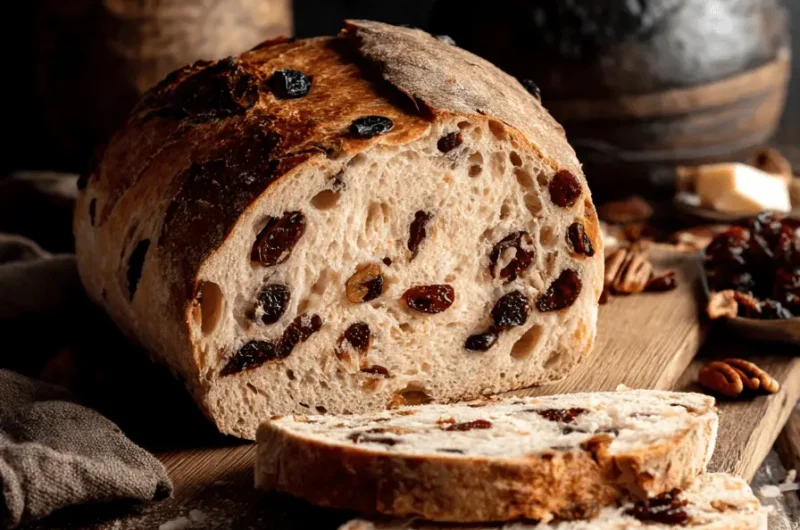
I remember the first time I made cranberry walnut sourdough bread—it felt like magic turning simple ingredients into something cozy and fragrant. Since then, this recipe has been my go-to for sharing warmth during busy days. Today, I’m excited to guide you through the ultimate foolproof cranberry walnut sourdough bread visual masterclass that makes artisan baking approachable and fun.
Table of Contents
Watch the Video: A Visual Masterclass
If you’re a visual learner, this step-by-step video tutorial is perfect for you. It walks you through essential techniques like stretch and folds, shaping, and scoring, so you can feel confident at every stage. Watch as the dough transforms, helping you nail this cranberry walnut sourdough bread recipe with ease.
Why You’ll Love This Cranberry Walnut Sourdough Recipe
- Foolproof thanks to clear visual guides, so no guesswork in the process.
- Perfectly even distribution of cranberries and toasted walnuts for delightful bites.
- Rustic, blistered crust that creates that authentic artisan bread look and taste.
- Flexible baking schedules designed for busy lifestyles, making sourdough accessible.
Sourdough Glossary for Beginners
- Autolyse:
- This is when you mix the flours and water first and let them rest, allowing the flour to hydrate and gluten to develop naturally.
- Bulk Fermentation:
- The main rise where the dough gets bigger and stronger, filled with bubbles signaling fermentation.
- Proofing:
- The final rest that lets the dough rise and prepare for baking, crucial for airy crumb.
- Scoring:
- Making cuts on the dough surface before baking, helping it expand and creating beautiful patterns.
Don’t worry—these sounds fancy but you’ll master all of them through this recipe’s clear guidance.
Key Ingredients & Equipment
Ingredients
- All-purpose flour (180 grams): Gives structure and is versatile for the crumb.
- Bread flour (120 grams): High protein to create strong gluten, crucial for airy bread.
- Whole wheat flour (60 grams): Adds nuttiness and complexity.
- Active sourdough starter (113 grams): The natural leavening agent bringing flavor and rise.
- Dried cranberries (70 grams): Sweet and tart bursts to complement the bread.
- Toasted walnuts (75 grams): Crunchy and aromatic for texture and flavor.
- Water (75 + 282 grams): Hydrates the dough and soaks the cranberries for juiciness.
- Salt (7 grams): Enhances flavor and controls fermentation.
Equipment
- Dutch oven: Ideal for baking sourdough as it traps steam, creating a crispy, blistered crust. Choose one with a tight-fitting lid and heavy walls for even heat.
- Baking without a Dutch oven: You can bake on a hot baking stone or tray with added steam from a water pan to mimic the moist oven environment.
- Digital scale: Essential for accurate measuring to ensure consistency in your loaf.
- Banneton: For shaping and supporting dough during cold proofing.
- Bench scraper and sharp scoring blade: To confidently handle and score the dough.
Sample Baker’s Schedule
| Schedule Type | Day 1 | Day 2 | Day 3 |
|---|---|---|---|
| Weekday Bake | Soak cranberries overnight, mix dough in evening | Fold and bulk ferment after work | Bake in the evening after proofing |
| Weekend Bake | Morning: soak cranberries and mix dough | Afternoon: coil folds and shape dough | Morning: bake fresh bread for the day |
These schedules help you fit the sourdough process into your life without stress.
How to Make Cranberry Walnut Sourdough Bread: Step-by-Step
Day 1 – Soak Cranberries and Mix Dough
- Soak the cranberries: Combine 70 grams dried cranberries with 75 grams water in a small container. Cover and leave overnight. The cranberries will plump and sweeten.
- Mix the dough: Combine 180 grams all-purpose flour, 120 grams bread flour, 60 grams whole wheat flour, and 282 grams water in a large bowl. Stir with a stiff spatula until no dry flour remains and a shaggy dough forms. Cover and rest for 30 minutes to 1 hour.
Day 2 – Bulk Fermentation & Shaping
- Incorporate starter and salt: Add 113 grams active sourdough starter and 7 grams salt into the dough. Knead until salt is fully absorbed.
- Rest the dough: Transfer to a lightly greased container, cover, and rest 30 minutes in a warm spot.
- Drain cranberries: Drain soaked cranberries and pat them dry with a tea towel to remove excess moisture.
- Add mix-ins: Scatter half the cranberries and toasted walnuts over the dough. Fold dough over filling, add remaining cranberries and nuts, then cover and rest for 30 minutes.
- Perform coil folds: Do 3 sets of coil folds every 30 minutes. Lift the dough center with fingertips until edges release, then tuck ends under. Cover between folds and rest in a warm place.
- Bulk ferment: Let the dough rise untouched until bubbly and well risen, about 1½ to 2 hours.
- Pre-shape dough: Turn dough onto a floured surface, gently form into a tight ball, cover, and rest for 30 minutes.
- Shape dough: Flatten dough into a rectangle. Fold sides over center, fold top over bottom flap, then round into a boule. Place seam side up in a banneton.
- Cold proof: Cover banneton with plastic wrap and refrigerate 8–16 hours.
Day 3 – Bake
- Preheat oven: Heat oven to 500°F with Dutch oven inside.
- Score dough: Turn dough onto parchment paper, score the top with a cut at least ¼-inch deep.
- Bake covered: Transfer dough on parchment into Dutch oven. Lower temperature to 450°F. Bake covered for 25-30 minutes.
- Bake uncovered: Remove lid and bake another 10-15 minutes until crust is deeply browned and internal temperature reaches 190°F.
- Cool: Transfer bread to a rack and cool at least 2 hours before slicing to finish setting the crumb.
- Store: Keep leftover bread in an airtight container at room temperature for up to 3 days.
Baker’s Percentage for Easy Scaling
| Ingredient | Weight (g) | Baker’s % |
|---|---|---|
| All-purpose flour | 180 | 52.17% |
| Bread flour | 120 | 34.78% |
| Whole wheat flour | 60 | 17.39% |
| Water (dough) | 282 | 81.74% |
| Water (soaking) | 75 | N/A |
| Active sourdough starter | 113 | 32.74% |
| Salt | 7 | 2.03% |
| Dried cranberries | 70 | N/A |
| Walnuts (toasted) | 75 | N/A |
Use baker’s percentages to scale recipe by flour weight for larger or smaller batches. For example, to double the recipe, multiply each ingredient by 2.
Tips for a Perfect Loaf Every Time
For Beginners: Easier Dough Handling
Try reducing water slightly to lower hydration for a less sticky dough that’s simpler to manage if you’re new to sourdough.
For Advanced Bakers: Adding Flavor Complexity
Swap a portion of whole wheat for rye or spelt flour to deepen flavor and add more character to your loaf.
How to Get a More Blistered, Rustic Crust
Use a well-preheated Dutch oven with lid on to trap steam, and bake uncovered the last 10-15 minutes for a beautifully blistered crust.
How to Adjust for a Warm or Cold Kitchen
In warmer kitchens, shorten rest times to prevent over-proofing. In cooler spaces, increase rise times and use warm spots for bulk ferment.
Variations and Flavor Boosters
| Component | Substitution | Notes |
|---|---|---|
| Walnuts | Pecans | Pecans add a sweeter, buttery crunch. |
| Dried cranberries | Dried cherries | Cherries offer a tart but less sweet bite. |
| Flavor addition | Orange zest | Adds citrus brightness and aroma. |
| Flavor addition | Cinnamon | Warms up the flavor profile beautifully. |
What to Serve with Cranberry Walnut Sourdough
This bread pairs wonderfully with soft cheeses like brie or tangy goat cheese. Try it alongside butternut squash soup for a cozy fall meal. For spreads, salted butter or cream cheese highlight the bread’s sweet and nutty flavors perfectly.
How to Store, Freeze, and Refresh Your Sourdough
- Store at room temperature: Keep bread in an airtight container or wrapped in a tea towel for up to 3 days.
- Freeze: Slice loaf and freeze in airtight bags for convenience, or freeze whole wrapped tightly.
- Refresh: To revive frozen or stale bread, warm in a 350°F oven for 10-15 minutes until crust regains crunch and crumb softens.
Frequently Asked Questions (FAQ)
Why did my walnuts turn the dough purple?
The tannins in walnuts can react with the dough’s acidity causing a purple hue, which is harmless and normal.
How can I get a more sour flavor in my sourdough?
Increase fermentation time or keep your starter at cooler temperatures to boost acidity and tang.
What should the final internal temperature of the bread be?
Bake until the internal temperature reaches at least 190°F for a fully cooked loaf.
My crumb is gummy. What went wrong?
Gummy crumb often results from under-proofing or slicing bread before it cools entirely. Allow full proofing and cool bread at least 2 hours before slicing.
How do I bake this recipe at a high altitude?
Increase hydration slightly, reduce proofing times, and bake at a slightly higher temperature to compensate for lower air pressure.
Conclusion
This cranberry walnut sourdough bread recipe is my trusted, easy-to-follow choice for any baker wanting that perfect artisan loaf at home. With its foolproof method, delicious flavor, and practical schedules, it fits beautifully into busy lives. I can’t wait to see your beautiful bread! What will you serve with your first loaf of cranberry walnut sourdough? Let me know in the comments below!
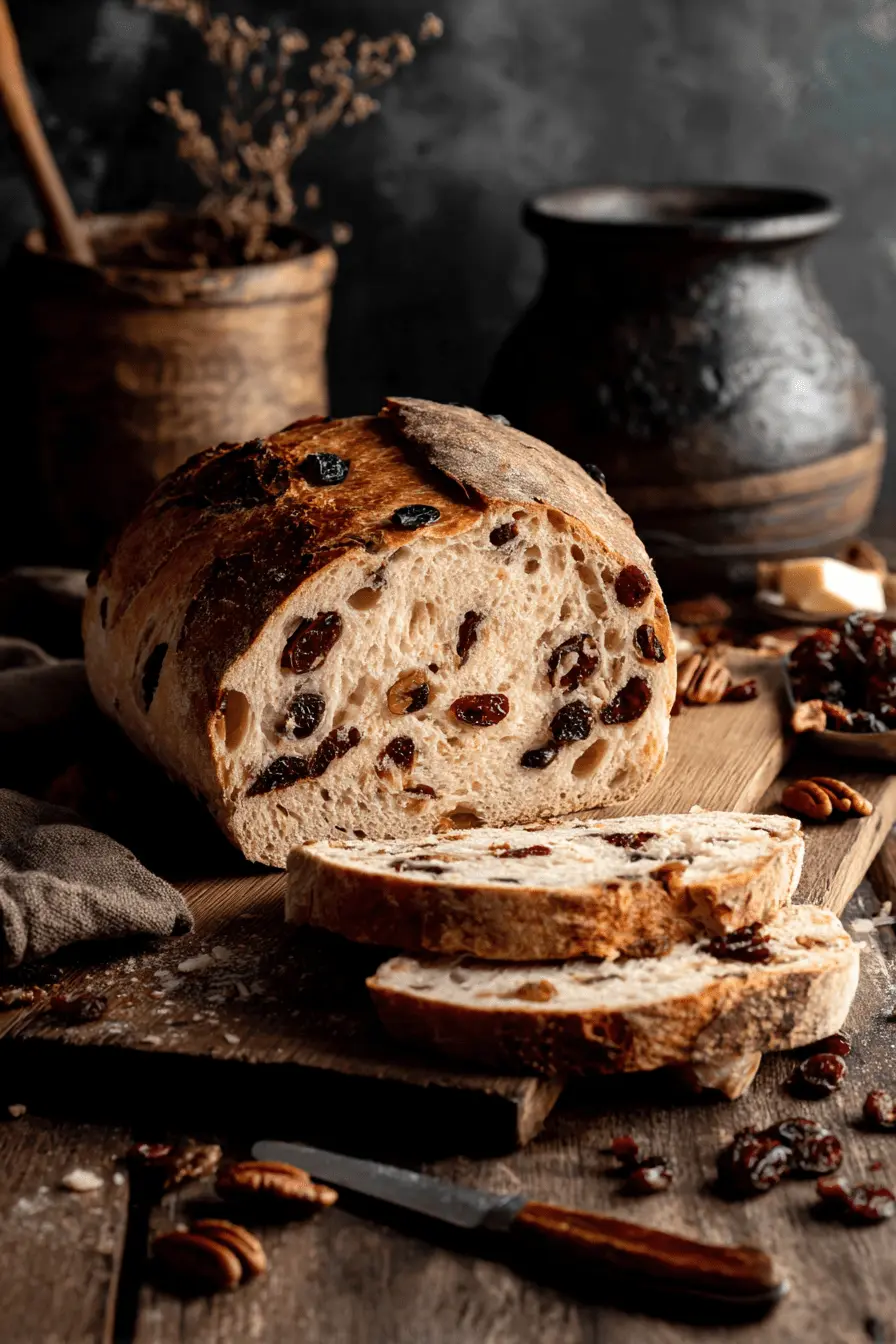
Cranberry Walnut Sourdough Bread
Ingredients
Equipment
Method
- Combine cranberries with water in a small container, cover, and soak overnight.
- Mix flours and water until a shaggy dough forms, then cover and rest for 30-60 minutes.
- Fold in sourdough starter and salt, knead until smooth, then cover and rest for 30 minutes.
- Drain cranberries and pat dry with a towel.
- Fold cranberries and walnuts into the dough, cover, and rest for 30 minutes.
- Perform 3 sets of coil folds at 30-minute intervals, covering between sets.
- Let the dough rise until bubbly, about 1.5-2 hours.
- Shape the dough into a tight ball, cover, and rest for 30 minutes.
- Flatten, fold, and shape the dough into a boule, then place seam-side up in a banneton.
- Cover and refrigerate the dough overnight (8-16 hours).
- Preheat oven to 500°F with a Dutch oven inside.
- Score the dough, transfer to the Dutch oven, and bake at 450°F for 25-30 minutes covered and 10-15 minutes uncovered.
- Cool the bread for 2 hours before slicing. Store leftovers in an airtight container for up to 3 days.